 English
 中文简体
中文简体 日本語
日本語 Español
 عربى
عربى
Search
Categories
Recommend
Categories
 Lin Yuxi — International Product Sales Manager
Recommend
-
 Industry news
 -
 Industry news
 -
 Industry news
 -
 Industry news
Oct 14, 2026 - By admin
Advanced 316L Stainless Steel Vacuum Kettle for Modern Tea, Coffee, and Everyday Hydration
Content
- 1 1. Product Overview and Core Specifications
- 2 2. 316L Stainless Steel Inner Liner
- 3 3. Six-Layer Heat-Locking Construction
- 4 4. Three-Mode Rotating Snap Lid
- 5 5. Detachable 316L Stainless Steel Tea Infuser
- 6 6. Ergonomic Carrying Ring and Portable Design
- 7 7. Visual Design Inspired by Eastern Craft Traditions
- 8 8. Application Scenarios
- 9 9. Manufacturing Integration and Engineering Strengths
- 10 10. Advantages Over Common Competing Products
- 11 11. Procurement and Customization Considerations
- 12 12. Care and Responsible Use
- 13 13. Why Integrated Manufacturing Matters to Buyers
- 14 14. Frequently Asked Questions
- 14.1 Q1: What is the capacity of the kettle?
- 14.2 Q2: What material is used for the inner liner?
- 14.3 Q3: Does the kettle support tea brewing?
- 14.4 Q4: What are the three lid modes?
- 14.5 Q5: Is the kettle suitable for cold beverages?
- 14.6 Q6: Is the kettle suitable for hot drinks?
- 14.7 Q7: What is the purpose of the wide opening?
- 14.8 Q8: Does the product have an antibacterial feature?
- 14.9 Q9: Is the kettle suitable as a gift?
- 14.10 Q10: What manufacturing services does the supplier provide?
- 14.11 Q11: Can the product be customized?
- 14.12 Q12: How should the tea infuser be maintained?
- 14.13 Q13: What makes this kettle different from a basic vacuum flask?
- 14.14 Q14: Who may benefit most from this product?
- 15 15. Conclusion
- 16 References
- 17 Product: Xinyao Cone-shaped Kettle
Choosing a vacuum kettle involves more than selecting a container with a large capacity. A dependable kettle must preserve beverage temperature, resist corrosion, remain comfortable to carry, support different drinking habits, and withstand the demands of daily use. The Xinyao Cone-shaped Kettle is designed around these practical requirements while adding a distinctive visual identity inspired by traditional Eastern indigo dyeing.
With a 1,150 ml capacity, a 316L stainless steel inner liner, a six-layer heat-locking structure, a three-mode rotating snap lid, and a detachable stainless steel tea infuser, this kettle combines thermal performance, material durability, flexible serving, and visual appeal in one product. It is suitable for homes, offices, outdoor activities, commuting, workouts, and gift-oriented applications.
The kettle is manufactured by Heenoor Co., Ltd., an established drinkware manufacturer founded in 1999. The company integrates product design, engineering validation, tooling development, standardized production, and quality management. This integrated manufacturing approach is important for buyers seeking more than an attractive sample. It provides a foundation for stable production, repeatable quality, customization support, and long-term supply continuity.
This article examines the kettle’s product design, material advantages, thermal structure, lid functions, tea-brewing performance, application value, manufacturing strengths, quality considerations, and suitability for different purchasing requirements. It also compares the product’s functional advantages with common vacuum bottles and kettles that provide fewer material, drinking, or cleaning options.
Xinyao Cone-shaped Kettle
1. Product Overview and Core Specifications
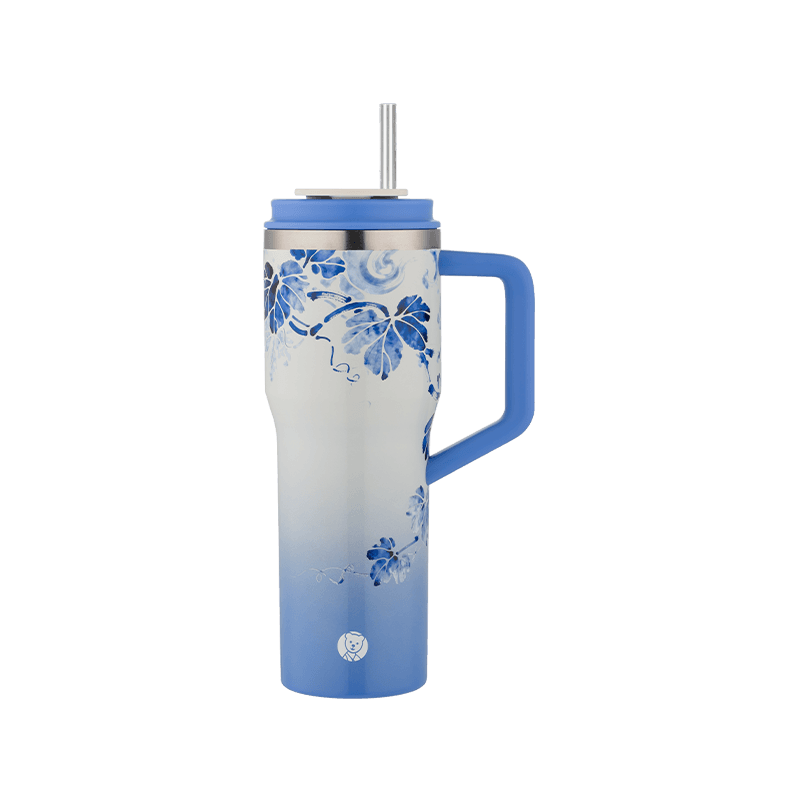
The Xinyao Cone-shaped Kettle belongs to the stainless steel vacuum kettle category. Its product model is XN-860Y-1, and its listed capacity is 1,150 ml. The main material is a 316L stainless steel inner liner, and the color is identified as Cyan Charm. The body uses a cone-shaped silhouette, while the exterior decoration combines an intangible cultural heritage-inspired blue calico pattern with a modern “Qingyun hue” visual concept.
| Specification | Product Information |
|---|---|
| Product type | Stainless steel vacuum kettle |
| Model number | XN-860Y-1 |
| Capacity | 1,150 ml |
| Inner liner | 316L stainless steel |
| Color | Cyan Charm |
| Lid system | Rotating snap design with three modes |
| Tea accessory | Detachable 316L stainless steel tea infuser |
| Thermal structure | Six-layer heat-locking construction |
| Carrying feature | Soft anti-slip carry ring |
The 1,150 ml volume is especially practical for users who want more than a single-cup bottle but do not need a large household thermos. It can hold enough tea, coffee, water, or another suitable beverage for an extended work period, a commute, a workout session, or a day outdoors. The larger capacity also reduces the frequency of refilling, which can be helpful in offices, travel situations, and outdoor environments.
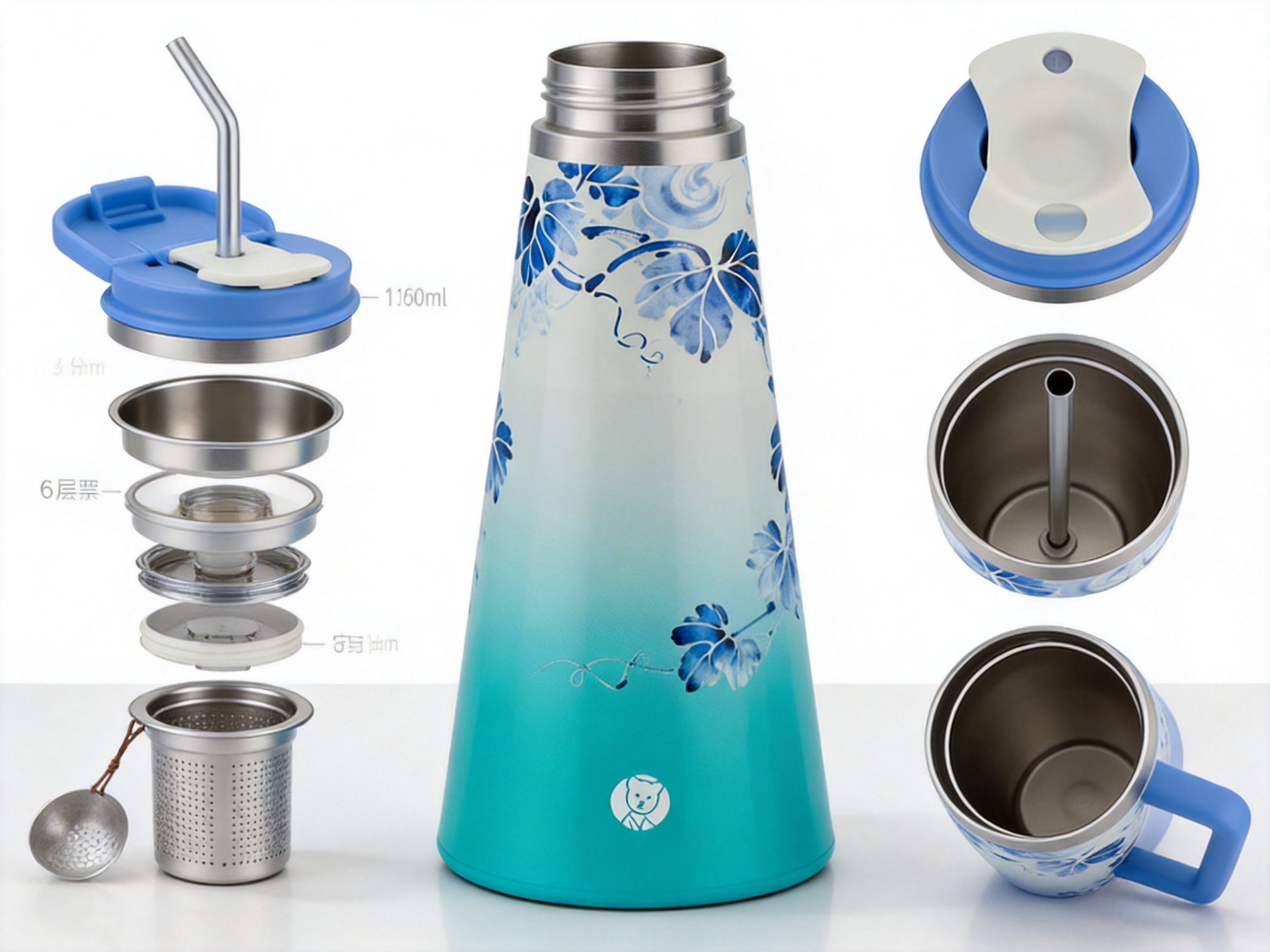
Unlike a simple bottle with one drinking opening, this kettle is designed for multiple use modes. Users can drink directly from the spout, sip through a straw opening, or open the lid fully to add ingredients and clean the interior. The detachable tea infuser expands the product from a basic hydration container into a practical tea-brewing and serving vessel.
2. 316L Stainless Steel Inner Liner
The inner liner is one of the most important components in any reusable drinkware product because it comes into direct contact with beverages. This kettle uses 316L stainless steel for the liner. Compared with more basic stainless steel options, 316L is recognized for its strong corrosion resistance and suitability for demanding contact environments.
The supplied product information describes the liner as resistant to corrosion from acids and alkalis. This gives the kettle a broader beverage range than a product intended only for plain water. Floral tea, lemon water, coffee, and milk are specifically identified as suitable beverage applications. The material is also described as supporting neutral taste performance, helping prevent unwanted flavor transfer during extended use.
For tea and coffee drinkers, material neutrality matters. Strongly flavored beverages can leave residues or aromas in containers with difficult-to-clean surfaces. A well-finished stainless steel liner is easier to maintain than many porous or lower-quality materials. The use of 316L stainless steel also gives procurement teams a clear material specification when they evaluate products for office programs, hospitality applications, promotional projects, or private-label collections.
The product description further states that the inner liner is paired with an antibacterial process, with testing confirming a 99.9% antibacterial rate. This performance statement should be understood as a product testing claim associated with the specified process and test conditions. As with all antibacterial product claims, users should still wash the kettle thoroughly and follow normal hygiene practices. Antibacterial treatment does not replace regular cleaning, drying, or responsible beverage handling.
Advantages of 316L for Daily Beverage Use
First, 316L stainless steel supports resistance to corrosion. This is valuable when the kettle is used for beverages containing natural acids, including lemon water and certain teas. It also helps protect the appearance and service life of the liner when the product is used correctly and cleaned regularly.
Second, the material is suitable for a variety of beverage categories. A user can prepare tea in the morning, carry coffee to the office, drink lemon water during the day, and use the kettle for plain water without needing a different container for every beverage type.
Third, stainless steel is durable and reusable. Compared with disposable beverage packaging, a reusable vacuum kettle can support a more consistent hydration routine and reduce dependence on single-use containers. The robust material is also well suited to active applications such as commuting, camping, fitness, and travel.
Fourth, the liner specification creates a useful point of differentiation in a competitive market. Many vacuum bottles emphasize appearance or insulation alone. This product combines insulation with a clearly stated 316L inner liner, an antibacterial process, a tea infuser, and several drinking configurations.
3. Six-Layer Heat-Locking Construction
Temperature retention is a primary reason consumers purchase vacuum drinkware. The Xinyao Cone-shaped Kettle uses a six-layer heat-locking structure designed to reduce heat loss. According to the product information, the structure provides long-lasting warmth in cold weather and sustained cooling in warm weather.
The value of a multilayer thermal construction lies in its ability to manage heat transfer through the body. A vacuum drinkware system generally seeks to limit the movement of heat between the beverage and the surrounding environment. The quality of the final result depends on the overall body construction, the inner liner, the lid, the sealing interface, and the manufacturing consistency of the assembled product.
For hot beverages, dependable temperature retention allows users to prepare tea or coffee in advance and enjoy it later. This is convenient for office workers, commuters, students, travelers, and outdoor users. For cold beverages, the same thermal objective helps preserve a cooler drinking experience over a longer period, especially during warm-weather activities.
Thermal Benefits Compared with Ordinary Containers
An ordinary single-wall bottle can quickly adopt the temperature of its surroundings. It may become hot on the outside when filled with a hot drink, or it may allow ice to melt quickly when filled with a cold beverage. A vacuum kettle with a heat-locking structure is designed to reduce this exchange and provide a more stable internal temperature.
The six-layer construction also supports a more versatile use pattern. A product intended only for hot tea may be limited to one season or one beverage category. This kettle is positioned for both warm and cool drinks, giving it practical value across the year. Users can prepare hot aged white tea in winter, carry iced tea during summer, or use the kettle for coffee, water, or other compatible beverages throughout the day.
Actual retention results can vary according to starting temperature, ambient temperature, filling level, lid opening frequency, and beverage type. Buyers requiring formal thermal performance data should request test reports and agreed testing methods for the relevant project. Nevertheless, the six-layer heat-locking structure provides a clear engineering feature that supports the product’s thermal positioning.
4. Three-Mode Rotating Snap Lid
The lid is a major differentiator because it changes the way the kettle can be used. The rotating snap design produces a soft clicking sound when the user switches between modes. This tactile feedback helps indicate that the lid has moved into a new position and makes the mechanism intuitive for everyday use.
Direct Drinking Spout
The direct drinking spout is intended for quick pouring and larger sips. It is useful when the user wants to drink conveniently without using an additional cup. This mode can be particularly practical at a desk, during a break, while traveling, or after physical exercise.
A direct spout also supports controlled serving. Users can pour a measured amount into a cup, share a beverage with another person, or drink directly when a cup is not available. Compared with a narrow one-purpose bottle opening, the spout provides greater flexibility.
Straw Opening
The straw opening is designed for gentle sipping. It can be convenient when the user wants to drink gradually while working, commuting, exercising, or driving as a passenger. A straw-based opening may also help users who prefer a lower-flow drinking experience instead of a larger pour.
Using a straw opening can reduce the need to tilt a large 1,150 ml kettle repeatedly. This is a practical benefit for active users and for people who keep the kettle near a computer, on a vehicle console, or in another situation where controlled sipping is preferred.
Fully Open Wide-Diameter Design
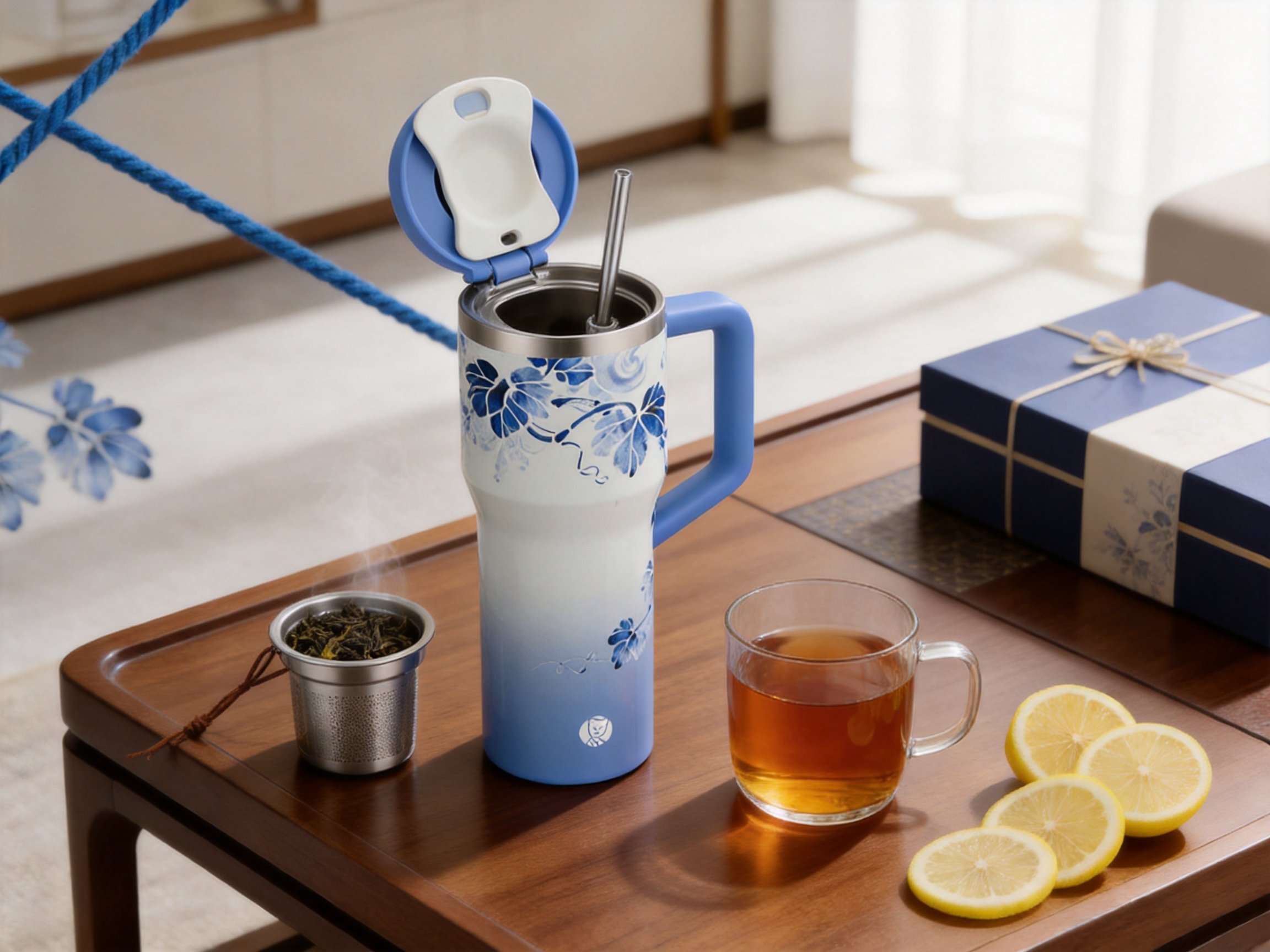
The fully open position creates a wide-diameter access point. This makes it easier to add tea leaves, fruit, lemon slices, ice cubes, or other suitable ingredients. It also simplifies cleaning because the user can reach more of the interior and inspect the liner more easily.
The wide opening is a meaningful advantage over narrow-neck bottles. Narrow openings may be difficult to fill with ice, challenging to clean around the base, and less convenient when adding loose-leaf tea. By contrast, a wide-diameter design supports preparation, serving, and maintenance in one product.
The three-mode mechanism therefore offers more than convenience. It allows the same kettle to adapt to different settings and users. A person may use the direct spout at home, the straw opening during a workout, and the fully open configuration when preparing tea or washing the vessel.
5. Detachable 316L Stainless Steel Tea Infuser
The detachable tea infuser reinforces the kettle’s identity as a tea-serving product rather than a standard water bottle. The infuser is made from 316L stainless steel and is designed to filter tea residue cleanly. Users can prepare loose-leaf tea directly inside the kettle, allowing the drinkware to function as both a brewing vessel and a portable serving container.
This feature is useful for aged white tea, floral tea, and other loose-leaf varieties that benefit from direct steeping. It also reduces the need for a separate teapot, filter, and storage container. For home users, this can simplify preparation. In offices, it allows tea to be brewed and served with less equipment. During travel or outdoor activities, it provides a compact way to prepare tea without carrying a full tea set.
The detachable design is important for maintenance. A fixed filter can trap residue and make thorough cleaning difficult. A removable infuser can be taken out, rinsed separately, inspected, and dried. This contributes to better hygiene and helps preserve the taste of future beverages.
Compared with a regular vacuum flask, the addition of a stainless steel tea infuser gives the kettle a more specialized use case. Compared with a dedicated teapot, the vacuum body adds portability and temperature retention. This combination makes the product suitable for users who appreciate traditional tea preparation but also require a modern travel-friendly format.
6. Ergonomic Carrying Ring and Portable Design
The soft anti-slip carry ring is designed to make lifting and transporting the kettle more comfortable. A large-capacity kettle can become heavy when full, so the carrying interface is important. A soft ring can help distribute pressure and reduce the discomfort that may occur when a rigid handle presses into the hand.
The ring also supports portability in several situations. Users can carry the kettle from a kitchen to a meeting room, attach it to a suitable bag or hook where appropriate, or lift it easily when moving between locations. For camping, commuting, outdoor exercise, and travel, a secure carrying point is more convenient than gripping the smooth body alone.
The cone-shaped silhouette contributes to the product’s visual identity while helping it appear different from conventional cylindrical vacuum flasks. Its shape, surface pattern, and blue-toned color create a more decorative presence for home and office environments. The product can therefore function as both drinkware and a visible lifestyle accessory.
Ergonomics also influence whether a product is used consistently. If a kettle is difficult to lift, awkward to open, or uncomfortable to carry, users may leave it unused. By combining a carry ring, multiple drinking modes, a practical capacity, and a manageable opening system, the product is designed around repeated daily interaction.
7. Visual Design Inspired by Eastern Craft Traditions
The visual design combines a blue calico-inspired pattern with a modern cone-shaped body. The product information describes the pattern as inspired by intangible cultural heritage and associates the silhouette with a “Qingyun hue” concept. This approach brings elements of traditional Eastern indigo dyeing into contemporary drinkware.
Many drinkware products compete primarily through color blocks, metallic finishes, or simple printed graphics. A cultural pattern can create a more distinctive emotional connection. It gives the product a story and makes it more suitable for buyers seeking differentiated gifts, hospitality accessories, cultural products, or premium office drinkware.
The Cyan Charm color supports a calm and refined visual impression. Blue tones can work in residential kitchens, conference rooms, reception areas, studios, and outdoor settings. The design is decorative without requiring excessive ornamentation, which allows it to appeal to users who prefer understated style.
The gift box continues the cultural design language with blue patterns and a refined presentation. Packaging is especially important when the product is purchased for employee gifts, client gifts, seasonal programs, cultural events, or retail display. A well-coordinated box can improve the perceived value of the product and support a more complete brand or campaign presentation.
8. Application Scenarios
Home Use
At home, the kettle can be used to brew and store tea for gradual consumption. A user can prepare aged white tea, fill the kettle, and enjoy it over an extended period. The wide opening simplifies adding tea and cleaning after use, while the infuser helps control tea residue.
The kettle can also serve households where different members prefer different beverages. One person may use it for floral tea, another for coffee, and another for lemon water. The corrosion-resistant liner and versatile lid reduce the need to maintain multiple beverage containers.
Office and Meeting Environments
In an office, the 1,150 ml capacity can cover a substantial portion of the working day. The product can be placed at a desk, in a meeting room, or in a shared hospitality area. The direct drinking spout supports personal use, while the pouring function can be used when serving clients or colleagues.
The product’s visual design also makes it suitable for professional environments that want drinkware with more character than a plain metal flask. Its cultural pattern can support an office atmosphere that values design, craftsmanship, and thoughtful details.
Camping and Outdoor Activities
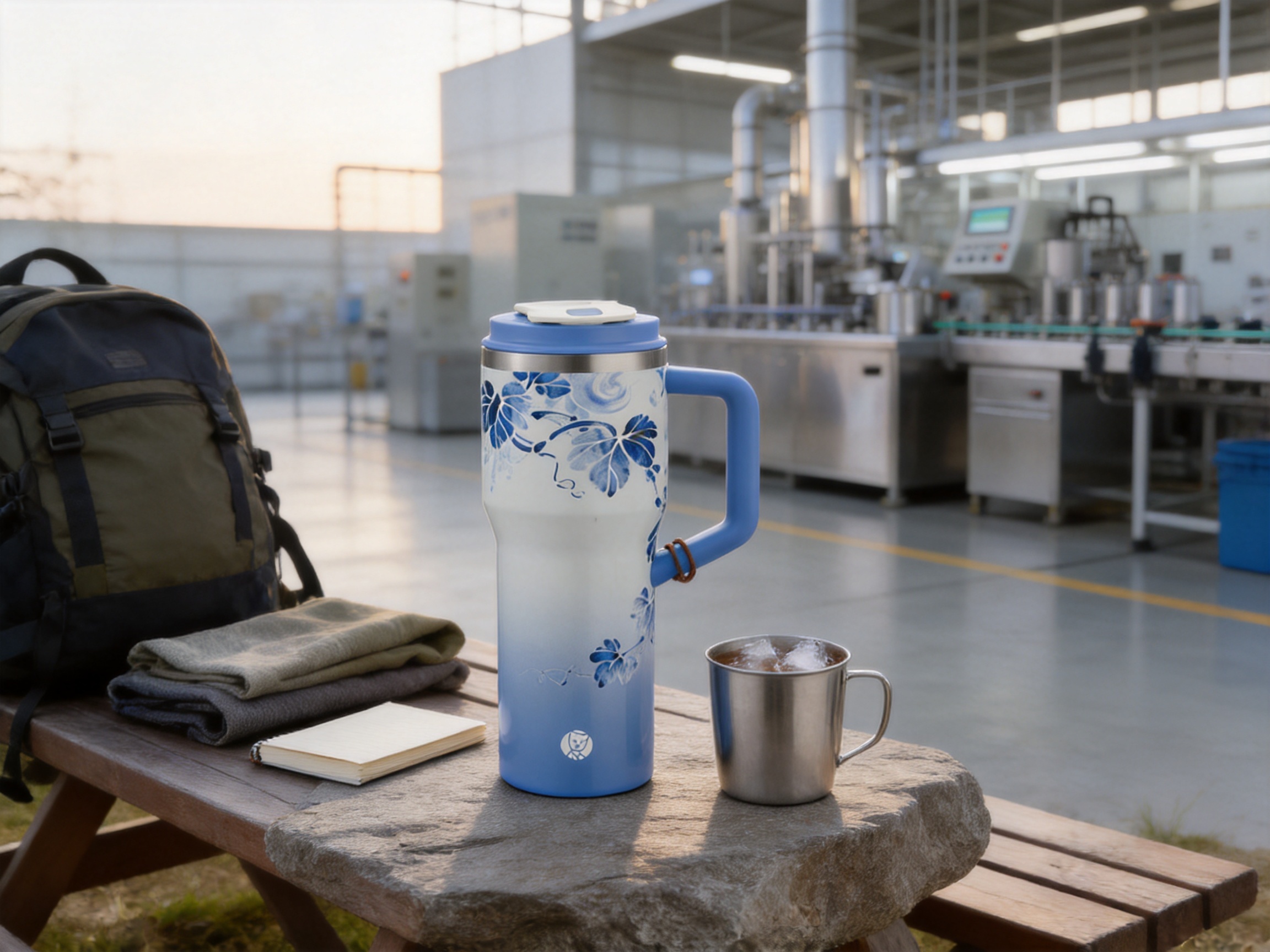
For camping and outdoor use, the large capacity reduces the need for frequent refills. The thermal structure helps keep drinks warm in cool weather and cool in warm weather. The carry ring makes transportation easier, while the durable stainless steel liner is suitable for repeated use in active environments.
The wide opening is useful when preparing cold drinks with ice cubes or adding tea ingredients at a campsite. The product should be transported responsibly, with the lid properly closed and the kettle protected from unnecessary impact or misuse.
Commuting and Travel
Commuters can benefit from the choice of drinking modes. Direct sipping may be convenient during a break, while the straw opening can support gradual consumption. The capacity is large enough to reduce refilling stops, yet the product remains a single portable vessel rather than a collection of separate containers.
Fitness and Daily Exercise
During workouts or outdoor exercise, users may prefer a straw opening because it allows controlled sipping without repeatedly removing a large lid. The anti-slip ring supports carrying before and after activity. As with any beverage container used during exercise, users should select a secure storage position and avoid placing the kettle where it may interfere with movement or equipment.
9. Manufacturing Integration and Engineering Strengths
The product’s functional features are supported by the manufacturing capabilities of Heenoor Co., Ltd. Founded in 1999, the company has grown into a large-scale drinkware manufacturer specializing in product development and industrial manufacturing. Its stated capabilities cover product design, engineering validation, tooling development, standardized production, and quality management.
This integrated structure is valuable because drinkware performance depends on the interaction of many components. A successful product is not created by material selection alone. The liner, outer body, vacuum construction, lid, sealing parts, infuser, carry ring, decorative finish, and packaging must all be developed with compatibility and repeatability in mind.
Product Design
Product design provides the starting point for balancing appearance, capacity, usability, and manufacturability. In this kettle, the design combines a cone-shaped body, a cultural pattern, a multilayer thermal structure, a three-mode lid, and a detachable infuser. These elements must work together without making the product unnecessarily difficult to use or produce.
A manufacturer with internal design capability can evaluate how the shape affects handling, how the opening supports cleaning, how the lid interfaces with the body, and how the decorative pattern follows the product’s surface. This reduces the risk of creating a concept that looks attractive but performs poorly in production.
Engineering Validation
Engineering validation helps determine whether the product can meet its intended functional requirements. For a vacuum kettle, validation may involve reviewing thermal performance, lid operation, sealing behavior, material compatibility, infuser fit, carry-ring attachment, and cleaning access.
The supplied information identifies a tested antibacterial rate of 99.9% for the specified antibacterial process. Buyers should request relevant documentation when they need to evaluate this claim for a particular procurement program. Engineering validation is strongest when test methods, sample quantities, environmental conditions, and acceptance criteria are clearly defined.
Tooling Development
Tooling development is particularly important for products with a shaped body, rotating lid, decorative surface, and multiple detachable parts. Stable tooling helps produce consistent dimensions and repeatable assembly. It also supports efficient transitions from prototype development to larger production volumes.
For custom drinkware programs, tooling capability can help a manufacturer adapt capacity, color, surface treatment, packaging, lid components, or decorative themes. The exact customization options depend on project requirements and should be confirmed during technical discussions.
Standardized Production
Standardized production helps reduce variation between batches. This matters for corporate purchasing, retail programs, promotional campaigns, and long-term supply contracts. When a buyer orders products at different times, consistent appearance and function are important for maintaining a unified presentation.
The company’s experience with stainless steel, titanium, plastic, and glass drinkware provides a broad material base. This can be useful for buyers developing a product family rather than a single item. A supplier capable of supporting multiple material categories may help procurement teams coordinate related drinkware projects through one manufacturing partner.
Quality Management
Quality management supports the transition from design intent to finished product. Relevant quality considerations for this kettle include liner material, surface condition, lid movement, sealing performance, infuser fit, carry-ring attachment, printed pattern consistency, thermal construction, packaging integrity, and overall appearance.
A disciplined quality process should distinguish between incoming material inspection, in-process checks, assembly inspection, functional testing, and final shipment review. Buyers should discuss the inspection plan, sampling requirements, packaging standards, labeling, and documentation before mass production begins.
10. Advantages Over Common Competing Products
The kettle competes in a crowded market that includes ordinary water bottles, basic vacuum flasks, single-purpose tea bottles, and decorative gift drinkware. Its advantage is not limited to one feature. Instead, it combines several functions that are often separated among different products.
Material Advantage
The 316L stainless steel inner liner provides a clearly specified material position. Products using less corrosion-resistant materials may be less suitable for frequent use with acidic or strongly flavored beverages. The 316L specification supports a broader beverage range and gives buyers a more transparent basis for evaluation.
Functional Advantage
Many vacuum bottles provide only one drinking opening. This kettle offers direct drinking, straw sipping, and full opening access. The user can select the most appropriate mode for the situation instead of adapting every activity to one fixed opening.
Tea-Brewing Advantage
A detachable 316L tea infuser gives the product an advantage over basic hydration bottles. Users can brew loose-leaf tea directly in the kettle and remove the filter for cleaning. This is especially valuable for tea drinkers who want portability without giving up a more traditional brewing experience.
Cleaning Advantage
The wide-diameter opening provides better access than a narrow-neck bottle. It simplifies adding ice and ingredients, allows more direct inspection of the interior, and supports more thorough cleaning. Easy maintenance is a practical competitive advantage because it affects the product’s long-term usability.
Capacity Advantage
At 1,150 ml, the kettle offers more volume than many compact personal bottles while remaining more portable than a large household beverage dispenser. It is well suited to extended use during office hours, travel, outdoor activities, and exercise.
Design Advantage
The cultural blue pattern and cone-shaped silhouette create a distinctive appearance. Compared with plain stainless steel products, the kettle has greater potential as a gift, decorative office item, or lifestyle product. The matching gift box extends the design concept beyond the vessel itself.
Manufacturing Advantage
The company’s integrated capabilities in design, engineering validation, tooling, standardized production, and quality management provide a stronger foundation than a supplier focused only on trading or assembly. For buyers seeking custom development, repeat production, and international project support, this manufacturing integration can reduce coordination complexity.
11. Procurement and Customization Considerations
Buyers evaluating this kettle should first define the intended market and usage environment. A retail customer may prioritize appearance, packaging, and consumer instructions. A corporate buyer may focus on logo placement, delivery schedule, quantity, and gift presentation. A hospitality or institutional buyer may require repeated-use performance, cleaning guidance, and documented inspection procedures.
Material documentation should identify the 316L stainless steel inner liner and any relevant surface or antibacterial process. If a project involves specific regulatory, food-contact, or market-entry requirements, the buyer should communicate those requirements before production so that the appropriate documentation and testing can be reviewed.
Design customization may include color, pattern, packaging, printed information, and project-specific presentation. Customization feasibility depends on quantities, artwork, tooling requirements, production schedules, and quality standards. The cone-shaped body and blue pattern may serve as a starting point for a coordinated product series.
Packaging should be considered part of the product program. The existing gift box uses a refined blue cultural pattern, which can support gifting and premium presentation. Buyers may wish to review the box structure, protective inserts, product labeling, barcode requirements, shipping cartons, and drop-protection standards.
For large orders, procurement teams should establish a written specification covering capacity, material, color, surface finish, lid modes, infuser construction, carry-ring requirements, packaging, inspection criteria, and acceptable tolerances. Clear specifications reduce misunderstandings between product development, production, and purchasing departments.
12. Care and Responsible Use
Although the kettle is designed for repeated use, proper care remains important. Users should wash the body, lid, infuser, and sealing areas regularly. Tea leaves, milk residues, coffee oils, lemon particles, and other beverage residues should not be left inside for extended periods.
The detachable tea infuser should be removed and rinsed after brewing. The wide opening can be used to improve access during cleaning. After washing, the components should be allowed to dry fully before the kettle is closed and stored.
Users should check that the rotating snap lid is correctly positioned before carrying the kettle. The lid should be closed securely before the product is placed in a bag or transported. Hot beverages should be handled carefully, particularly when the kettle is used around children or during movement.
Compatibility with extremely hot, carbonated, or highly reactive beverages should be confirmed according to the manufacturer’s instructions. The product information specifically identifies floral tea, lemon water, coffee, and milk as suitable examples, but users should still observe safe handling and cleaning practices for each beverage.
Regular inspection is advisable. If the lid, sealing components, infuser, or carry ring shows damage, users should stop using the affected function and seek replacement guidance where available. Responsible maintenance helps extend service life and preserve beverage quality.
13. Why Integrated Manufacturing Matters to Buyers
Drinkware buyers often focus on the final appearance, but the supplier’s manufacturing system can have an equally important effect on project success. An integrated manufacturer can connect design decisions with tooling, production engineering, inspection, and packaging. This makes it easier to identify risks before mass production begins.
For example, a decorative pattern must be compatible with the body geometry and surface process. A rotating lid must align with the opening and sealing structure. A tea infuser must fit securely without obstructing the drinking modes. A carry ring must be comfortable while remaining properly attached. Each individual feature influences the others.
Heenoor’s experience across stainless steel, titanium, plastic, and glass drinkware positions the company to support different product strategies. Some buyers may require a stainless steel vacuum kettle today and a titanium or glass product for another market later. A broad material portfolio can support product diversification while maintaining a consistent manufacturing relationship.
The company’s stated emphasis on manufacturable, durable, scalable products is relevant to buyers who need reliable volume production. A concept that cannot be produced consistently is not commercially useful. Engineering validation and standardized production help transform an attractive design into a repeatable product suitable for ongoing supply.
14. Frequently Asked Questions
Q1: What is the capacity of the kettle?
The listed capacity is 1,150 ml. This volume is suitable for extended personal use at home, in the office, during commuting, while exercising, and during outdoor activities.
Q2: What material is used for the inner liner?
The inner liner is made from 316L stainless steel. The material is described as corrosion-resistant and suitable for beverages such as floral tea, lemon water, coffee, and milk when used and cleaned appropriately.
Q3: Does the kettle support tea brewing?
Yes. It includes a detachable 316L stainless steel tea infuser designed to filter tea residue. The wide opening also makes it easier to add tea ingredients and clean the kettle after use.
Q4: What are the three lid modes?
The rotating snap lid provides a direct drinking spout, a straw opening, and a fully open wide-diameter configuration. A soft clicking sound indicates movement between the modes.
Q5: Is the kettle suitable for cold beverages?
Yes. Its six-layer heat-locking structure is designed to reduce heat loss and support sustained cooling in warm weather. It can be used for cold water and other compatible cool beverages.
Q6: Is the kettle suitable for hot drinks?
Yes. The thermal structure is designed to provide long-lasting warmth in cold weather. Hot tea and coffee are among the beverage applications identified in the product information. Users should handle hot liquids carefully.
Q7: What is the purpose of the wide opening?
The wide opening makes it easier to add tea, ice cubes, lemon, or other suitable ingredients. It also improves access for cleaning and inspection compared with a narrow-neck design.
Q8: Does the product have an antibacterial feature?
The product description states that the 316L inner liner is paired with an antibacterial process and that testing confirmed a 99.9% antibacterial rate. Buyers requiring formal verification should request the applicable test documentation and conditions. Regular cleaning remains essential.
Q9: Is the kettle suitable as a gift?
Yes. Its cultural blue pattern, Cyan Charm color, distinctive cone-shaped form, and coordinated gift box make it suitable for personal gifts, corporate gifts, client gifts, cultural programs, and premium promotional applications.
Q10: What manufacturing services does the supplier provide?
The supplier states that it integrates product design, engineering validation, tooling development, standardized production, and quality management. It also works with stainless steel, titanium, plastic, and glass drinkware.
Q11: Can the product be customized?
Customization should be discussed according to the project’s quantity, artwork, color, packaging, tooling, documentation, and delivery requirements. Possible options may include coordinated surface design and packaging, subject to technical confirmation.
Q12: How should the tea infuser be maintained?
The infuser should be removed after use, rinsed thoroughly, and dried. Removing it helps prevent tea residue from accumulating and makes the components easier to inspect and clean.
Q13: What makes this kettle different from a basic vacuum flask?
It combines a 316L stainless steel inner liner, six-layer heat-locking construction, three lid modes, a detachable tea infuser, a soft carry ring, a 1,150 ml capacity, and a culturally inspired design. A basic vacuum flask may offer insulation but not all of these functions together.
Q14: Who may benefit most from this product?
Tea drinkers, office workers, commuters, travelers, campers, fitness users, households, hospitality teams, and organizations seeking distinctive gifts may all find the product useful.
15. Conclusion
The Xinyao Cone-shaped Kettle is designed as a versatile drinkware product rather than a single-purpose bottle. Its 316L stainless steel inner liner supports a broad beverage range and strong corrosion resistance. The six-layer heat-locking structure is designed to preserve warmth and coolness. The three-mode rotating snap lid adapts to direct drinking, straw sipping, ingredient addition, and cleaning. The detachable tea infuser adds genuine brewing functionality, while the anti-slip carry ring improves portability.
Its 1,150 ml capacity makes it suitable for extended daily use, and the Cyan Charm color, blue calico-inspired pattern, cone-shaped silhouette, and matching gift box give it a distinctive visual position. These features allow the product to compete not only as a vacuum kettle but also as a tea accessory, office item, outdoor companion, and premium gift.
The manufacturing foundation is equally significant. Heenoor Co., Ltd. brings together product design, engineering validation, tooling development, standardized production, quality management, and experience with multiple drinkware materials. For buyers seeking reliable development and scalable supply, this integrated structure can be an important advantage.
Overall, the kettle’s strongest competitive position comes from the combination of material specification, thermal design, flexible lid operation, tea preparation, ergonomic handling, cultural aesthetics, and manufacturing capability. It addresses practical everyday needs while offering a differentiated appearance and a platform suitable for personal use, gifting, hospitality, and customized drinkware programs.
References
1. Product specification sheet for stainless steel vacuum kettle model XN-860Y-1.
2. Manufacturer-provided product description covering the 316L inner liner, antibacterial process, six-layer heat-locking structure, lid modes, tea infuser, carry ring, and intended applications.
3. Manufacturer-provided company profile describing product design, engineering validation, tooling development, standardized production, quality management, and material capabilities.
4. General technical references on stainless steel grades, corrosion resistance, reusable food-contact drinkware, and vacuum insulation principles.
5. General product-development references on engineering validation, tooling control, standardized manufacturing, inspection planning, and packaging quality.
Product: Xinyao Cone-shaped Kettle

You may also like…
Copyright © 2025 Heenoor Co., Ltd. All Rights Reserved.
 Custom Stainless Steel Drinkware Manufacturers
BACK TOP