Hardness Versus Wear Behavior, and Why Packaging Gets Rethought for Titanium Plates
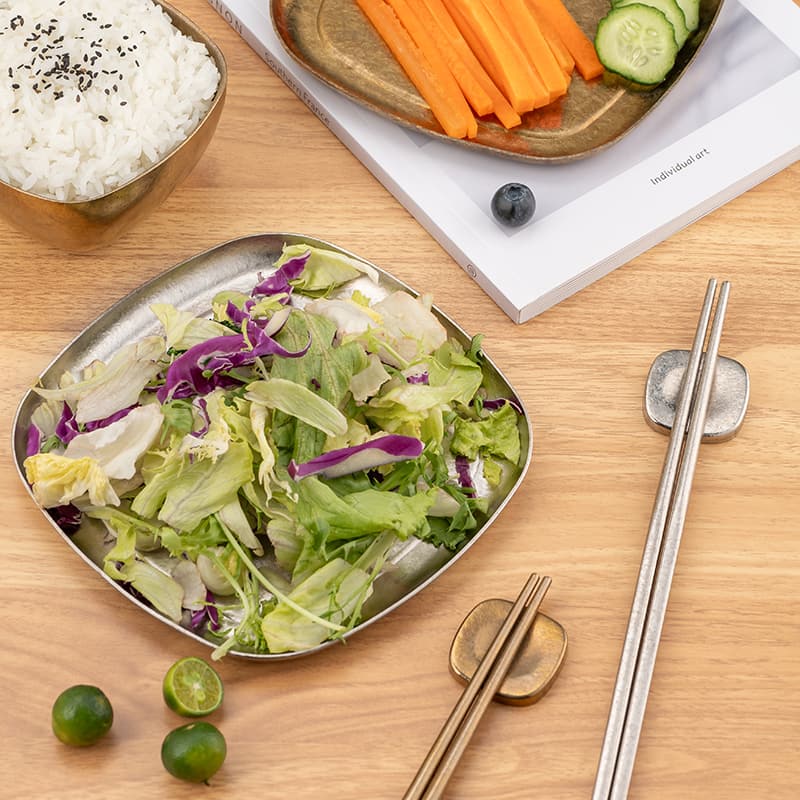
A restaurant supplier once ran a side-by-side wear test between a stainless steel plate and a titanium plate, both put through the same commercial dishwasher cycle daily for three months. The stainless plate picked up a network of fine scratches from cutlery contact that dulled its surface sheen noticeably by week six. The titanium plate showed marks too, but they were shallower and less visually apparent under the same lighting. That difference comes down to a hardness comparison that isn't as straightforward as people assume, and it connects to a second, more overlooked issue — how a Titanium Dinner Plate actually needs to be packaged differently once it leaves the anodizing line, precisely because that same hardness profile doesn't mean the surface is immune to marking.
What "Harder" Actually Means When Comparing Titanium, Stainless Steel, and Ceramic
On a Vickers hardness scale, commercially pure titanium typically measures somewhere in the range of 120–200 HV depending on grade, while 304 stainless steel sits closer to 150–200 HV in its annealed state — the two overlap more than marketing materials often suggest, so titanium isn't categorically harder than stainless in raw material terms. Ceramic dinnerware, by contrast, measures considerably higher on hardness scales due to its glazed surface, yet ceramic is brittle in a way metal isn't, meaning it resists scratching far better than either metal but fails catastrophically — chipping or cracking — under impact that a titanium plate would simply dent or survive without visible damage.
The practical wear difference between titanium and stainless steel comes less from raw hardness and more from how each metal work-hardens during use and how their surface oxide layers behave. Titanium's natural oxide layer, which forms immediately on exposure to air, is thin but chemically stable and resists many acids and alkalis that would gradually etch or dull a stainless steel surface over years of exposure to acidic foods like tomato sauce or citrus. A Pure Titanium Home Dining Plate handling this kind of daily acidic exposure tends to hold its surface character longer than a comparable stainless plate, not because the metal underneath is dramatically harder, but because the oxide layer doesn't react with food the way an aging stainless surface can under repeated acid contact.
Cutlery marking is where the comparison gets more nuanced. Both stainless and titanium plates show fine scratch lines from knife and fork contact over time — this is unavoidable with any metal tableware — but titanium's marks tend to sit shallower because the metal deforms slightly rather than gouging as readily, particularly on a plate that has gone through a polishing pass rather than being left with a raw mill finish.
| Property |
Titanium |
Stainless Steel (304) |
Glazed Ceramic |
| Vickers hardness (approx.) |
120 – 200 HV |
150 – 200 HV |
Higher, but brittle |
| Behavior under impact |
Dents, rarely cracks |
Dents, rarely cracks |
Chips or fractures |
| Reaction to acidic food exposure |
Resists etching via stable oxide layer |
Can dull gradually with repeated acid contact |
Glaze generally unaffected |
Why Packaging a Titanium Dinner Plate Isn't the Same as Packaging Stainless Steel
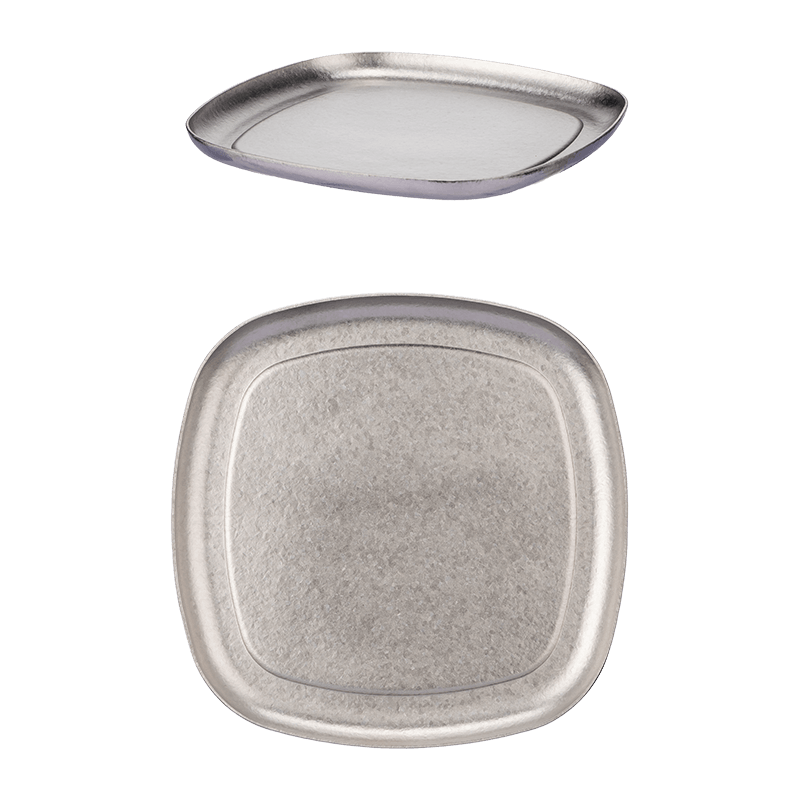
Here's where the hardness comparison above matters less than people expect: an anodized titanium surface derives its color entirely from a thin oxide film, not from a paint or coating layer sitting on top of the metal. This means the visible color itself is part of the surface, and any scratch deep enough to disrupt that oxide layer shows up as a visible flaw in the color, not just a scuff mark the way it would on a painted or coated stainless plate. A Titanium Dinner Plate that would survive rough handling structurally can still arrive looking damaged if the anodized surface picks up fine scratches during transit, even though the metal itself took no real harm.
This changes packaging priorities. Individual interleaving — a soft, non-abrasive sheet placed between every stacked plate — becomes closer to mandatory rather than optional, since even brief contact between two anodized titanium surfaces during a bumpy truck ride can leave hairline marks that weren't there at the factory. Foam or felt inserts shaped to the plate's polished edge profile also help, since the plate's multiple polished edges — smoothed and rounded during finishing rather than left sharp — are more prone to picking up contact marks at points where they'd otherwise rest directly against packaging material or another plate's rim.
Heenoor Co., Ltd. runs interleaving and edge-protection as a standard step for anodized titanium tableware rather than treating it as an upgrade option, since the cost of an extra packaging layer is minor compared to the cost of a customer receiving a Pure Titanium Home Dining Plate with visible transit scratches on an otherwise defect-free anodized surface.
| Packaging Element |
Purpose |
Risk If Skipped |
| Interleaving sheets between stacked plates |
Prevents surface-to-surface contact during transit |
Hairline scratches disrupting the anodized color layer |
| Edge-contour foam or felt inserts |
Protects the polished, rounded plate rim |
Marking at contact points along the edge profile |
| Rigid outer carton with fitted dividers |
Limits plate movement inside the box |
Shifting during transit causing repeated micro-contact |
How the Two Issues Tie Back Together
Titanium's wear resistance against acids and its resistance to visible scratching aren't the same property, and conflating them leads to packaging decisions that underestimate risk. A titanium dinner plate genuinely resists acidic food exposure better than stainless steel over years of use, which is part of why it holds up well for daily dining applications, but that chemical resistance doesn't translate into scratch immunity during shipping — the anodized color layer is thin enough that abrasive contact during transit remains a real concern regardless of how the metal performs at the dinner table. Heenoor Co., Ltd. treats these as separate engineering questions in its titanium tableware programs, addressing wear performance through material and finishing choices while addressing transit protection through dedicated packaging design, since assuming one solves the other tends to be where quality complaints originate.

 English
 中文简体
中文简体 日本語
日本語 Español
 عربى
عربى Vacuum Flask/Water Bottle