Matching Finishes and Matching Schedules: The Two Coordination Problems Behind Every Gift Set
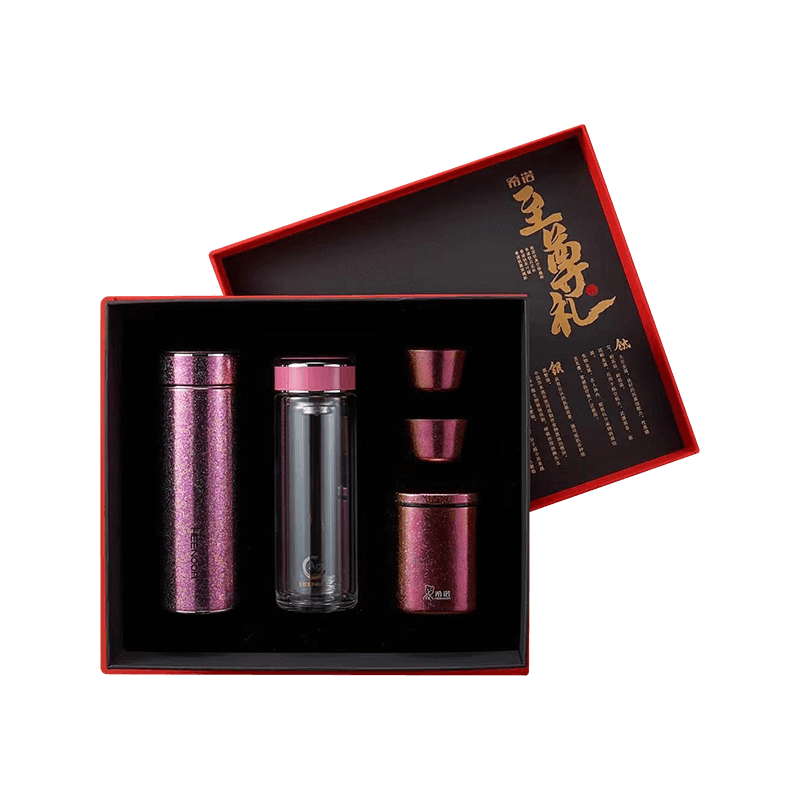
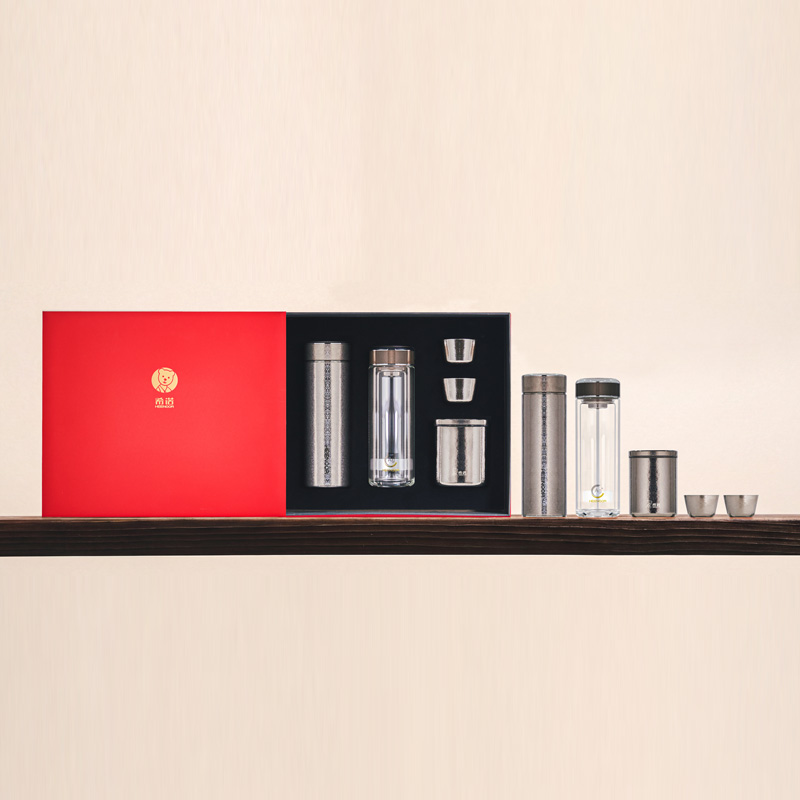
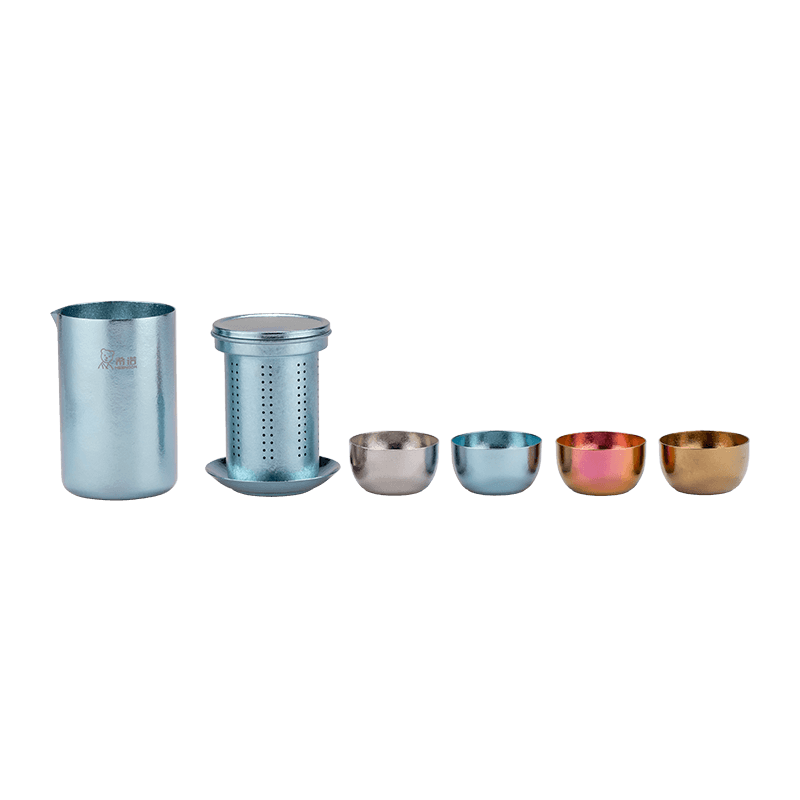
A returned Supreme Flask and Pot Set Box once came back with a note pointing out that the thermos cup and the tea can, sitting side by side in the same box, had a visible tone difference under daylight — both anodized titanium, both from the same production batch on paper, yet noticeably different in hue. Neither piece was defective on its own. The problem was that they'd been anodized on separate runs days apart, and titanium's color response to the anodizing process is sensitive enough that even small shifts in bath temperature or voltage between runs show up as a mismatch once two pieces sit next to each other. This is one of two coordination problems that rarely get discussed outside a factory floor but shape whether a Water Bottle Gift Set actually reads as a cohesive product or as several unrelated items sharing a box.
Why Matching Titanium Finishes Across Multiple Pieces Is Harder Than It Sounds
Anodized titanium color comes from thin-film interference — the oxide layer thickness formed during anodizing determines which wavelength of light gets reflected, and that thickness is controlled by voltage applied during the electrochemical process. The relationship between voltage and resulting color isn't perfectly linear, and it's sensitive to bath chemistry, temperature, and even how long a piece sits in the solution. A batch anodized at 9:00am and a batch anodized at 2:00pm on the same day, using the same nominal settings, can still land at slightly different points on the color spectrum if bath temperature drifted by even a couple of degrees in between.
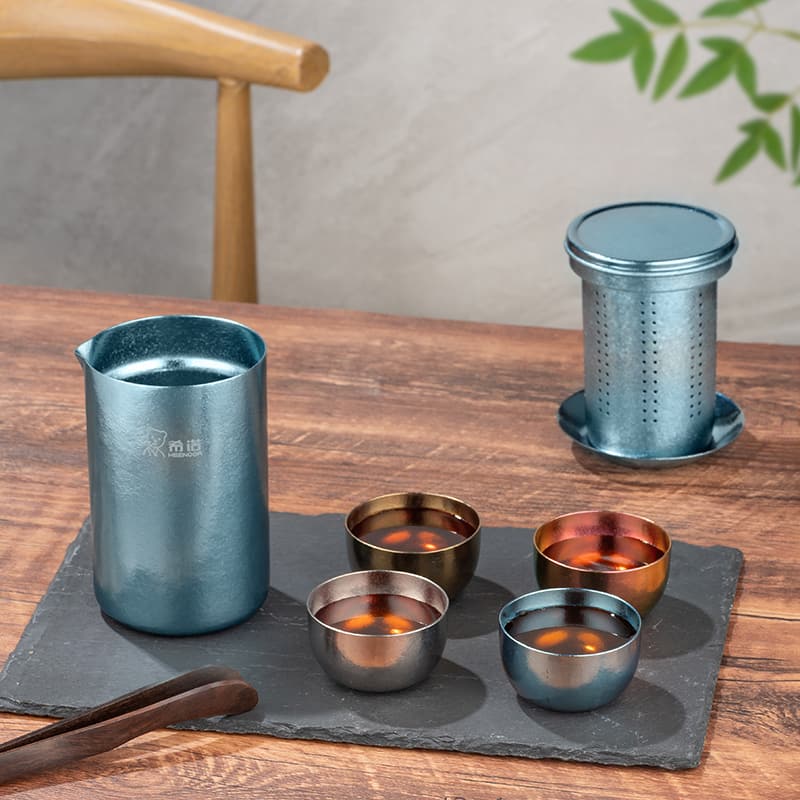
For a single product this variation is invisible, since there's nothing to compare it against. In a Pure Titanium Travel Tea Set, where a pot, cups, and sometimes a caddy all need to read as one matched finish, this becomes a real production constraint rather than a cosmetic afterthought. The practical fix is running all titanium components for a given set through the anodizing line as a single continuous batch, using one bath charge and one voltage program, rather than treating each item type as a separate production task scheduled independently. Some production teams also hold a reference sample from each anodizing run and do a side-by-side visual check under standardized lighting before releasing a batch for packing, since color differences that look acceptable under factory fluorescent light can appear more pronounced under daylight or retail lighting.
Heenoor Co., Ltd. batches titanium components for multi-piece sets through anodizing as grouped runs specifically to avoid the kind of mismatch described above, since splitting a gift set's titanium items across separate anodizing sessions — even hours apart — introduces a risk that doesn't show up until the finished pieces are placed together in the box.
| Anodizing Approach |
Color Consistency Risk |
Typical Cause of Mismatch |
| Grouped single-batch run |
Low, all pieces share bath conditions |
Minimal, since voltage and temperature stay constant across the set |
| Separate runs per component type |
Higher, especially across different days |
Bath temperature drift or voltage calibration differences between sessions |
Scheduling Around Materials That Don't Move at the Same Speed
A Supreme Flask and Pot Set Box pulls together titanium components, a silver-ion antibacterial glass cup, and packaging materials that each follow entirely different production timelines. Titanium forming and anodizing might take one to two weeks depending on order volume, glass forming and annealing runs on its own furnace schedule that doesn't flex easily once started, and the antibacterial coating on the glass cup requires a curing period that can't be compressed without compromising coating adhesion. If these three streams aren't planned against a shared target date from the start, one component finishing early just sits in inventory while another becomes the bottleneck that delays the whole set.
The more workable approach is backward scheduling from the final packing date rather than forward scheduling from each component's start date independently. Glass forming and coating, having the least schedule flexibility due to furnace batch timing and cure duration, gets set as the anchor point, and titanium production and anodizing get scheduled to land finished pieces a few days ahead of that anchor rather than running in parallel and hoping the timelines converge naturally. This sounds straightforward on paper but requires visibility across departments that don't always share a production calendar by default — glass forming and titanium anodizing are typically different physical lines with different supervisors, and without a shared schedule, delays in one don't get flagged to the other until packing day arrives short a component.
Heenoor Co., Ltd. runs gift set programs like the Water Bottle Gift Set line through a single coordinated production calendar rather than letting each material stream schedule independently, which reduces the chance that a fast-moving titanium run sits idle in a warehouse for two weeks waiting on a slower glass coating cycle, or that a coating delay pushes a shipment date without anyone catching it until the last stage.
| Component |
Typical Lead Time Driver |
Scheduling Role |
| Titanium items (cup, tea can) |
Forming and grouped anodizing run |
Scheduled to finish just ahead of the anchor date |
| Antibacterial glass cup |
Furnace batch timing plus coating cure period |
Anchor point for the overall production calendar |
| Gift box and packaging inserts |
Print and die-cut lead time |
Scheduled parallel to product manufacturing, matched to final assembly date |
Where Finish Consistency and Scheduling Overlap
These two problems connect more directly than they first appear. Batching titanium components together for anodizing, done to solve the color-matching issue, also happens to be the same production decision that helps with scheduling — grouping all titanium pieces for a Water Bottle Gift Set into one run means they finish together rather than trickling in at different times, which simplifies the backward-scheduling process described above. A factory that hasn't organized its anodizing line around finished-set groupings tends to face both problems at once: mismatched color and staggered completion dates that complicate final assembly for something like a Supreme Flask and Pot Set Box, where every component needs to arrive at the packing station within the same narrow window.

 English
 中文简体
中文简体 日本語
日本語 Español
 عربى
عربى Vacuum Flask/Water Bottle