Shell Material Pairing and Steel Grade Verification: Two Questions Worth Asking Before Signing a Kettle Order
A batch of returned units flagged the same defect three separate times over one production quarter — the outer shell of a Stainless Steel Vacuum Kettle had developed a faint but visible warp near the base after repeated boiling-to-cold cycles, even though the vacuum layer itself still tested fine. Tracing the cause led back to a mismatch between the inner and outer shell alloys, not a defect in either piece individually. This kind of failure doesn't show up in a single-use test, and it points to a question that gets less attention than it should during sourcing: how the material pairing between inner and outer shells is chosen, and separately, how a buyer actually confirms the steel grade a supplier claims to be using.
Why Inner and Outer Shell Material Pairing Affects Cycling Durability
A vacuum kettle's structure relies on two separate steel shells, sealed with a vacuum gap between them, and each shell expands and contracts at its own rate as the kettle moves through hot and cold cycles. If both shells are drawn from the same steel grade — typically 304 for general use — their thermal expansion coefficients match closely enough that the vacuum seal at the neck junction experiences even, predictable stress across repeated cycles. Problems start when a supplier mixes grades to cut cost, using 304 for the visible outer shell and a lower-grade or reclaimed steel for the inner liner, since even small differences in expansion behavior between the two materials concentrate stress at the seam where they're joined.
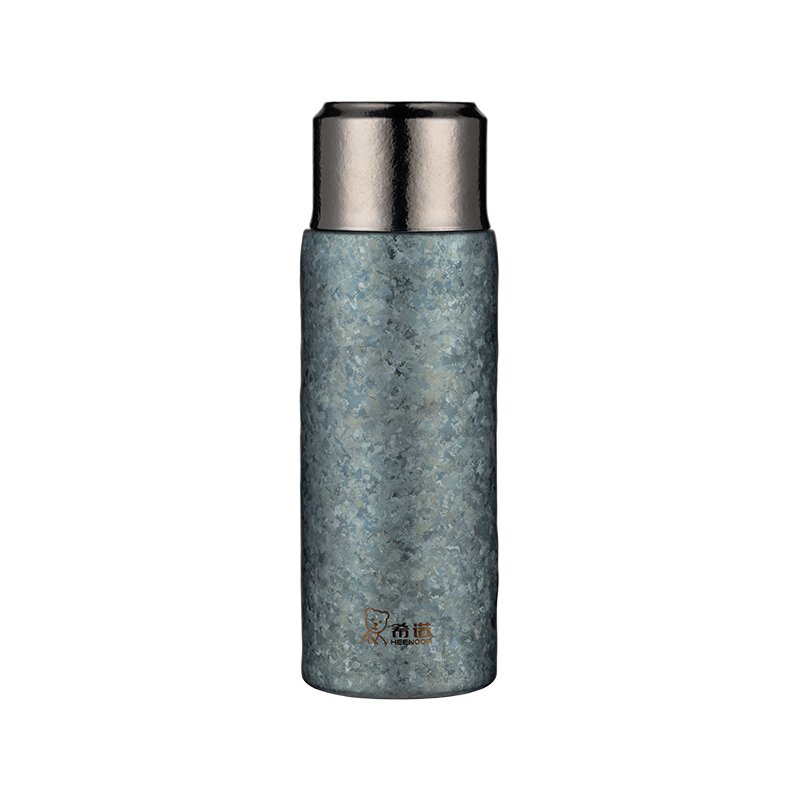
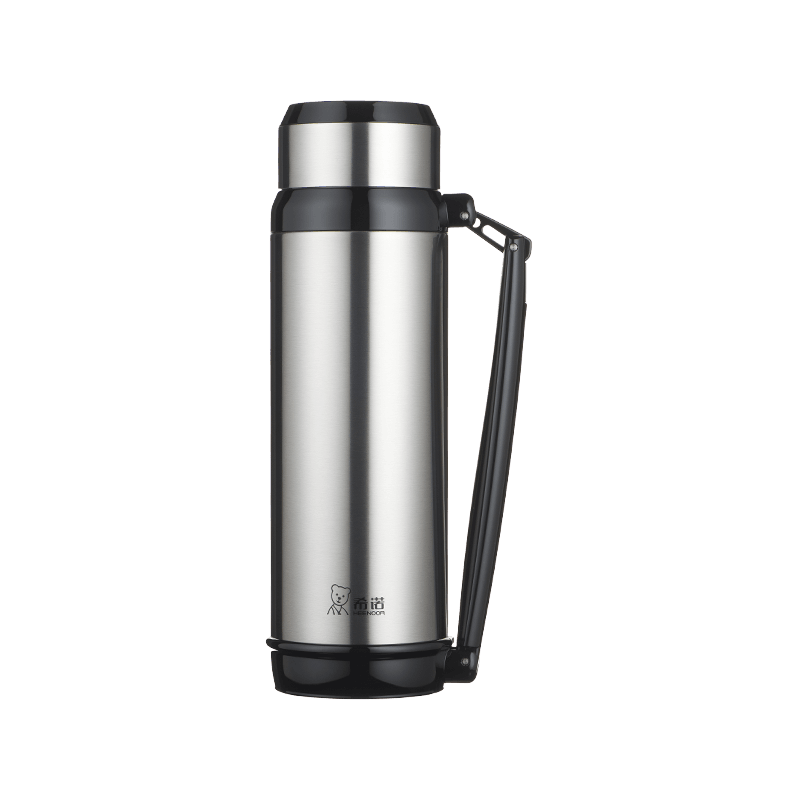
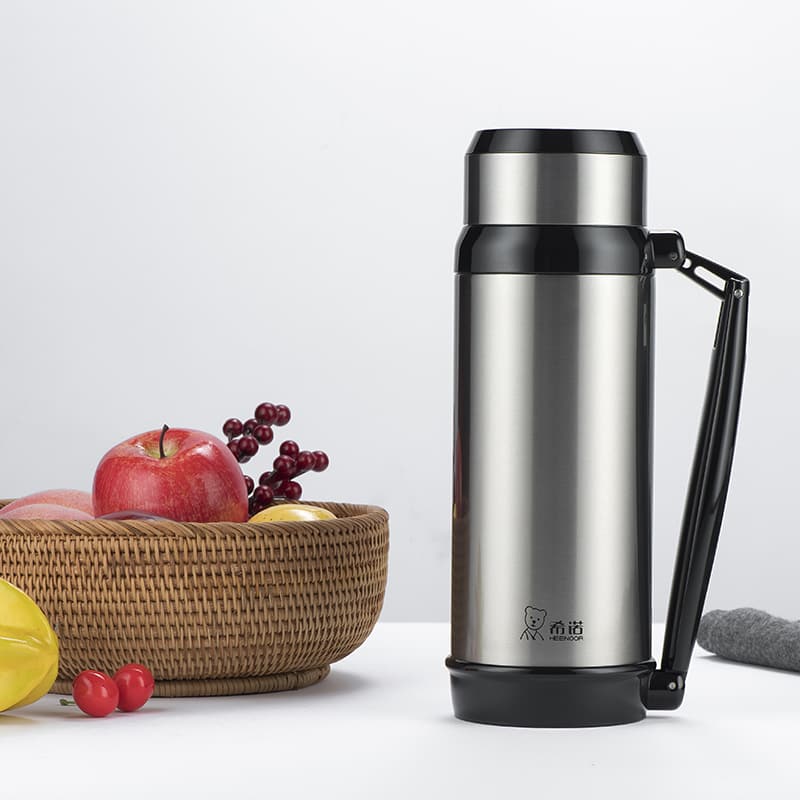
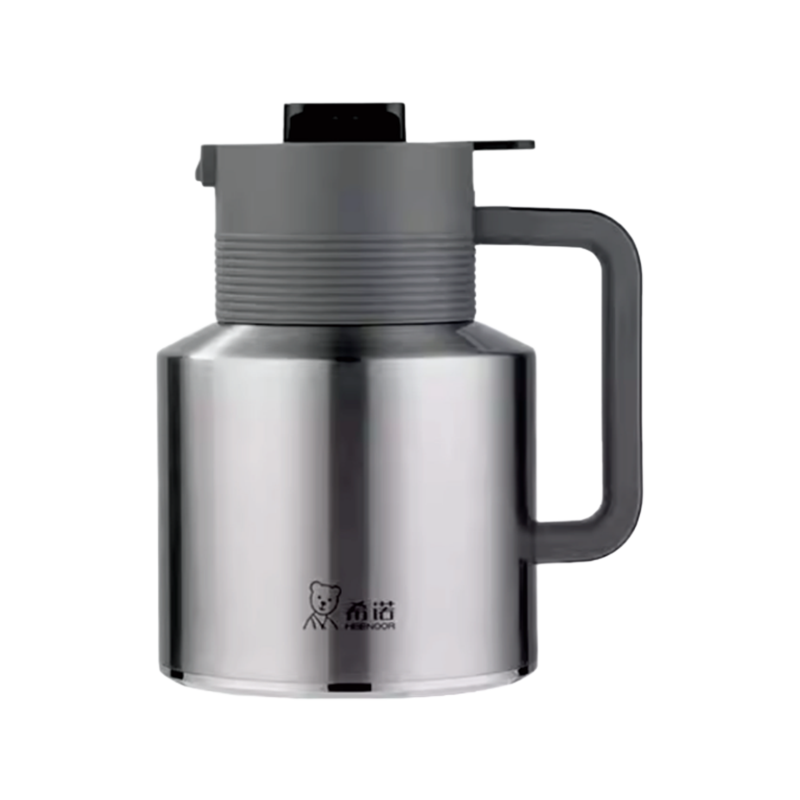
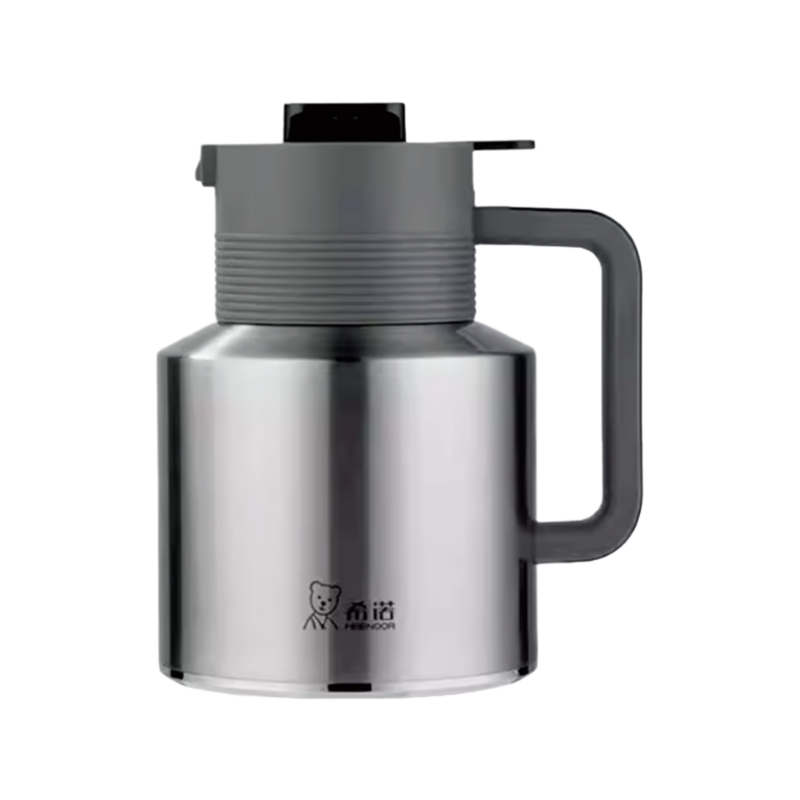
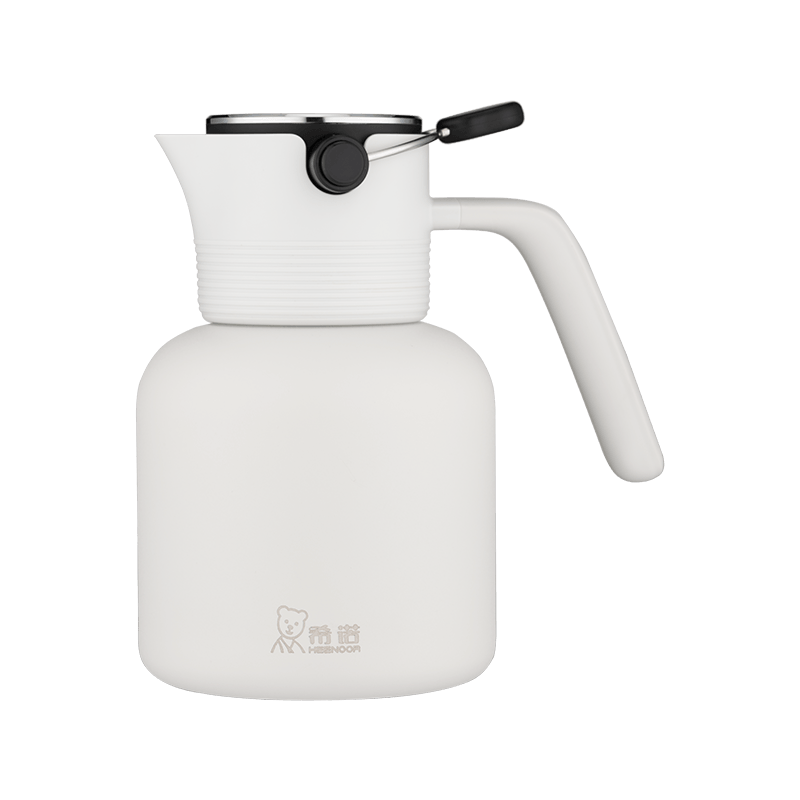
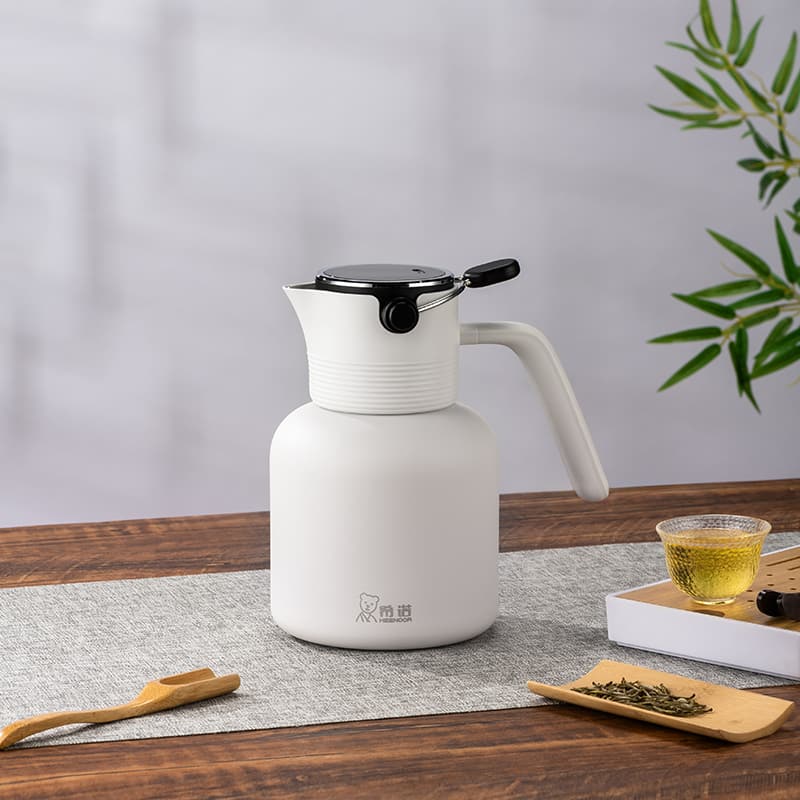
This matters differently depending on the product. A Stainless Steel Outdoor Travel Kettle Handheld Kettle goes through more frequent, sharper temperature swings than a stationary home kettle — filled with near-boiling water, carried in a cold pack, then reheated again within the same day — so shell material mismatch shows up faster in cycling fatigue than it would in a kettle used once or twice daily at home. An Anti-scald Home Stainless Steel Kettle carries a different consideration: the outer anti-scald layer, whether a secondary steel shell or a bonded composite layer, has to maintain its bond to the inner shell through the same cycling stress, and a mismatched expansion rate there can eventually cause delamination at the bonding interface rather than a vacuum leak.
Heenoor Co., Ltd. specifies matched-grade steel across inner and outer shells for its stainless steel vacuum kettle lines rather than allowing grade substitution between the two layers, since the cost saved on a lower-grade inner liner tends to surface later as warranty claims tied to seam stress rather than as a visible defect at the point of shipment.
| Shell Pairing Approach |
Cycling Stress Behavior |
Typical Failure Point If Mismatched |
| Matched grade (304/304 or 316/316) |
Even expansion, predictable seam stress |
Rare, seam holds through repeated cycling |
| Mixed grade (304 outer, lower-grade inner) |
Uneven expansion rates between shells |
Seam stress concentration, gradual warping or vacuum loss |
How Steel Grade Claims Actually Get Verified
A quotation that lists "304 stainless steel" doesn't carry much weight on its own, since grade claims are easy to state and harder to confirm without asking for supporting documentation. Mill test certificates, issued by the steel coil producer rather than the kettle manufacturer, list the actual chemical composition of a given coil batch — chromium and nickel content specifically, since these are what distinguish 304 from lower-grade substitutes that sometimes get passed off under the same label. A buyer can request these certificates and cross-check the batch number against the coil actually used in production, though this only works if the supplier maintains batch-level traceability from raw coil to finished kettle in the first place.
Beyond paperwork, a magnet test offers a rough field check — genuine 304 stainless steel is largely non-magnetic or only weakly magnetic due to its austenitic structure, while some lower-grade substitutes with different nickel content respond more strongly to a magnet. This isn't a precise test and can give false readings depending on how the steel was cold-worked during forming, but it's a quick way to flag an obvious substitution before committing to a full lab analysis. For buyers running larger volume programs, sending sample coupons to a third-party lab for X-ray fluorescence (XRF) testing gives a more reliable composition readout, confirming chromium and nickel percentages against the claimed grade rather than relying on the magnet check alone.
Heenoor Co., Ltd. provides mill certificates alongside batch traceability records for its stainless steel vacuum kettle production, allowing procurement teams to confirm grade claims against the specific coil lot used for a given order rather than relying on a general material statement on the quotation sheet.
| Verification Method |
What It Confirms |
Practical Limitation |
| Mill test certificate |
Chemical composition of the specific coil batch |
Only useful if batch traceability is maintained through production |
| Magnet field test |
Rough indication of alloy type |
Not precise, can be affected by cold-working during forming |
| Third-party XRF lab analysis |
Accurate chromium and nickel composition |
Adds cost and lead time, best suited to larger volume orders |
Where These Two Questions Meet in Practice
Shell material pairing and grade verification aren't separate concerns — a matched-grade shell pairing only holds up if the grade being matched is actually what the mill certificate claims it to be. A supplier who substitutes a lower-grade inner liner to cut cost is also, by definition, breaking the shell-pairing consistency that protects a stainless steel vacuum kettle from seam stress over its cycling lifespan, whether that kettle ends up as a Stainless Steel Outdoor Travel Kettle Handheld Kettle carried daily in a bag or an Anti-scald Home Stainless Steel Kettle sitting on a kitchen counter. Requesting traceable mill certification isn't just a paperwork formality — it's the practical way a buyer confirms that the shell pairing they were quoted is the shell pairing actually running through production.

 English
 中文简体
中文简体 日本語
日本語 Español
 عربى
عربى Vacuum Flask/Water Bottle