Keeping a Multi-Piece Titanium Set Dimensionally Consistent Across Different Item Shapes
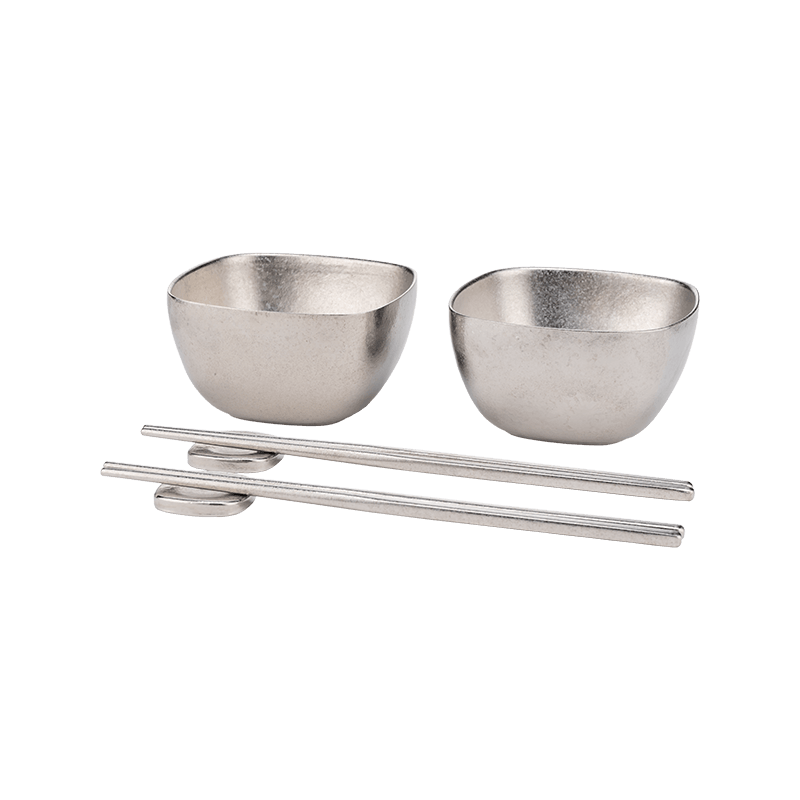
A bowl, a plate, and a cup in the same Titanium Tableware Set rarely go through identical tooling paths, and that is precisely where dimensional drift tends to creep in. Each item shape responds differently to the same forming pressure, draw depth, and blank size, so keeping them aligned to a shared design tolerance requires more coordination than simply running each part on its own die schedule.
Why Different Item Shapes Drift at Different Rates
A shallow plate and a deep bowl experience different amounts of material stretch during forming, even when cut from the same gauge titanium sheet. The plate, with its lower draw ratio, tends to hold dimension closely to the die cavity, while the bowl — pulled to a greater depth — is more prone to springback variation at the rim. Left unmanaged, this means a set shipped together can show a plate that measures within a tight band and a bowl that drifts slightly wider at the opening, which becomes visible once the pieces are nested or displayed side by side.
Shared Reference Points Across Tooling
One practical response is to anchor every die in the set to a common reference datum — typically the base diameter or a fixed rim height — rather than treating each item's tooling as an independent design exercise. When rim height, foot diameter, and wall angle are locked to the same reference system across bowl, plate, and cup dies, dimensional variation between pieces stays within a range that does not disrupt stacking or visual pairing, even though each shape still carries its own forming characteristics.
| Item Type |
Typical Drift Risk |
Control Point |
| Shallow plate |
Low, minor rim flatness variation |
Blank centering, press tonnage consistency |
| Deep bowl |
Moderate, rim diameter springback |
Overbend allowance in die design |
| Cup or mug body |
Moderate, base-to-rim taper variation |
Multi-stage draw with intermediate sizing pass |
| Lid or cover piece |
High, fit tolerance against multiple bodies |
Matched-fit sampling against production bodies |
Sampling frequency also shifts depending on which item in the set carries the highest drift risk. A lid that has to seat correctly across several body variants gets checked more frequently than a flat plate, since a fit issue on the lid becomes apparent to the end user immediately, while a slight rim variation on a plate is far less noticeable in daily use. Heenoor Co., Ltd. applies this kind of risk-weighted sampling when running multi-piece titanium programs, adjusting inspection frequency by item rather than applying one uniform check interval across an entire set.
Cross-Piece Verification Before a Set Ships as a Unit
Dimensional consistency checked on individual pieces does not always guarantee that a complete set assembles or nests correctly. Some factories run a final cross-piece verification — physically stacking or nesting a sample set pulled from the current production run — to confirm that variation within individual tolerance bands does not compound into a visible mismatch once pieces are placed together. This step catches issues that a single-item inspection routine would miss entirely, since a bowl and a lid can each pass their own tolerance check while still not seating cleanly against each other.
Protecting a Titanium Tableware Set Through the Packaging Stage
Titanium resists denting better than thinner-gauge stainless steel, but a polished or anodized surface on a Titanium Tableware Set is still vulnerable to scuffing, and a lid or handle attachment can still be knocked out of alignment during rough handling in transit. Packaging protection for titanium tableware is less about preventing structural failure and more about preserving surface finish and item-to-item fit through a supply chain that involves multiple handling points.
Surface Protection Comes Before Structural Protection
Because anodized color on titanium comes from an oxide layer rather than a paint coating, even light surface abrasion during shipping can produce a visible scuff that alters the perceived color at that spot. Individual pieces are typically wrapped in a soft, low-abrasion material — often a microfiber or felt-like sleeve — before being placed into any structural packaging, since direct contact between polished or anodized titanium surfaces during transit is one of the more common causes of cosmetic damage claims.
Nested Item Separation Inside the Carton
When a set includes stacking pieces such as bowls or plates, molded pulp trays or die-cut foam inserts are shaped to hold each piece in a fixed position, preventing pieces from shifting and rubbing against each other during transport vibration. This separation matters more for a multi-piece set than for a single item, since stacked pieces that shift even slightly can create rim-to-rim contact points that scuff the finish over a long shipping distance, particularly on ocean freight routes where transit time runs into weeks.
| Risk During Transit |
Packaging Response |
| Surface scuffing between nested pieces |
Individual soft sleeves plus molded tray separation |
| Carton compression under stacking |
Reinforced outer carton rated for stacked pallet load |
| Lid or handle misalignment from shock |
Fitted foam cutout locking lid position against the body |
| Moisture exposure during ocean freight |
Desiccant packs and sealed inner poly bagging |
Testing Packaging Before It Reaches Full Production Volume
Rather than finalizing a packaging design on assumption, drop testing and vibration simulation on a loaded carton reveal where movement occurs inside the box before a full shipment goes out. A carton that appears secure when packed by hand can still allow enough movement under simulated transit vibration to cause rim contact between pieces, which is typically caught by running a sample carton through a vibration table test and inspecting for scuff marks or shifted inserts afterward. Heenoor Co., Ltd. treats this kind of packaging validation as part of the broader production framework for a Titanium Tableware Set, since a well-formed piece that arrives scuffed or misaligned creates the same customer complaint as a manufacturing defect, even though the root cause sits entirely in the packaging stage rather than in forming or finishing.

 English
 中文简体
中文简体 日本語
日本語 Español
 عربى
عربى Vacuum Flask/Water Bottle