 English
 中文简体
中文简体 日本語
日本語 Español
 عربى
عربى
Search
Categories
Recommend
Categories
 Company news
Recommend
-
 Industry news
 -
 Industry news
 -
 Industry news
 -
 Industry news
Oct 16, 2026 - By admin
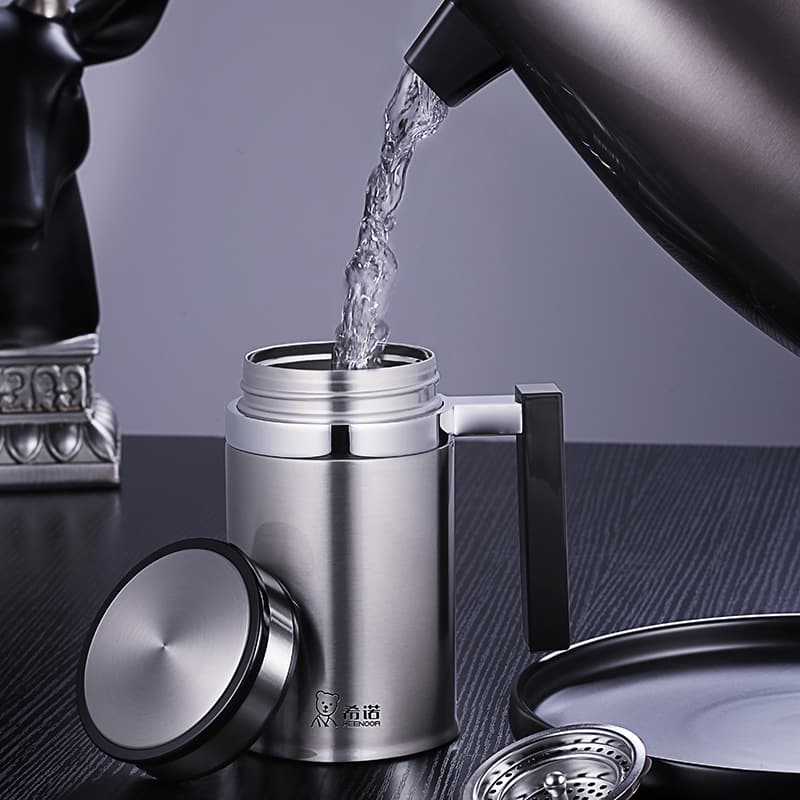 Business Office Handle Stainless Steel Vacuum FlaskA 480ml office flask with 304 stainless steel interior, lotus filter, leak-resistant silicone seal, and reinforced handle for desk-to-meeting-room carrying.View Product →
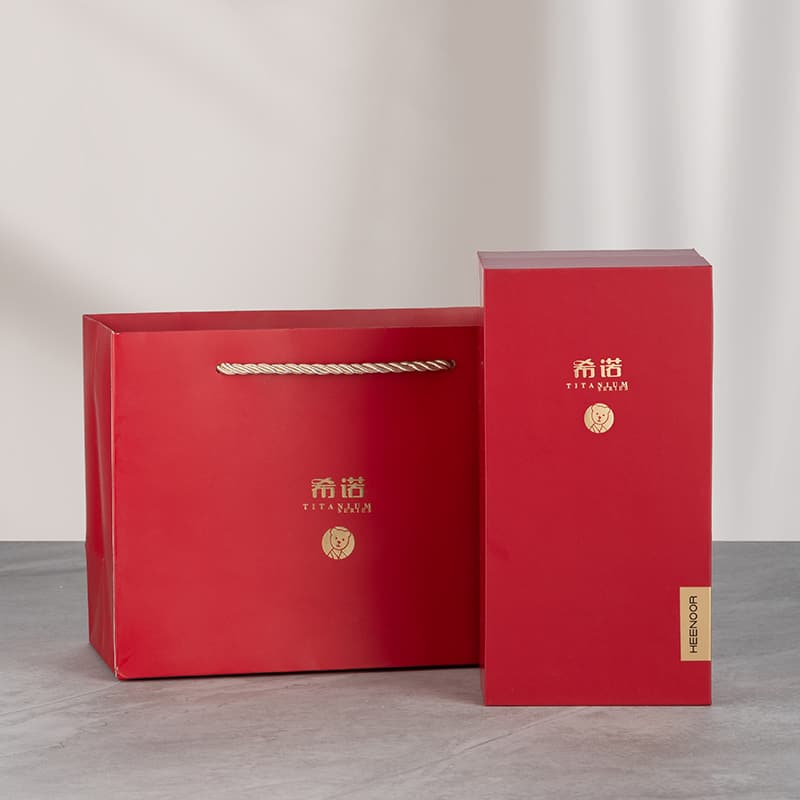 Pure Titanium Portable Vacuum FlaskA lightweight TA1 titanium flask with double-wall vacuum insulation, lotus filter, and leak-resistant seal for tea, commuting, travel, or gifting.View Product →
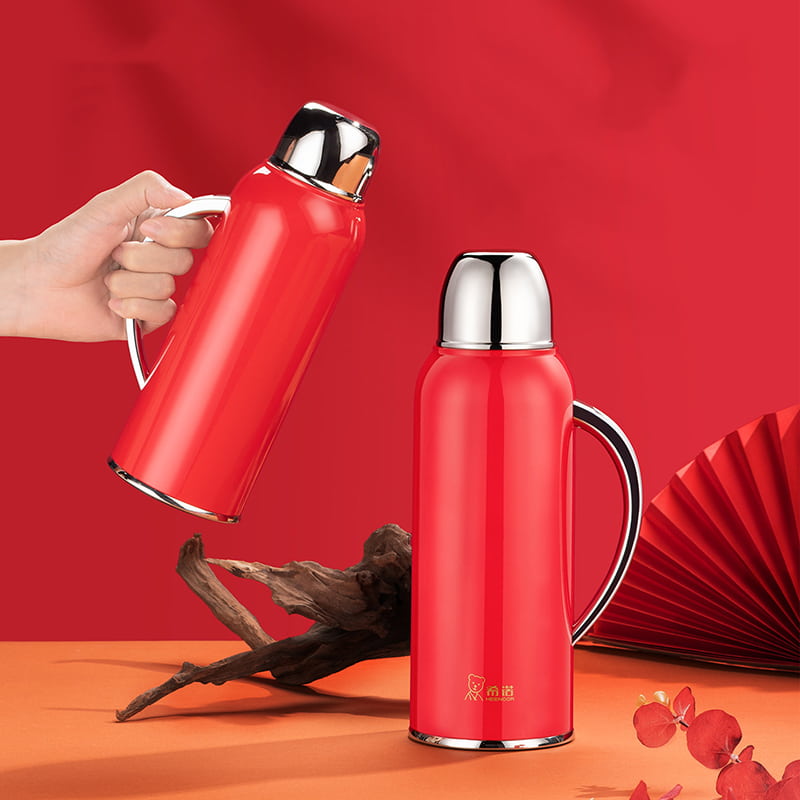 Anti-Scald Home Stainless Steel Vacuum KettleA 316L stainless steel vacuum kettle with dual-rotation inner lid and magnetic outer lid, built for gongfu tea and slow office refills.View Product →
How Do Insulated Cups Work? The Science of Vacuum Insulation Explained
Content
- 1 What Makes a Cup "Insulated"?
- 2 The Three Ways Heat Moves
- 3 How the Vacuum Handles Each One
- 4 Why Stainless Steel Became the Standard
- 5 Comparing the Common Materials
- 6 Hot Drinks and Cold Drinks Are Not Quite the Same Problem
- 7 The Lid Does More Work Than People Expect
- 8 How Long Should You Expect a Drink to Last?
- 9 What to Look For When You Buy
- 10 The Same Physics in a Kettle
- 11 Questions We Get Asked a Lot
Insulated cups have a way of making physics feel like a small everyday miracle. You pour coffee in at seven in the morning, drop the cup into a bag, sit through a meeting, and the drink is still hot enough to steam at lunchtime. Nothing was plugged in, nothing was reheated, and the outside of the cup never even felt warm.
There is no trick to it. There is one very simple idea, executed very carefully: leave empty space between your drink and the outside world, then make sure heat has no practical way to cross that space. Once you understand how that works, the difference between a cheap tumbler and a properly built vacuum flask stops being marketing talk and starts being obvious.
What Makes a Cup "Insulated"?
Insulated drinkware comes in two families, and the distinction matters more than most shoppers realise.
A double-walled cup has two layers of material with an air gap between them. Trapped air is a reasonable insulator, because air conducts heat far more slowly than metal does, but it is not nothing. Given an hour or two, heat will find its way across that gap.
A vacuum-insulated cup takes the same structure and removes the air from the gap entirely. What remains between the two walls is, for practical purposes, nothing at all. Heat cannot move through a vacuum by conduction or convection, so the only route left is radiation, and that is dealt with separately. We will get to that in a moment.
The Three Ways Heat Moves
Before looking at how a vacuum flask defeats heat transfer, it helps to know the three routes heat takes to get from one place to another.
- Conduction - heat travels straight through a solid material, the way a metal spoon handle warms up while it sits in a pot of soup.
- Convection - heat travels with a moving fluid. Warm liquid rises, cool liquid sinks, and the resulting loop keeps circulating energy.
- Radiation - heat travels as infrared waves, which is why you can feel warmth from a fire without touching it.
A well-designed insulated cup has an answer for all three.
How the Vacuum Handles Each One
Start with conduction. The inner wall touches your drink, so heat does flow into that first thin layer of steel. But the path stops there. The vacuum gap behind it has almost no thermal conductivity, so there is nothing for the heat to travel through. In a good flask the conduction route is effectively severed at the inner wall.
Convection is handled by the same gap. With no air inside, there is no fluid to rise, sink and circulate, so the second route never opens.
That leaves radiation. Infrared waves do not need a medium, so they would happily cross an empty gap. This is why the inner surfaces of most good vacuum flasks are given a thin copper coating. Copper has very low emissivity, meaning it reflects infrared energy back toward the drink instead of letting it radiate away. It is a small detail that makes a noticeable difference over several hours.
The vacuum itself is created during manufacturing: the two walls are sealed while the space between them is evacuated, and the seal at the base is finished so it is invisible from the outside. From that point on, the cup is a closed system that is extremely hard for heat to escape.
Why Stainless Steel Became the Standard
Walk through any drinkware catalogue and the same answer keeps appearing: 304 stainless steel, often written as 18/8. That is not an arbitrary choice.
Stainless steel conducts heat poorly compared with copper or aluminium, so less energy leaks around the edges of the vacuum gap. It is strong enough to hold a thin double wall without denting the first time it is knocked over. It does not react with coffee, tea or citrus, so there is no metallic aftertaste and no corrosion on the inside surface. It also welds and polishes cleanly into the seamless shapes you see in a finished flask.
That is the theory. In practice it looks like a double-walled steel body, an evacuated gap, a tight lid and an outer surface that stays comfortable to hold even with a fresh brew inside.
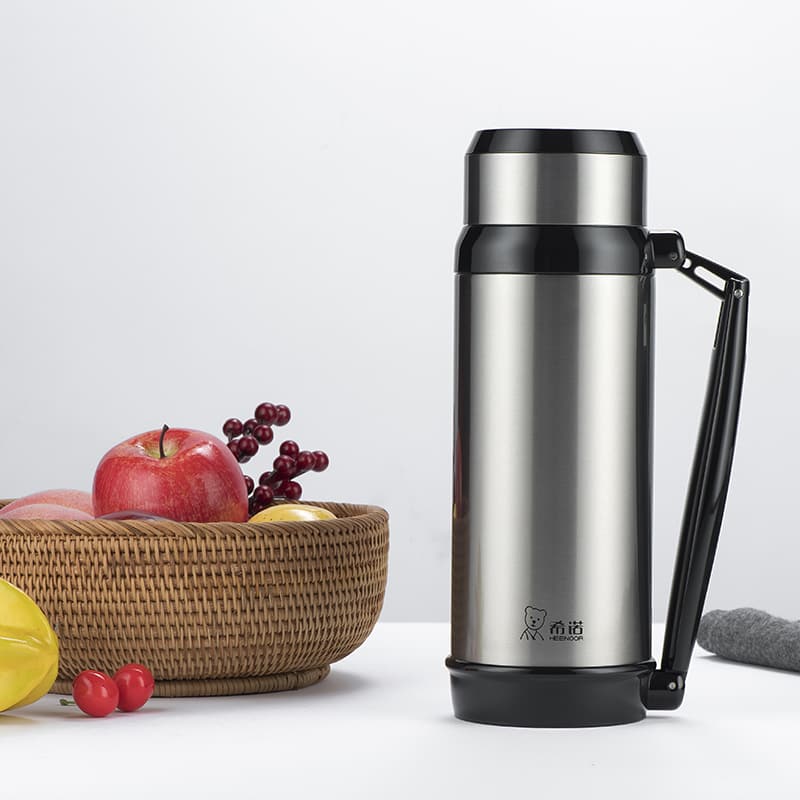
If you want a concrete example of the principle applied to something you would actually carry to work, this office flask is a fair illustration: two steel walls, a vacuum between them, and a handle that keeps it easy to move between desk and meeting room.
Business Office Handle Stainless Steel Vacuum FlaskA 480ml office flask with 304 stainless steel interior, lotus filter, leak-resistant silicone seal, and reinforced handle for desk-to-meeting-room carrying.View Product →Comparing the Common Materials
Once you know that a vacuum matters more than wall thickness, it becomes easier to read a product page. The table below sets out how the usual materials compare.
| Material | How it insulates | Hot drinks | Cold drinks | Worth knowing |
|---|---|---|---|---|
| Vacuum stainless steel | Vacuum sealed between two steel walls | 8-12 hours | 12-24 hours | The everyday standard |
| Vacuum titanium | Vacuum sealed between two titanium walls | 6-10 hours | 10-20 hours | Lighter, neutral taste, higher price |
| Double-wall glass | Trapped air between two glass layers | 1-2 hours | 2-4 hours | Pleasant to hold, fragile |
| Double-wall plastic | Air gap or foam layer | 1-2 hours | 2-3 hours | Light and inexpensive |
| Single-wall glass or ceramic | None | 15-30 minutes | 30-60 minutes | Easy to clean, no insulation to speak of |
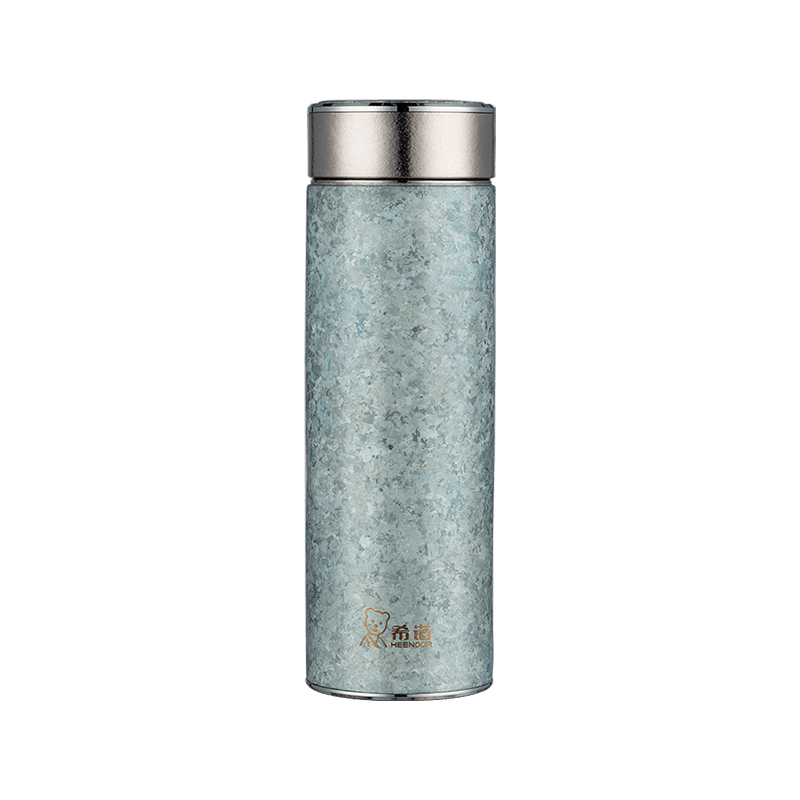
Titanium is the material people ask about most often. It insulates on exactly the same principle, but the metal itself is noticeably lighter and completely inert, which is why it has become popular for tea drinkers who care about taste. A portable titanium flask shows the trade-off clearly: slightly less raw retention than a thick steel body, considerably less weight in your bag.
Pure Titanium Portable Vacuum FlaskA lightweight TA1 titanium flask with double-wall vacuum insulation, lotus filter, and leak-resistant seal for tea, commuting, travel, or gifting.View Product →Hot Drinks and Cold Drinks Are Not Quite the Same Problem
Keeping coffee hot and keeping water cold use the same vacuum, but the details differ.
With hot drinks, heat is trying to leave. A quick fill with boiling water, swirled and poured out before you add your coffee, warms the inner wall so the flask is not spending its first twenty minutes heating itself. Filling the cup close to the top also helps, because it leaves less air space for convection inside the drink chamber.
With cold drinks, heat is trying to get in, and ice adds a buffer: melting ice absorbs a large amount of energy before the temperature starts to climb. Cold drinks also tend to last longer than hot ones in the same flask. If the outer wall turns cold and starts to sweat, that is usually a sign the vacuum has been compromised rather than a sign the drink is especially cold.
The Lid Does More Work Than People Expect
A vacuum flask is only as good as the hole at the top of it. A screw lid with a silicone gasket closes that hole properly; a loose press-fit lid or a wide drinking opening lets heat pour straight out through the air. Roughly speaking, a vacuum flask without its lid performs about as well as a single-walled cup.
This is also why travel mugs with narrow sipping openings hold temperature longer than wide tumbler lids, and why a flask that has been left open on a desk all morning feels disappointing. If your drink is cooling faster than you expected, check the gasket before you blame the vacuum.
How Long Should You Expect a Drink to Last?
| Vessel | Hot drink | Cold drink |
|---|---|---|
| Vacuum flask with screw lid, preheated | 8-12 hours | 12-24 hours |
| Vacuum tumbler with sliding lid | 3-5 hours | 6-10 hours |
| Vacuum travel mug with sip lid | 2-4 hours | 4-8 hours |
| Double-wall glass with lid | 1-2 hours | 2-3 hours |
What to Look For When You Buy
Most of the specification sheet is noise. These few things are not.
- Confirm the construction. "Double wall" and "vacuum insulated" are not the same claim, and only one of them will still be working after two hours.
- Check the lid seal. A removable silicone gasket that can be washed is a sign the lid was designed to be maintained rather than replaced.
- Think about the opening. A wide mouth is easier to fill with ice and easier to clean; a narrow mouth holds heat better but needs a brush.
- Match capacity to use. A 500 ml cup you carry every day beats a 1.5 litre flask you leave at home.
- Preheat or prechill before you rely on it, especially on the first outing.
If you are shopping for a larger vessel rather than a cup, the same logic applies with a few extra considerations such as spout design and pouring comfort. We wrote a more detailed walkthrough on how to choose a vacuum insulated kettle if that is the direction you are heading.
The Same Physics in a Kettle
Nothing about the vacuum principle changes when you scale the vessel up. A kettle is still two walls with an evacuated gap between them, still relying on a lid or a closed spout to stop warm air escaping through the top. The differences are practical: there is more liquid to keep warm, the handle has to stay cool with a heavier body, and the pouring action has to work without letting heat stream out of an open mouth.
A home kettle built on this principle keeps a full pot of tea at drinking temperature through an afternoon of slow refills, which is the situation most households actually care about.
Anti-Scald Home Stainless Steel Vacuum KettleA 316L stainless steel vacuum kettle with dual-rotation inner lid and magnetic outer lid, built for gongfu tea and slow office refills.View Product →Questions We Get Asked a Lot
Does a thicker wall keep drinks hotter?
Not directly. Thickness helps with durability and with slowing conduction through the steel itself, but the vacuum gap is doing almost all of the work. A thin-walled flask with a good vacuum will outperform a heavy one with a poor seal.
Why does my flask feel warm on the outside?
It should not. A warm outer wall usually means heat is crossing the gap, either because the vacuum has failed or because the lid is leaking warm air around the edge.
Can I put fizzy drinks in a vacuum flask?
It is possible but not ideal. Pressure builds inside a sealed vessel, and the gaskets used in most drinkware are designed for still liquids. Coffee, tea and water are the safe everyday choices.
Is titanium worth the extra cost?
If weight and taste matter to you, yes. If you mainly want maximum retention for the lowest price, stainless steel remains the sensible answer.
Everything above comes from people who spend their working lives on this subject. Heenoor has been manufacturing drinkware since 1999, and over that time we have kept design, engineering validation, tooling and production inside one operation, which is how a small detail like a copper coating or a lid gasket actually survives from drawing board to finished goods.
We build vacuum flasks, titanium cups, kettles and tableware for brands, organisations and procurement teams who need the same result in the ten-thousandth unit as in the first. If you are developing your own line, our work on custom stainless steel cups is a reasonable place to start, and we are always happy to talk through the insulation side of a design before anything is cut.
You may also like…
Copyright © 2025 Heenoor Co., Ltd. All Rights Reserved.
 Custom Stainless Steel Drinkware Manufacturers
BACK TOP