 English
 中文简体
中文简体 日本語
日本語 Español
 عربى
عربى
Search
Categories
Recommend
Categories
 Lin Yuxi — International Product Sales Manager
Recommend
-
 Industry news
 -
 Industry news
 -
 Industry news
 -
 Industry news
Sep 08, 2026 - By admin
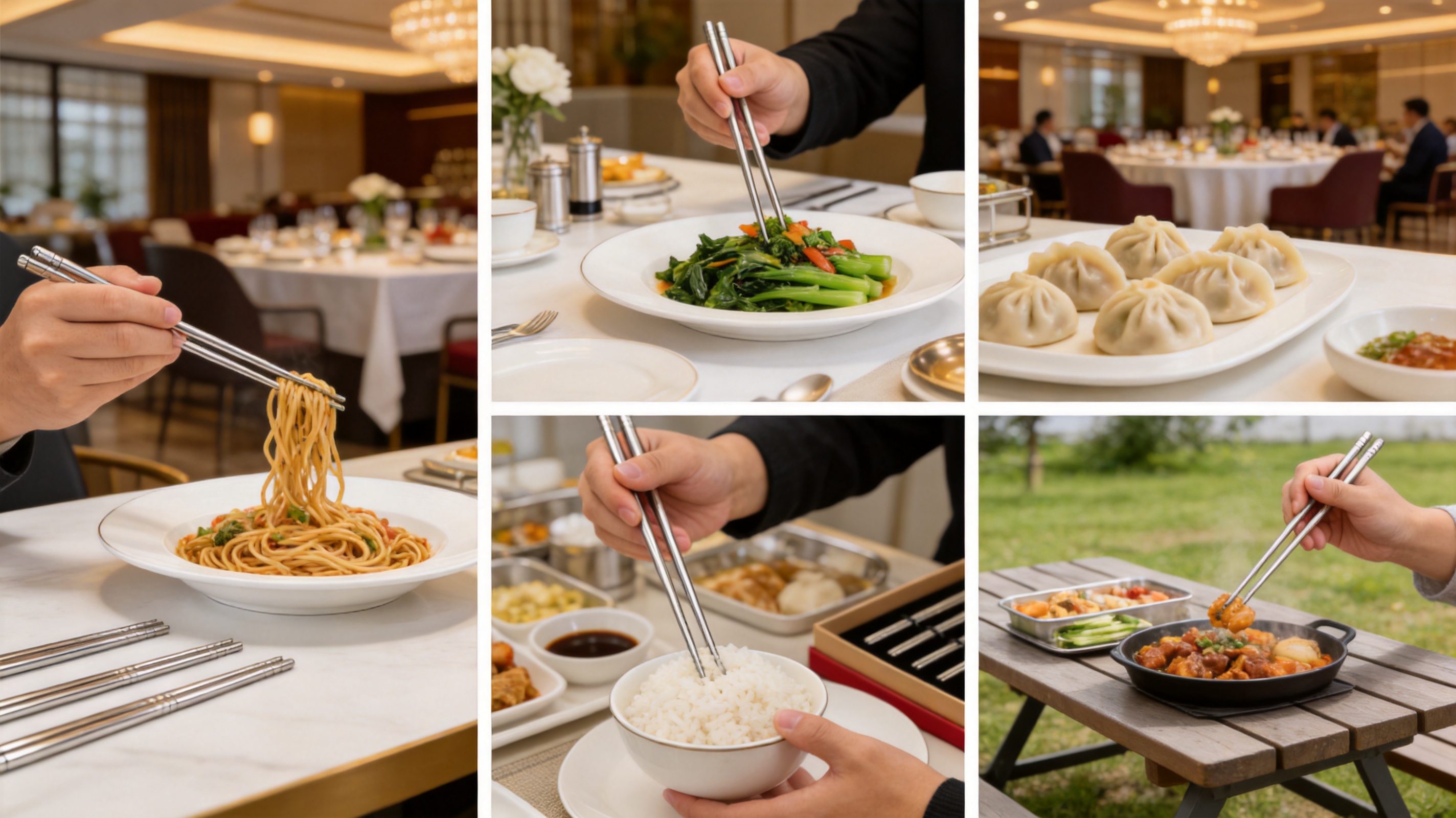

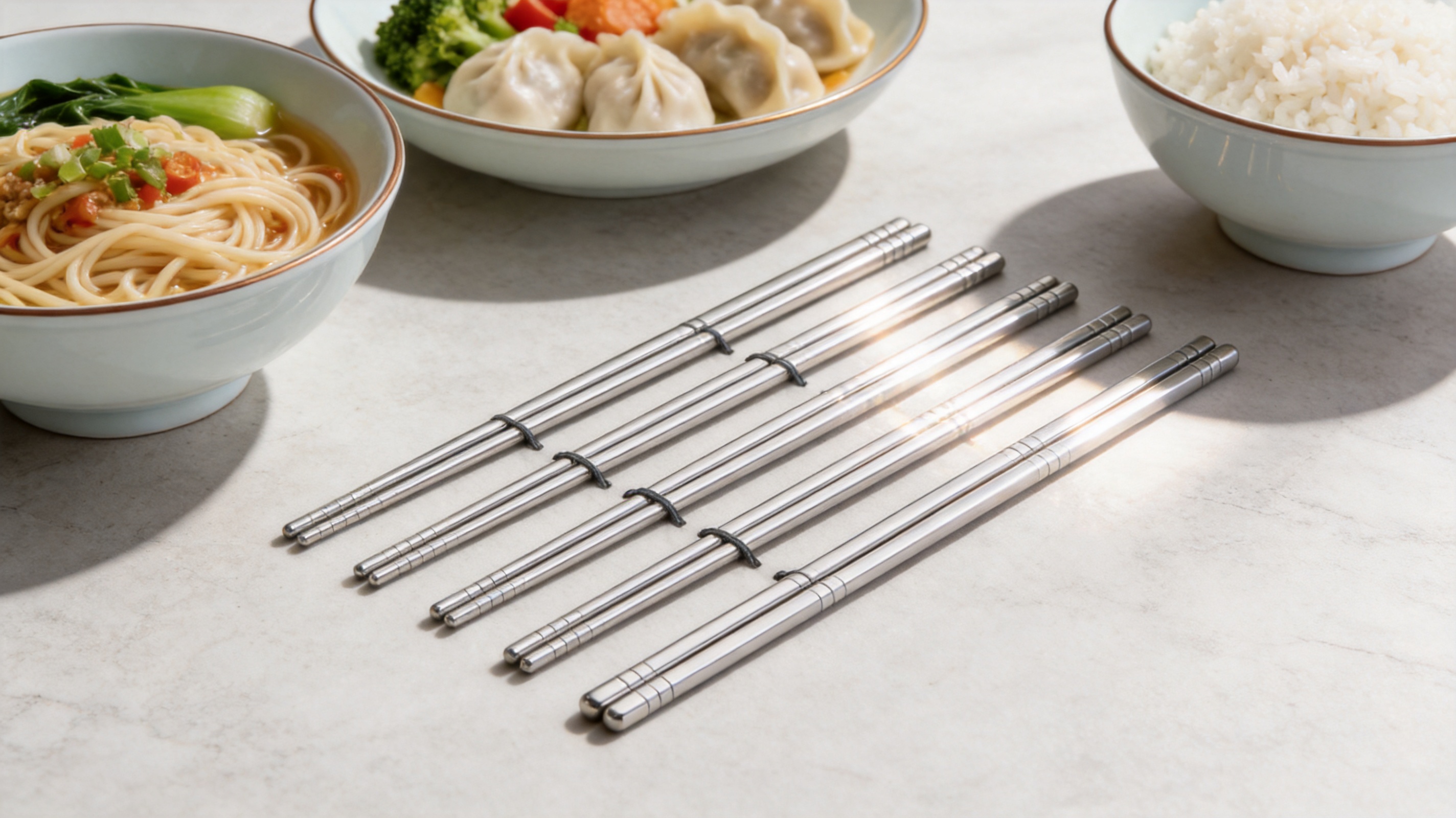
304 Stainless Steel Chopstick Sets: Durable, Hygienic, and Manufacturing-Ready Tableware
Content
- 1 Product Overview and Core Construction
- 2 Material Advantages of 304 Stainless Steel
- 3 Comparison with Other Chopstick Materials
- 4 Design Details That Improve Everyday Use
- 5 Advanced Manufacturing and Process Control
- 6 Why Manufacturing Capability Matters to Wholesale Buyers
- 7 Applications Across Different Markets
- 8 Cleaning, Use, and Care Recommendations
- 9 Quality Considerations for Product Selection
- 10 Customization and Product Program Development
- 11 Environmental and Lifecycle Considerations
- 12 Commercial Advantages for Brands and Procurement Teams
- 13 Frequently Asked Questions
- 13.1 What material are these chopsticks made from?
- 13.2 How long are the chopsticks?
- 13.3 Are the chopsticks painted or wax-coated?
- 13.4 Do the chopsticks have an anti-slip design?
- 13.5 Are stainless steel chopsticks suitable for dishwashers?
- 13.6 Are stainless steel chopsticks better than wooden or bamboo chopsticks?
- 13.7 Can the chopsticks be used with hot food?
- 13.8 Are the edges comfortable?
- 13.9 What types of businesses can use this product?
- 13.10 Can the product be customized?
- 13.11 What should buyers inspect before placing a large order?
- 13.12 Why is manufacturing integration important?
- 14 Conclusion
- 15 References
- 16 Product: Stainless Steel Chopstick Sets
Stainless steel chopsticks have become an increasingly practical choice for households, restaurants, hospitality businesses, catering companies, institutional kitchens, and outdoor dining applications. They combine the familiar function of traditional chopsticks with the durability, cleanliness, and long service life expected from modern tableware. Among the available materials, 304 stainless steel is especially valued because it offers a balanced combination of corrosion resistance, structural strength, heat tolerance, and ease of maintenance.
This stainless steel chopstick set is designed for users who want dependable daily tableware without the maintenance concerns associated with wood, bamboo, painted surfaces, or fragile ceramic alternatives. Manufactured from high-quality 304 stainless steel, the chopsticks feature a solid one-piece structure, a carefully polished surface, rounded edges, and anti-slip grooves at the tips. These details support a stable grip while helping the product remain attractive and functional after repeated use.
The product measures 23.9 centimeters in length, providing a practical balance between reach, control, and comfort. Its classic Chinese design reflects the traditional “round heaven and square earth” concept while applying modern manufacturing techniques to improve usability. Through multiple grinding and polishing processes, the surface becomes smooth and refined, and the ends are shaped to reduce discomfort during dining.
For buyers, the value of this product extends beyond the finished chopsticks. A successful tableware program also depends on material consistency, process control, scalable production, quality management, and reliable project communication. Heenoor Co., Ltd. supports these requirements through integrated product development and industrial manufacturing capabilities. The company combines product design, engineering validation, tooling development, standardized production, and quality management to support large-volume drinkware and tableware programs.
This article examines the construction, performance, competitive advantages, production process, customization potential, and commercial applications of 304 stainless steel chopstick sets. It also explains why stainless steel is a strong alternative to other common chopstick materials and how a disciplined manufacturing partner can help buyers create dependable products for their own markets.
Stainless Steel Chopstick Sets
Product Overview and Core Construction
The chopstick set is made from 304 stainless steel, a widely used material for food-contact products, kitchenware, hospitality equipment, and reusable tableware. The material is selected for its practical balance of durability and corrosion resistance. When properly formed, finished, cleaned, and maintained, 304 stainless steel can withstand regular exposure to food, moisture, washing, and elevated temperatures without the rapid deterioration commonly associated with lower-durability materials.
The chopsticks use a solid one-piece construction. This means the product does not depend on glued joints, painted layers, decorative sleeves, or separate components that may loosen during long-term use. A solid structure gives the chopsticks a stable feel in the hand and helps reduce the risk of cracking, separation, or deformation. It also simplifies cleaning because there are fewer seams or recessed areas where food particles and moisture could collect.
The 23.9-centimeter length is suitable for everyday meals and commercial dining environments. It provides enough reach for use with bowls, plates, shared dishes, and serving containers while remaining manageable for users who prefer a controlled grip. The weight and balance of stainless steel also contribute to a solid tactile experience. Unlike very light wooden or plastic chopsticks, stainless steel chopsticks can provide a more substantial, stable feel without becoming excessively bulky.
The surface is processed through multiple grinding and polishing stages. These operations are important because the quality of stainless steel tableware depends not only on the base material but also on the condition of its finished surface. A well-finished surface is smoother, easier to wipe and wash, and less likely to retain dirt in visible irregularities. The metallic luster also gives the product a clean and professional appearance suitable for homes, restaurants, hotels, offices, and premium gift or promotional programs.
The tip area includes anti-slip grooves. These grooves are designed to improve contact between the chopsticks and food, making it easier to pick up noodles, vegetables, meat, dumplings, and other dishes. The anti-slip structure is especially useful when handling foods with smooth or moist surfaces. Rather than relying only on the user’s finger pressure, the textured tip helps create a more secure interaction with food.
Material Advantages of 304 Stainless Steel
Material selection is one of the most important decisions in tableware development. A chopstick may appear simple, but its material must withstand repeated contact with food, water, cleaning agents, heat, impact, and daily handling. 304 stainless steel is well suited to these conditions when the product is manufactured and maintained correctly.
Corrosion Resistance
Stainless steel is valued for its ability to resist corrosion in ordinary dining and washing environments. Moisture, food residues, and regular cleaning can cause deterioration in unsuitable materials. 304 stainless steel offers a stronger level of resistance than many common metals and is less likely to rust under normal use when its surface is properly processed and cared for.
This characteristic is particularly beneficial for commercial kitchens and hospitality operations. Products in these settings may be washed many times each day and exposed to a wide range of food ingredients. Durable corrosion resistance helps extend product life and reduces the need for frequent replacement.
Heat Resistance
Stainless steel chopsticks are more resistant to heat than many wooden, bamboo, or plastic alternatives. They are less likely to soften, warp, or permanently deform when used with hot foods. Their solid metal construction also provides consistent performance in environments where high-temperature washing or disinfection is required.
Users should still follow the operating instructions of the cleaning equipment and avoid unnecessary exposure to extreme heat. However, compared with materials that can crack, burn, soften, or absorb moisture, stainless steel provides a dependable option for demanding daily use.
Strength and Dimensional Stability
The chopsticks are manufactured as a solid, stable product. This construction supports resistance to bending and deformation during normal dining. The material is also less vulnerable to the swelling and shrinking that can occur when wood or bamboo repeatedly absorbs and releases moisture.
Stable dimensions are important for consistent user experience. When chopsticks remain straight and properly aligned, users can control them more easily. For commercial buyers, dimensional stability also helps ensure that products maintain a uniform appearance across large orders.
Easy Cleaning
The smooth metallic surface is easy to clean by hand or through suitable dishwasher processes. Unlike porous materials, stainless steel does not absorb food liquids in the same way that untreated wood or bamboo can. The absence of paint and wax also reduces concerns about surface coatings wearing away during repeated cleaning.
Easy cleaning supports both convenience and hygiene management. In restaurants, cafeterias, hotels, and institutional facilities, tableware must move efficiently through washing and sanitation routines. A material that cleans quickly and consistently can help reduce labor and improve operational flow.
Long-Term Appearance
The polished stainless steel finish creates a bright, refined metallic appearance. With appropriate cleaning, the chopsticks can retain their visual appeal over an extended service life. Their neutral appearance also fits a wide range of table settings, from traditional Chinese dining to modern casual restaurants and professional catering events.
Because the finish is not dependent on a painted decorative layer, the product does not rely on surface color to communicate quality. Its appearance comes from the material and the polishing process itself. This gives buyers a durable visual identity that can be used across different hospitality and retail environments.
Comparison with Other Chopstick Materials
Different chopstick materials offer different user experiences. Wood, bamboo, plastic, ceramic, and stainless steel can all be suitable in particular situations, but their performance varies according to moisture exposure, cleaning requirements, heat, impact, and expected service life. Stainless steel is competitive because it combines several desirable characteristics in a single product.
Material |
Main Advantages |
Common Limitations |
Best-Suited Applications |
304 stainless steel |
Strong, corrosion-resistant, heat-resistant, easy to clean, durable |
May feel cooler or heavier than wood; can conduct heat |
Daily dining, restaurants, hotels, outdoor use, high-temperature cleaning |
Wood |
Lightweight, warm tactile feel, traditional appearance |
May absorb moisture, develop mold, stain, crack, or wear over time |
Short-term household use and traditional dining applications |
Bamboo |
Lightweight, renewable material image, natural appearance |
Can split, crack, absorb moisture, or require more careful maintenance |
Light-use dining and natural-style product programs |
Ceramic |
Decorative appearance, smooth surface, distinctive feel |
Can chip or break if dropped; generally less suitable for rough handling |
Decorative dining and premium presentation settings |
Plastic |
Lightweight, economical, available in many colors |
May soften, scratch, stain, or degrade depending on material and heat exposure |
Low-cost, lightweight, and promotional applications |
Wooden chopsticks can provide a pleasant natural feel, but their porous structure may require more careful drying and storage. If moisture remains on the surface or inside microscopic pores, the product may become vulnerable to odors, staining, or mold. Bamboo chopsticks can offer a similar natural appearance, but repeated exposure to moisture and washing may contribute to cracking or splitting.
Ceramic chopsticks may be visually distinctive, but their brittleness can be a disadvantage in busy dining environments. A dropped ceramic product may chip or break, creating safety and replacement concerns. Plastic chopsticks can be economical and colorful, but their performance depends heavily on the specific polymer, temperature range, surface quality, and cleaning process.
Stainless steel does not eliminate every consideration. Metal can conduct heat, and some users may prefer the warmer feel of wood. However, the product’s heat resistance, solid construction, smooth finish, and cleanability make it a practical choice where durability and sanitation are important priorities.
Design Details That Improve Everyday Use
Traditional Form with Modern Refinement
The design retains the visual and cultural character of classic Chinese chopsticks. The concept of “round heaven and square earth” has long been associated with the form of traditional chopsticks, combining a rounded upper section with a more defined and functional lower section. This product interprets that familiar design through stainless steel manufacturing, giving users a traditional silhouette with modern durability.
Design continuity can be valuable for restaurants and brands that want tableware to communicate cultural identity. The chopsticks can complement Chinese cuisine, pan-Asian dining, banquet service, hospitality collections, and gift sets. At the same time, their restrained metallic appearance allows them to fit contemporary table settings without appearing overly decorative.
Rounded Edges
Multiple rounds of polishing help refine the edges and reduce sharpness. Rounded edges improve comfort for users and make the product feel more finished in the hand. They also contribute to the perception of quality because the product does not feel rough, unfinished, or abrasive during normal use.
Edge treatment is a small but important detail in reusable tableware. A poorly finished edge can affect comfort, cleaning, and overall product acceptance. By incorporating repeated grinding and polishing, the manufacturing process addresses both functional and aesthetic requirements.
Anti-Slip Tip Grooves
The textured tips are designed to support food control. Smooth metal can sometimes be difficult to use with slippery foods, particularly for individuals who are accustomed to wood or bamboo. The grooves create additional surface interaction, helping users pick up food with less pressure and fewer repeated attempts.
The grooves must be manufactured with appropriate depth and consistency. If they are too shallow, they may provide limited benefit. If they are too deep or poorly finished, they could make cleaning more difficult. Controlled processing is therefore essential to achieve a balance between grip and hygiene.
Balanced Length and Weight
At 23.9 centimeters, the chopsticks are long enough for practical dining while remaining comfortable for controlled movement. Length affects leverage, reach, and hand position. A product that is too short may feel cramped, while one that is excessively long may feel difficult to control.
Stainless steel naturally provides a denser feel than many wooden or plastic alternatives. This can contribute to a stable grip, especially when the chopsticks are properly balanced. The result is a product that feels solid without requiring excessive force during use.
Advanced Manufacturing and Process Control
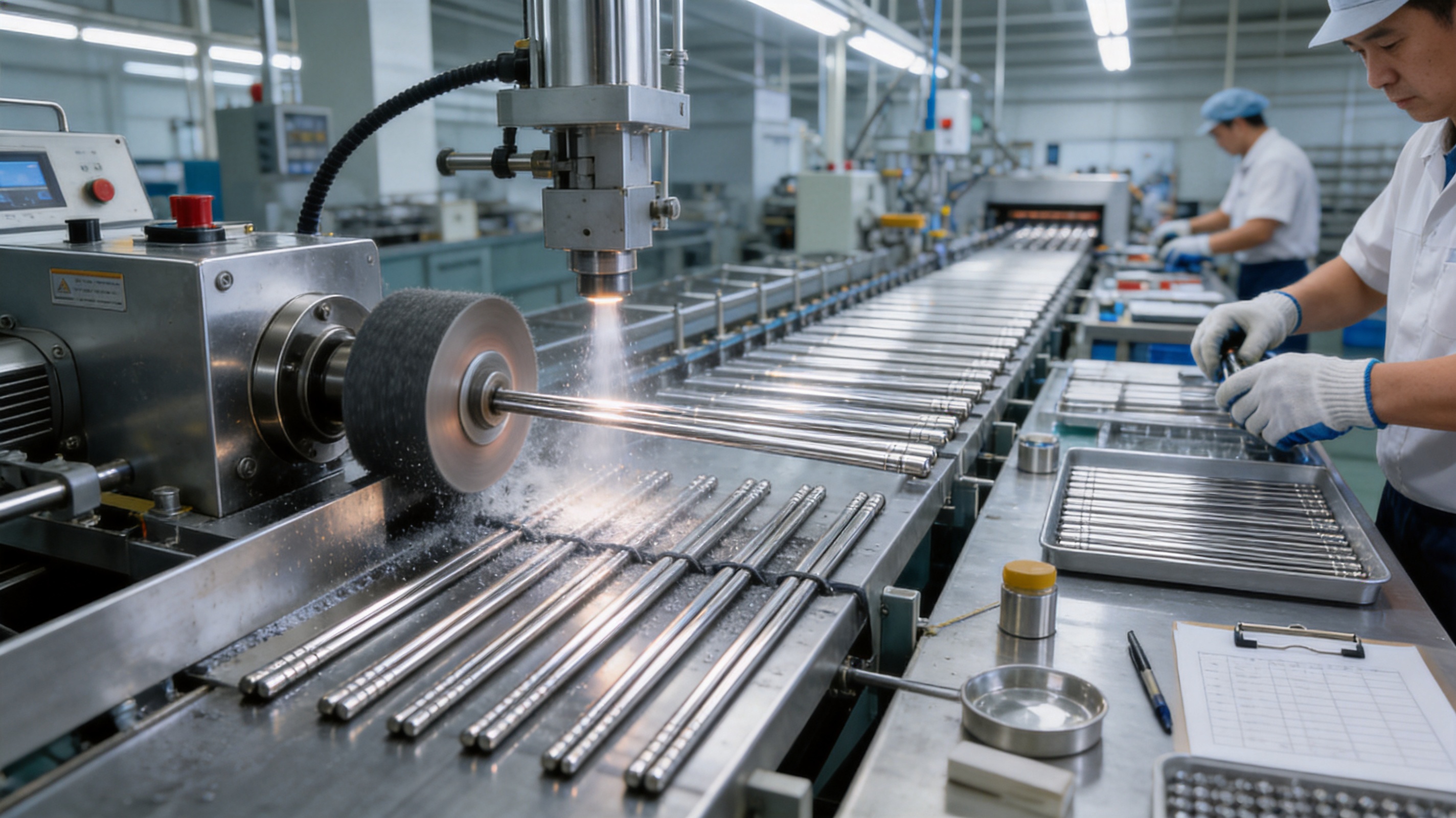
The performance of a stainless steel chopstick set depends on more than material selection. A reliable product requires coordinated control of material preparation, forming, surface treatment, dimensional inspection, cleaning, packaging, and shipment. Heenoor Co., Ltd. integrates product design, engineering validation, tooling development, standardized production, and quality management to support this type of controlled manufacturing program.
Product Design and Engineering Validation
Product development begins with a clear understanding of the intended application. Engineers and product designers consider length, diameter, shape, tip geometry, grip comfort, surface finish, packaging requirements, and expected cleaning conditions. These factors are evaluated together rather than treated as isolated details.
Engineering validation helps determine whether the design can be produced consistently and whether the final product meets practical usage requirements. For a chopstick, validation may include checks related to straightness, alignment, surface smoothness, edge treatment, tip symmetry, and resistance to ordinary handling. Design decisions should also consider the buyer’s target market, packaging format, order volume, and use environment.
Material Preparation
Material preparation is a fundamental step in achieving consistent quality. Stainless steel stock must be selected and handled according to the required product dimensions and manufacturing process. The condition of the material can influence forming, surface treatment, appearance, and final strength.
Controlled material preparation helps reduce variation between production batches. It also supports more predictable polishing and finishing results. For wholesale buyers, batch consistency is particularly important because products may be distributed across multiple stores, locations, or customer accounts.
Forming and Shaping
The chopsticks must be shaped into a consistent profile with suitable geometry for both grip and food handling. Forming operations must maintain the intended dimensions while avoiding unnecessary marks, distortion, or misalignment. The upper and lower sections must work together as a pair, and the tips should remain properly aligned when the chopsticks are held together.
Tooling development supports repeatable forming. Carefully developed tools can improve production efficiency and help maintain uniformity across large quantities. Tooling is especially important when the product design includes rounded transitions, tapered ends, or anti-slip grooves.
Grinding and Polishing
Grinding removes irregularities and refines the shape of the stainless steel surface. Polishing then improves smoothness and appearance. Multiple stages may be used because a single finishing pass may not achieve the desired combination of edge quality, surface brightness, and tactile comfort.
Proper polishing is also important for practical hygiene. A smooth surface is easier to wash and less likely to retain visible residue. The process must be carefully managed to prevent excessive material removal, uneven gloss, or inconsistent appearance between pieces.
Groove and Tip Processing
The anti-slip grooves at the tips require controlled processing to maintain consistent depth, spacing, and finish. Each pair should provide a similar user experience. Inconsistent grooves can affect grip and may reduce the perceived quality of the product.
After groove processing, the tip area should be checked for burrs or rough edges. These defects could affect comfort and cleaning. Careful finishing ensures that the functional texture does not compromise the smoothness and safety of the overall product.
Cleaning and Final Surface Treatment
Following manufacturing and polishing, the chopsticks should undergo appropriate cleaning to remove processing residues, metal particles, dust, and handling contaminants. Clean production practices are essential for products intended for food-contact applications.
Final inspection can include visual checks, dimensional checks, surface evaluation, and functional review. The goal is to ensure that the product leaving the factory reflects the design specification and is ready for packaging and distribution.
Standardized Production and Quality Management
Standardized production provides a repeatable framework for manufacturing. It helps align operating procedures, inspection points, equipment use, and packaging practices across production runs. Quality management supports the identification of potential issues before products reach customers.
Heenoor’s broader manufacturing experience includes stainless steel, titanium, plastic, and glass drinkware. This cross-material experience can support a more comprehensive understanding of forming, finishing, assembly, and quality control. Although the chopstick set is a relatively compact product, the same principles of engineering discipline and process consistency are essential to its success.
Why Manufacturing Capability Matters to Wholesale Buyers
Wholesale buyers typically need more than an attractive sample. They need a supplier capable of repeating the sample specification across an entire order and, when required, across future production cycles. A manufacturing partner must understand how design decisions affect production cost, lead time, quality stability, packaging, and long-term supply.
Integrated manufacturing can shorten the distance between product concept and finished goods. When design, engineering, tooling, production, and quality management are coordinated within one organization, communication can become more direct. This can help reduce misunderstandings related to dimensions, materials, finish requirements, packaging, and inspection standards.
Heenoor was founded in 1999 and has developed into a large-scale drinkware manufacturer with experience in product development and industrial manufacturing. Its capabilities include design, engineering validation, tooling development, standardized production, and quality management. These strengths are relevant to buyers seeking a supplier for durable tableware products as well as coordinated drinkware programs.
Manufacturing discipline is particularly important for products with polished metal surfaces. Small differences in grinding pressure, polishing time, tooling alignment, or material handling can influence the appearance of the finished product. A supplier with established process controls is better positioned to manage these details at commercial volumes.
Supply stability is another important consideration. Retailers, distributors, hospitality groups, and corporate procurement teams often require products to remain available over time. A reliable manufacturer should be able to communicate clearly about specifications, production planning, quality expectations, and repeat orders. This supports more predictable inventory management and helps buyers build a consistent product line.
Applications Across Different Markets
Household Dining
For household users, stainless steel chopsticks offer a reusable alternative to disposable products. They can be used for breakfast, lunch, dinner, snacks, noodles, rice dishes, vegetables, and shared family meals. Their durability makes them suitable for households that prefer to purchase tableware less frequently and use it for many years.
The easy-clean surface is useful for busy families. After use, the chopsticks can be washed by hand or placed in a suitable dishwasher according to the appliance and product-care instructions. Their neutral metallic appearance can also coordinate with stainless steel cutlery, cookware, and modern kitchen accessories.
Restaurants and Cafés
Restaurants require tableware that can withstand frequent use, washing, storage, and handling. Stainless steel chopsticks are suitable for Chinese restaurants, Asian restaurants, noodle shops, buffet operations, cafés, and casual dining venues. Their strong construction can help reduce replacement caused by cracking, splitting, or accidental breakage.
The polished surface presents a clean and professional appearance at the table. The traditional shape can support the identity of Asian cuisine while remaining adaptable to contemporary restaurant design. In high-volume dining environments, the combination of durability and cleanability can provide meaningful operational value.
Hotels and Hospitality Programs
Hotels may use chopsticks in breakfast restaurants, banquet halls, room-service programs, event catering, and executive dining areas. A consistent stainless steel design can be used across multiple service locations, helping establish a coordinated tableware presentation.
Hospitality operators also need products that can move efficiently through washing and sanitation cycles. Stainless steel’s resistance to moisture and heat makes it a practical candidate for these workflows, provided that the cleaning process is compatible with the product and is performed according to appropriate operating procedures.
Business Banquets and Events
Business banquets and formal events often require tableware that looks refined while remaining robust enough for repeated handling. The metallic luster and smooth finish of these chopsticks provide a professional appearance. Their classic form can complement formal Chinese dining arrangements and cultural events.
For event organizers, reusable stainless steel products may also support long-term cost management compared with disposable alternatives. They can be cleaned, inspected, stored, and reused for future functions.
Outdoor Dining and Picnics
Stainless steel chopsticks are suitable for outdoor picnics, camping meals, travel dining, and group activities. Their resistance to cracking and moisture exposure makes them more dependable than fragile ceramic products or untreated wooden alternatives.
Users should still store the chopsticks clean and dry after outdoor use. A protective pouch, case, or coordinated travel kit can help keep the products organized and reduce contact with dirt during transportation.
Institutional and Commercial Kitchens
Schools, hospitals, company cafeterias, military facilities, and other institutional kitchens may value tableware that is durable, easy to process, and suitable for repeated service. Stainless steel chopsticks can support standardized dining programs where products must pass through regular washing, inspection, and redistribution procedures.
Institutional buyers may also benefit from working with a manufacturer capable of supplying related drinkware and tableware products. A coordinated product program can simplify procurement, packaging design, quality evaluation, and replenishment planning.
Cleaning, Use, and Care Recommendations
Although stainless steel is durable, appropriate care helps preserve both performance and appearance. Users should wash the chopsticks after each use, especially after contact with oily, salty, acidic, or strongly colored foods. Prompt cleaning helps prevent residue buildup and keeps the surface bright.
When washing by hand, use a soft sponge or cloth with a suitable mild detergent. Avoid harsh abrasive materials that could create unnecessary scratches. After washing, rinse thoroughly and dry the chopsticks or place them in a clean drying area.
If using a dishwasher, buyers should confirm that the machine’s cycle and detergent are suitable for stainless steel tableware. The chopsticks should be positioned securely so that they do not fall into a heating area or become trapped between moving components. After the cycle, allowing them to dry fully can help prevent water spots.
Do not use the chopsticks as cooking tools unless they are specifically designed and approved for that purpose. Stainless steel is heat-resistant, but direct contact with a flame, hot pan, or high-temperature cooking surface may cause excessive heat transfer and is unnecessary during normal dining.
Store the chopsticks in a clean, dry location. If they are kept in a drawer or container, ensure that the storage area is dry and free from food particles. A dedicated case or holder can help protect the polished surface and improve organization in commercial kitchens or travel settings.
Quality Considerations for Product Selection
Buyers evaluating stainless steel chopstick sets should consider more than the material name. Product quality depends on the specific material grade, surface finish, dimensions, straightness, tip design, edge treatment, packaging, and consistency between units.
The first consideration is material clarity. Buyers should request clear information about the stainless steel grade and intended use. The 304 stainless steel specification provides a defined basis for product evaluation, but the finished product should also be checked for workmanship and surface condition.
The second consideration is dimensional consistency. Length, tip alignment, shaft shape, and groove positioning should remain uniform across the order. Consistency is especially important for hospitality groups and retailers that need every package to present the same product experience.
The third consideration is surface quality. Buyers should inspect for scratches, dents, discoloration, rough edges, polishing marks, residue, or uneven luster. A smooth and clean surface supports both appearance and usability.
The fourth consideration is packaging. Protective packaging should reduce movement, abrasion, dust exposure, and damage during transport. Retail-ready packaging may also need space for product information, care instructions, barcodes, and branding, depending on the buyer’s distribution model.
The fifth consideration is supplier communication. A capable manufacturer should be able to discuss drawings, samples, production schedules, inspection expectations, packaging formats, and repeat-order requirements. Clear communication at the beginning of a project can prevent costly corrections later.
Customization and Product Program Development
The standard 23.9-centimeter chopstick set can serve as a practical starting point for wholesale programs. Depending on project requirements, buyers may explore adjustments to length, surface treatment, packaging, gift-set configuration, or complementary products. Any modification should be evaluated for manufacturability, usability, durability, and cost.
Packaging customization is often one of the most accessible ways to create product differentiation. A set may be packaged in a paper sleeve, box, reusable pouch, restaurant pack, or coordinated dining kit. The packaging can communicate material information, care instructions, cultural design elements, or the identity of a retail and hospitality program.
Buyers may also develop coordinated product collections that include stainless steel chopsticks, spoons, forks, vacuum flasks, water bottles, vacuum kettles, and other tableware or drinkware. A manufacturer with experience in stainless steel, titanium, plastic, and glass products can help support a broader assortment strategy.
For custom projects, it is advisable to define the product specification before mass production begins. The specification should address material, length, shape, finish, tip design, tolerances, packaging, labeling, inspection requirements, and acceptable cosmetic standards. A pre-production sample can then be evaluated against those requirements.
Custom development should also consider the target market. A product intended for premium retail may require more attention to packaging and cosmetic presentation, while a product intended for institutional use may prioritize durability, efficient packing, and ease of replenishment. The same basic chopstick concept can therefore be adapted to different commercial goals.
Environmental and Lifecycle Considerations
Reusable tableware can support a longer product lifecycle than disposable alternatives. Stainless steel chopsticks are designed for repeated use, washing, and redistribution rather than single-use disposal. Their durability may help reduce the frequency of replacement when compared with materials that crack, split, or wear quickly.
Lifecycle value depends on actual usage and responsible care. A reusable product provides the greatest benefit when it is used for a long period, maintained properly, and eventually managed through appropriate material recovery systems where available. Buyers can support this objective by selecting durable designs, reducing unnecessary packaging, and communicating correct care instructions to users.
The absence of paint and wax on this product also gives the surface a straightforward material identity. The finish is created through grinding and polishing rather than relying on a decorative coating that may wear away. This can support long-term appearance and simplify maintenance.
Manufacturing responsibility also includes reducing avoidable variation, improving process efficiency, and maintaining clear quality standards. When products are made consistently, fewer units may be rejected because of preventable defects. Product development that considers durability, repairability where relevant, packaging efficiency, and long-term use can create value beyond the initial purchase.
Commercial Advantages for Brands and Procurement Teams
For brands and procurement teams, stainless steel chopsticks offer a combination of straightforward specifications and broad market appeal. The 304 stainless steel material, 23.9-centimeter length, polished finish, solid construction, and anti-slip tips create a clear product story that can be communicated to distributors and end users.
The product is also easy to position across several price and market segments. It can function as practical household tableware, restaurant equipment, hospitality serviceware, outdoor dining gear, or part of a premium gift collection. Its simple but recognizable design provides flexibility for packaging and merchandising.
Durability can lower the total cost of ownership in high-use environments. Even when the initial purchase price is higher than a low-cost disposable or fragile alternative, the ability to wash and reuse the product many times may produce better value over its service life. Commercial buyers should evaluate this through expected usage, replacement rates, cleaning costs, and inventory requirements.
A stable manufacturing partner can further improve commercial performance. Heenoor’s integrated capabilities in design, engineering, tooling, standardized production, and quality management are intended to support reliable, large-volume product programs. Its experience with multiple drinkware materials also provides a foundation for buyers seeking related product development under one manufacturing relationship.
Frequently Asked Questions
What material are these chopsticks made from?
The chopsticks are made from high-quality 304 stainless steel. This material is selected for its corrosion resistance, strength, heat resistance, and suitability for reusable tableware applications.
How long are the chopsticks?
Each chopstick is 23.9 centimeters long. This length is suitable for household dining, restaurants, hospitality service, banquets, outdoor meals, and other common applications.
Are the chopsticks painted or wax-coated?
No. The product is described as free from paint and wax. Its metallic appearance comes from the stainless steel material and the grinding and polishing process.
Do the chopsticks have an anti-slip design?
Yes. The tips include anti-slip grooves designed to improve grip on food and reduce slipping during use.
Are stainless steel chopsticks suitable for dishwashers?
They are suitable for environments that require dishwasher cleaning when the dishwasher cycle, detergent, loading method, and product-care instructions are compatible with stainless steel tableware. Buyers should confirm the specific operating conditions of their equipment.
Are stainless steel chopsticks better than wooden or bamboo chopsticks?
They offer different advantages. Stainless steel is generally more resistant to moisture, cracking, mold, deformation, and repeated washing. Wooden and bamboo chopsticks may feel lighter and warmer, but they can require more careful drying and maintenance.
Can the chopsticks be used with hot food?
Yes. Stainless steel chopsticks are heat-resistant and suitable for ordinary dining with hot food. However, they should not be placed directly on flames or used as cooking tools unless specifically designed for that application.
Are the edges comfortable?
The chopsticks undergo multiple rounds of grinding and polishing, including treatment intended to create smooth and rounded edges. This supports a more comfortable grip and helps reduce rough or sharp surfaces.
What types of businesses can use this product?
The product is suitable for restaurants, cafés, hotels, catering companies, banquet venues, institutional kitchens, retailers, outdoor dining programs, and household consumers.
Can the product be customized?
Customization may be possible depending on project requirements. Buyers can discuss dimensions, surface treatment, packaging, coordinated product sets, and other specifications with the manufacturer. A detailed specification and sample approval process is recommended before mass production.
What should buyers inspect before placing a large order?
Buyers should review the material specification, length, straightness, tip alignment, groove consistency, surface finish, edge quality, packaging, labeling, inspection standards, and repeat-order requirements. A production sample should be evaluated against the approved specification.
Why is manufacturing integration important?
Integrated design, engineering, tooling, production, and quality management can improve communication and consistency. It helps a manufacturer translate a product concept into a repeatable commercial product while supporting larger order volumes and long-term supply planning.
Conclusion
The 304 stainless steel chopstick set is a durable and practical tableware solution for users who value hygiene, strength, easy cleaning, and long-term performance. Its solid one-piece construction, polished metallic surface, rounded edges, balanced 23.9-centimeter length, and anti-slip tip grooves combine to create a dependable product for everyday dining and demanding commercial environments.
Compared with wooden chopsticks that may absorb moisture, bamboo chopsticks that may crack, ceramic chopsticks that may break, and plastic products that may have limited heat resistance, stainless steel provides a well-rounded balance of performance characteristics. It is especially suitable for restaurants, hotels, banquet service, institutional kitchens, outdoor dining, and other applications where products must withstand repeated cleaning and handling.
The product’s value is supported by the manufacturing system behind it. Through product design, engineering validation, tooling development, standardized production, surface finishing, and quality management, Heenoor Co., Ltd. is positioned to support reliable tableware and drinkware programs. Its experience with stainless steel, titanium, plastic, and glass products enables it to serve brands, organizations, distributors, and procurement teams seeking durable, scalable, and commercially practical product solutions.
For buyers evaluating reusable tableware, this stainless steel chopstick set offers a clear combination of material performance, thoughtful design, cultural character, and manufacturing readiness. It can serve as a dependable standalone product or as part of a coordinated tableware and drinkware collection developed for long-term market use.
References
1. General principles of stainless steel selection for food-contact utensils and reusable tableware.
2. General manufacturing practices for stainless steel forming, grinding, polishing, and surface finishing.
3. General guidance on reusable tableware cleaning, drying, storage, and dishwasher use.
4. General product-development principles covering engineering validation, tooling development, standardized production, and quality management.
5. Product specification provided for the 304 stainless steel chopstick set, including 23.9-centimeter length, solid construction, polished surface, and anti-slip tip grooves.
6. Company information provided for Heenoor Co., Ltd., including its product development, industrial manufacturing, material experience, and international project support capabilities.
Product: Stainless Steel Chopstick Sets

You may also like…

Copyright © 2025 Heenoor Co., Ltd. All Rights Reserved.
 Custom Stainless Steel Drinkware Manufacturers
BACK TOP