 English
 中文简体
 日本語
 Español
 عربى

Search
Categories
Recommend
Categories
 Company news
Recommend
-
 Industry news
-
 Industry news
-
 Industry news
-
 Industry news
Nov 18, 2026 - By admin
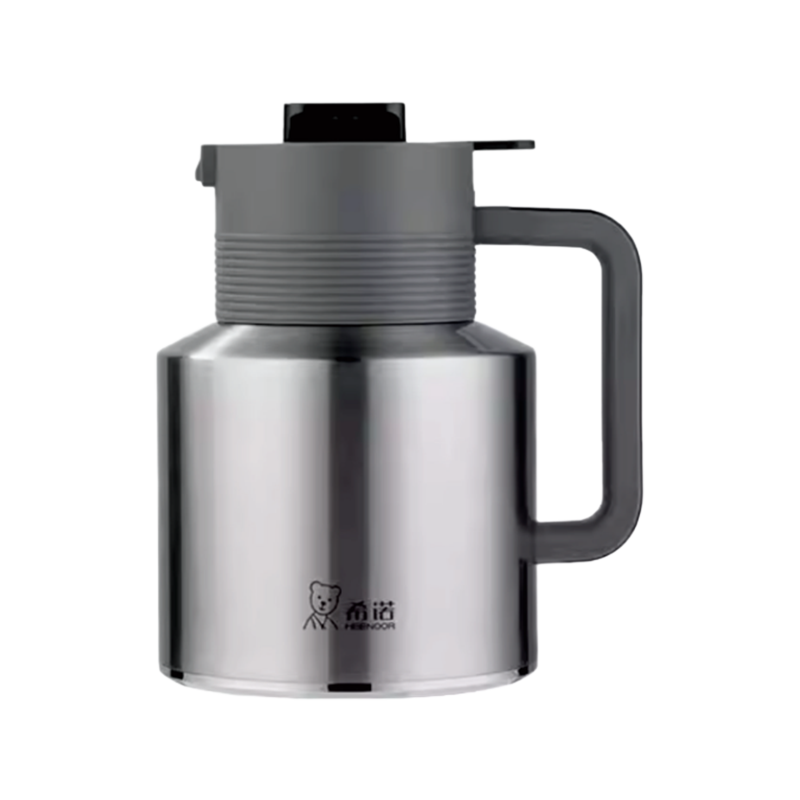
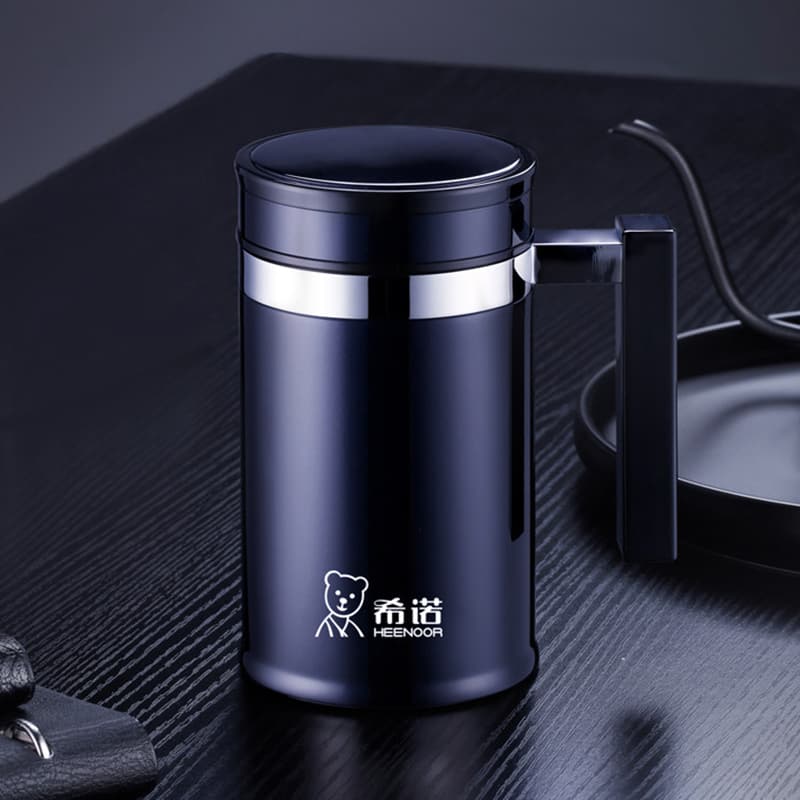 480 ml Handle Stainless Steel Vacuum FlaskA 480 ml office flask with 304 stainless steel interior, lotus tea filter, handle and non-slip base, suited to considered desk gifts.View Product →
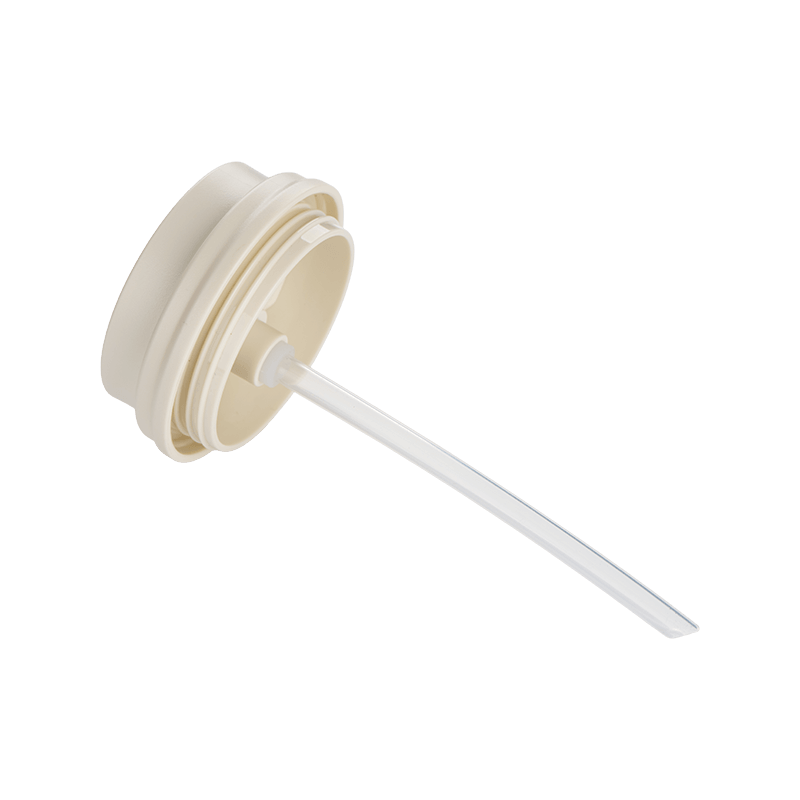 HEENOOR Xinyao 510 ml Coffee TumblerA 510 ml vacuum-insulated coffee tumbler with 316L liner, one-push flip lid and commuter-friendly size, worth viewing for daily coffee and acidic drinks.View Product →
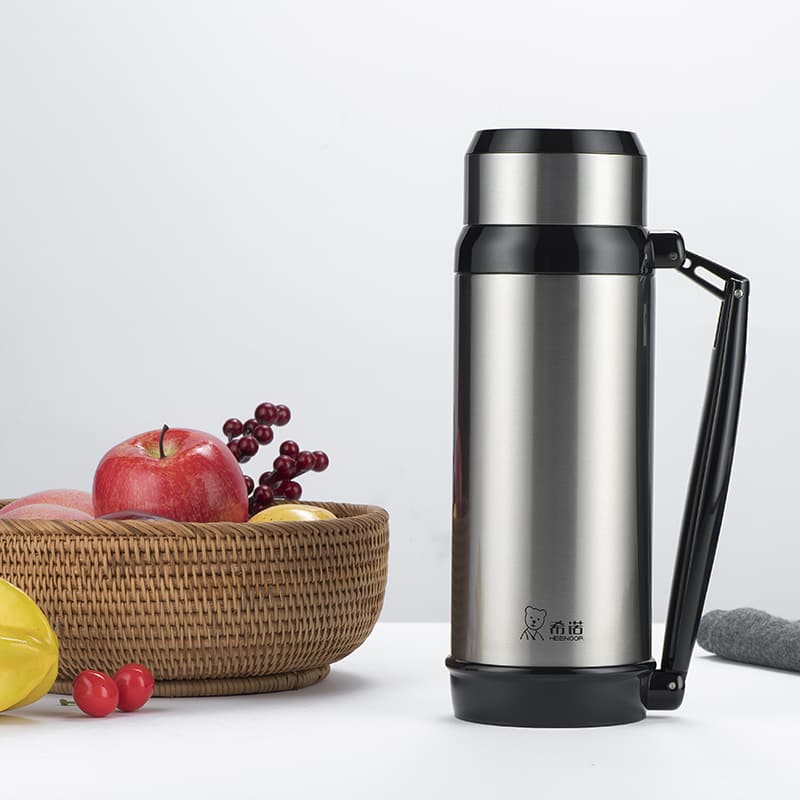
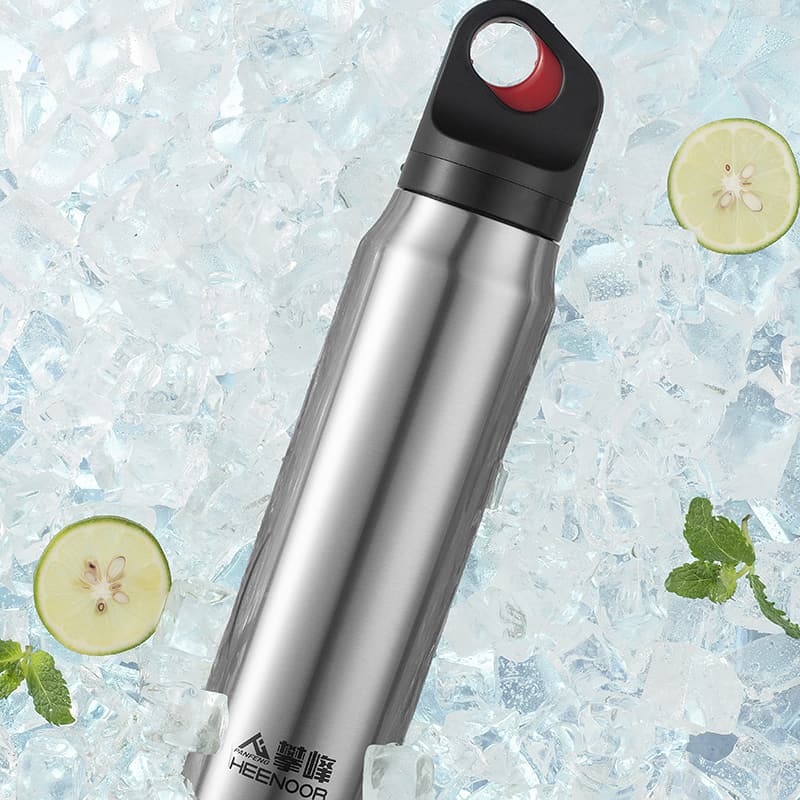 630 ml Outdoor Sports Stainless Steel Vacuum FlaskA 630 ml outdoor flask with 316L inner liner, one-handed lid, powder-coated body and non-slip base, suited to hiking, gym and commuting.View Product →
Custom Stainless Steel Water Bottle Branding Options: A Practical Maker's Guide
Content
- 1 What Custom Branding Really Covers on a Stainless Steel Bottle
- 2 Logo and Marking Methods Compared
- 3 Surface Finishes, Colours and Textures
- 4 Lids, Caps and Hardware Details
- 5 Choosing the Right Bottle Style for Your Brand
- 6 Sampling, Tooling and Quality Checks
- 7 Common Mistakes Worth Avoiding
- 8 Why the Manufacturing Partner Behind the Decoration Matters
A custom stainless steel water bottle is one of the few branded items a person actually holds in their hands every day. That makes the decoration decisions you settle at the sampling stage far more consequential than they first appear — a logo that fades after two months of daily washing does more damage to a brand than no logo at all. What follows is a practical walkthrough of the branding options available on stainless steel bottles, written from the perspective of people who build them rather than people who photograph them.
What Custom Branding Really Covers on a Stainless Steel Bottle
Newcomers tend to think of branding as "the logo". In practice, a finished bottle is the sum of six decisions, and every one of them affects how the product feels in the hand and how long it survives in a bag:
- Body form and capacity — straight-wall, tapered, handle-mounted or wide-mouth; 350 ml to 1 litre and beyond.
- Surface finish — brushed steel, mirror polish, powder coating, soft-touch or pattern transfer.
- Base colour — a stock shade, a Pantone match, or a two-tone gradient.
- Marking method — engraving, printing, badging or a combination of these.
- Lid and hardware — cap colour, spout type, straw, handle, strainer, silicone seals.
- Packaging — polybag, printed tube, fabric sleeve or a rigid presentation box.
Handled together, these six elements produce a bottle that looks deliberate. Handled separately, they produce a bottle that looks assembled from whatever was in stock. Our own custom stainless steel cup programme was built around exactly this idea: fix the body first, then layer the branding onto it.
Logo and Marking Methods Compared
There is no single "best" decoration method — only the method that suits your artwork, your coating and your budget. A logo with fine serif type behaves very differently from a bold silhouette, and a matte black body punishes methods that work flawlessly on bare steel.
| Method | Best for | Durability | Watch-outs |
|---|---|---|---|
| Laser engraving | Bare stainless bodies; permanent single-colour marks | Very high | On coated bodies it exposes the steel beneath; details below roughly 0.3 mm lose crispness |
| Silk screen printing | Flat, single-colour logos on coated surfaces | High when properly cured | Awkward on tight curves; dark ink on dark coating disappears |
| Pad printing | Small marks, lids, curved shoulders | Good | One plate per colour; large solid fills can show pinholes |
| Heat or water transfer | Full-colour artwork, photographic patterns, gradients | Moderate | Edges may lift without a clear protective coat |
| UV printing | Multi-colour runs, short lead times | Moderate | Ink sits on the surface; abrasion resistance varies by supplier |
| Metal badge or embossed wrap | Premium gift sets, tactile branding | Very high | Adds tooling cost and assembly time; limits body shape options |
In practice, many brands combine two methods: laser engraving for a permanent mark on the base and a printed band or badge on the body for colour. That pairing gives you durability where it matters and visual impact where people actually look.
Surface Finishes, Colours and Textures
The finish is often what people judge before they read a single word on the bottle. Matte powder coating photographs beautifully and hides fingerprints, but it scuffs more visibly on hard edges than a satin or brushed surface. Gloss coatings read as premium on a shelf and show every thumbprint within a day. Rubberised soft-touch finishes feel expensive in the hand, yet they attract dust and are unforgiving of rough handling.
Beyond colour, consider the finishing route: brushed stainless with a directional grain, mirror polishing for a jewellery-like effect, electroplated gold or rose-gold tones, and pattern transfers for seasonal artwork. Colour matching is usually quoted against Pantone references, and it is worth remembering that the same code reads differently on a coarse matte texture than on a smooth gloss one — always judge the match on a physical sample under daylight, not on a screen. Our custom surface finishing options are grouped by these routes so you can compare them side by side before committing to a tooling run.
Lids, Caps and Hardware Details
Lids are the most underrated branding surface on the product. A bottle body can take weeks of tooling, while a cap colour change or a small laser mark on the crown can happen comparatively quickly. Common configurations include a screw cap with a folding carry loop, a one-touch flip lid, a straw lid for sports use, a wide-mouth travel cap, and internal strainers or tea-water separation assemblies for loose-leaf drinking.
Two practical notes. First, the more a lid departs from an existing mould, the more tooling cost it carries — the difference between a colour change and a new mechanism is significant. Second, silicone seals and gaskets are wear items; specify food-grade material and confirm that replacement parts are available if your programme runs for years.
Choosing the Right Bottle Style for Your Brand
The branding method should follow the audience, not the other way around. Three directions come up most often.
Office and corporate gifting
For desk-based recipients, a handle-mounted or tapered body reads as a considered gift rather than a promotional freebie. Matte coatings, a restrained one-colour engraving on the base, and a presentation box tend to land better than loud full-colour artwork.
480 ml Handle Stainless Steel Vacuum FlaskA 480 ml office flask with 304 stainless steel interior, lotus tea filter, handle and non-slip base, suited to considered desk gifts.View Product →
Coffee and café culture
Coffee-forward bottles live or die on the drinking experience: a lid that opens one-handed, a rim that works with a takeaway cup, and a volume between 350 and 500 ml. Here, marking the lid as well as the body reinforces the brand every time the cap is opened.
HEENOOR Xinyao 510 ml Coffee TumblerA 510 ml vacuum-insulated coffee tumbler with 316L liner, one-push flip lid and commuter-friendly size, worth viewing for daily coffee and acidic drinks.View Product →
Outdoor and active lifestyle
For hiking, gym and cycling audiences, durability of decoration matters more than fine detail. Powder-coated bodies with laser-engraved marks, a secure loop and a straw or spout lid survive being dropped, packed and washed repeatedly.
630 ml Outdoor Sports Stainless Steel Vacuum FlaskA 630 ml outdoor flask with 316L inner liner, one-handed lid, powder-coated body and non-slip base, suited to hiking, gym and commuting.View Product →Sampling, Tooling and Quality Checks
Most branding problems are cheap to fix on paper and expensive to fix after production. A sensible sequence looks like this:
- Artwork proof — confirm vector files, minimum line weights and clearance from curves and seams.
- Blank body approval — form, capacity, finish and colour reference, checked in daylight.
- Pre-production sample — the exact decoration method, colour and placement, on the exact body.
- Adhesion and abrasion testing — cross-hatch tape tests for printed marks, rub tests for coatings.
- Washing and drop tests — a dishwasher cycle or two reveals more than any specification sheet.
- Packaging sign-off — box, insert, user leaflet and carton marking, before mass production.
Ask early about minimum order quantities per colour and per decoration method, because they usually differ. A four-colour print may carry a different threshold than a single engraving, and multi-colour programmes on the same body often need longer production windows. Also confirm placement tolerances in millimetres; a logo that drifts two millimetres sideways across a run is the most common source of complaint in repeat orders.
Common Mistakes Worth Avoiding
- Approving decoration on a screen instead of a physical sample in daylight.
- Choosing a dark logo for a dark matte body, then discovering it disappears in photographs.
- Specifying artwork with hairlines thinner than the chosen method can hold.
- Forgetting the packaging entirely, so a premium bottle arrives in a plain polybag.
- Testing only the bottle and never the lid, seal or replacement-part supply.
- Switching factories mid-programme without re-approving colour and placement.
Why the Manufacturing Partner Behind the Decoration Matters
Decoration is only as reliable as the process underneath it. When design, engineering validation, tooling development and production sit inside one operation, changes to a coating or a cap are reviewed by the same people who will run the order — which is why consistency tends to hold across repeat batches. Heenoor has been making drinkware since 1999 and works with brands, organisations and procurement teams on exactly that basis: a manufacturing partner for long-term supply rather than a one-off supplier. If you are still comparing bottles before you compare logos, that conversation is usually the most useful place to start.
The short version: decide who will hold the bottle, choose the body and finish that suit them, then pick the marking method that survives how they will actually use it. Get those three in the right order and the branding largely takes care of itself.
You may also like…
Copyright © 2025 Heenoor Co., Ltd. All Rights Reserved.
 Custom Stainless Steel Drinkware Manufacturers
BACK TOP