 English
 中文简体
中文简体 日本語
日本語 Español
 عربى
عربى
Search
Categories
Recommend
Categories
 Lin Yuxi — International Product Sales Manager
Recommend
-
 Industry news
 -
 Industry news
 -
 Industry news
 -
 Industry news
Sep 14, 2026 - By admin
Pure Titanium Vacuum Flask: Lightweight Performance, Hygienic Design, and Scalable Manufacturing
Content
- 1 Product Concept and Market Position
- 2 Pure Titanium as the Primary Contact Material
- 3 Lightweight Construction for Everyday Portability
- 4 Crystallized Surface Pattern and Tactile Design
- 5 Tea Filter and Stewing Function
- 6 Leak-Resistant Lid Structure
- 7 Capacity Options for Different Usage Scenarios
- 8 Advantages Compared with Conventional Drinkware
- 9 Manufacturing Capabilities and Engineering Strength
- 10 Material and Component Configuration
- 11 Practical Use in Daily Life
- 12 Cleaning and Care Considerations
- 13 Suitability for Brand and Procurement Programs
- 14 Why the Product Stands Out
- 15 Q&A
- 15.1 What material is used for the cup body?
- 15.2 Is the entire product made from titanium?
- 15.3 What are the available capacities?
- 15.4 How much does the flask weigh?
- 15.5 Can the flask be used for loose-leaf tea?
- 15.6 What is the purpose of the silicone rubber ring around the filter?
- 15.7 Does the lid help prevent leakage?
- 15.8 Is the product antibacterial?
- 15.9 What makes titanium advantageous compared with glass?
- 15.10 What makes the product different from a standard stainless steel flask?
- 15.11 Who is the product suitable for?
- 15.12 Can the product support custom or bulk orders?
- 16 Conclusion
- 17 References
- 18 Product: Pure Titanium Antibacterial Stewing Vacuum Flask
In the modern drinkware market, users are no longer choosing a bottle only by its capacity or appearance. Material safety, weight, durability, cleanability, sealing reliability, portability, and manufacturing consistency have all become important considerations. A well-designed vacuum flask must perform effectively in everyday situations while also meeting the expectations of consumers who are increasingly attentive to the materials that come into contact with their beverages.
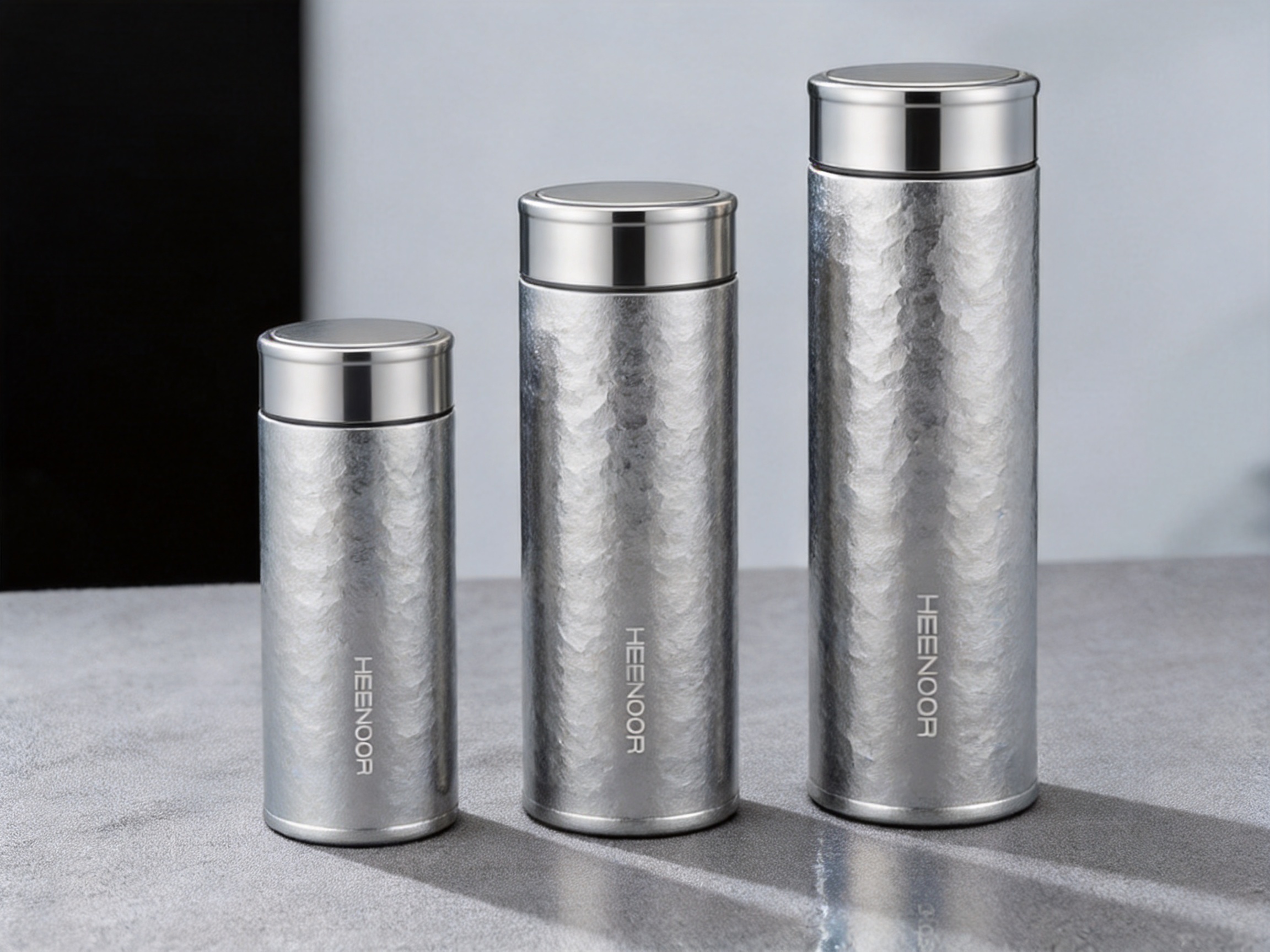
The Pure Titanium Antibacterial Stewing Vacuum Flask addresses these requirements through a combination of pure titanium construction, a compact vacuum-flask format, an integrated tea filter, a sealed lid, and a lightweight structural concept. Available in 340 ml, 450 ml, and 560 ml capacities, the product is suitable for office use, home tea drinking, commuting, travel, and outdoor activities. Its design is especially relevant to users who want the portability of a small tumbler without giving up the perceived material advantages of titanium.
Unlike conventional drinkware products that may rely primarily on stainless steel, plastic, or glass, this flask uses TA1 pure titanium for the cup body and filter screen. The lid also incorporates TA1 pure titanium together with PP and a heat-resistant silicone rubber sealing ring. This combination creates a practical balance between premium material selection, functional sealing, manufacturing feasibility, and everyday usability.
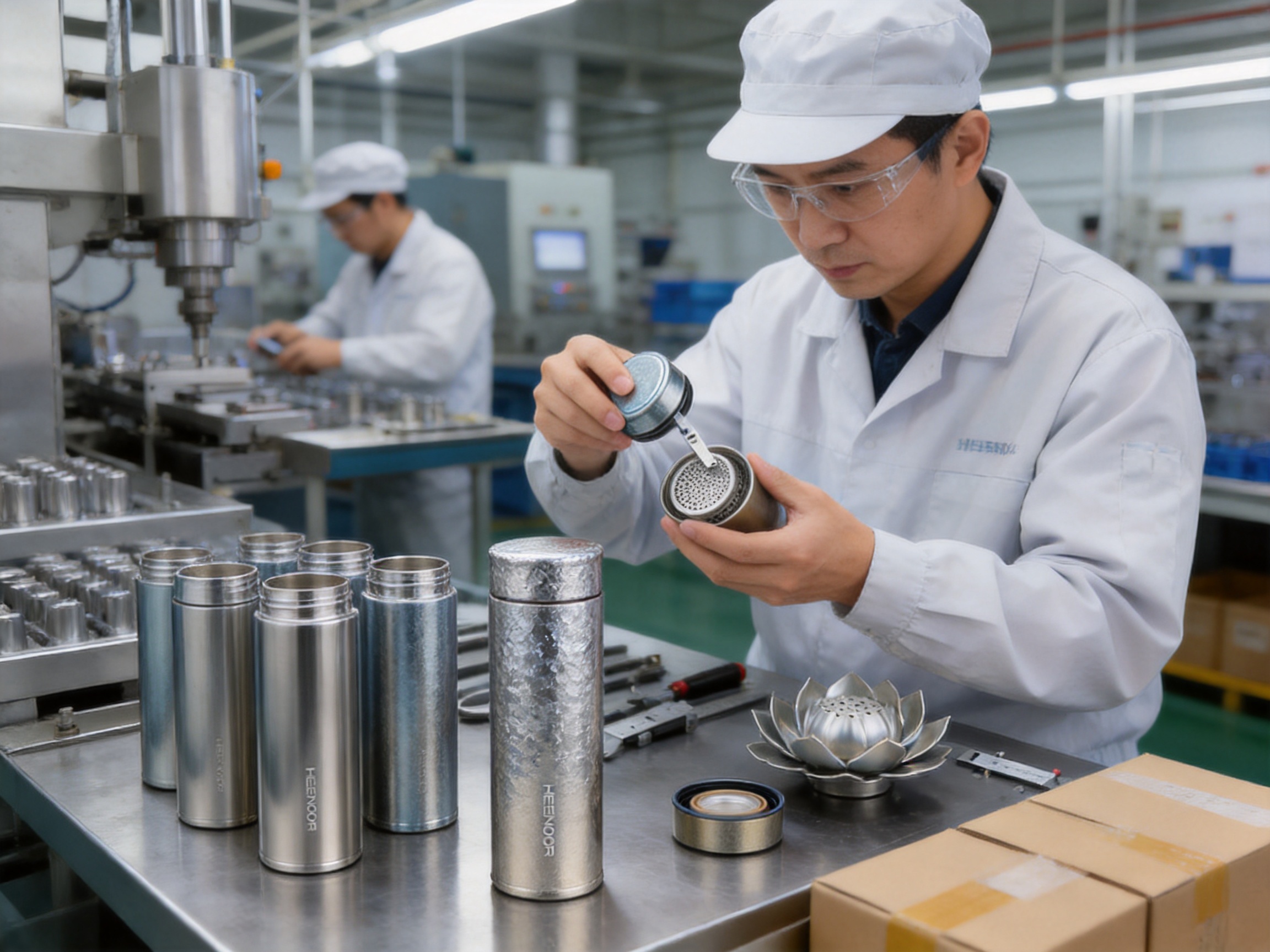
The product is developed and manufactured by Heenoor Co., Ltd., a drinkware manufacturer with experience in stainless steel, titanium, plastic, and glass products. Its manufacturing capabilities include product development, industrial design, engineering validation, tooling development, standardized production, and quality management. These capabilities are important because a technically attractive concept only becomes commercially valuable when it can be produced consistently, inspected reliably, and supplied at scale.
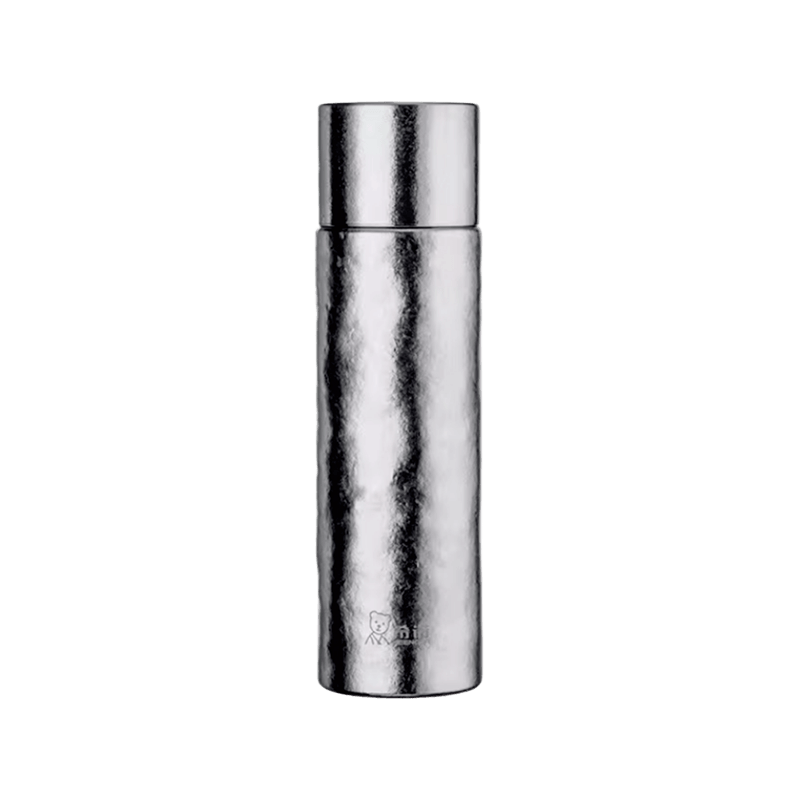
Pure Titanium Antibacterial Stewing Vacuum Flask
Product Concept and Market Position
The Pure Titanium Antibacterial Stewing Vacuum Flask is positioned as a premium, lightweight drinkware solution for people who place emphasis on material purity and portability. Its core concept combines the following product characteristics: pure titanium contact surfaces, vacuum-flask functionality, a tea-separation filter, a secure lid, compact capacity options, and a distinctive crystallized exterior texture.
Many standard drink bottles are designed primarily around water storage. This product takes a broader approach by considering tea drinking as well as ordinary hydration. The lotus-shaped filter enables users to prepare tea inside the vessel while separating tea leaves from the liquid. This makes the flask useful for loose-leaf tea, infused beverages, and other drinks that require a barrier between solid ingredients and the drinking liquid.
The three capacity choices allow the product to serve several different usage patterns. The 340 ml model is appropriate for a compact personal serving and can be convenient for desk use or short commutes. The 450 ml version provides a balanced middle capacity for daily hydration. The 560 ml model offers greater volume for extended periods away from a refill point, including travel, outdoor commuting, and longer work sessions.
Rather than competing only through large volume, the flask competes through a combination of lightweight construction, premium material identity, visual character, and functional detail. This is increasingly relevant in a market where consumers may already have access to inexpensive bottles but are willing to invest in products that offer a more refined experience.
Pure Titanium as the Primary Contact Material
The body of the flask is made from TA1 pure titanium. Titanium is widely recognized for its corrosion resistance, chemical stability, low density compared with many metals, and suitability for demanding applications. In drinkware, these characteristics can contribute to a clean, durable, and lightweight product experience.
One of the key benefits of a titanium beverage container is its resistance to corrosion. Drinks may contain water, tea compounds, mild acids, minerals, flavor ingredients, or other substances that can affect lower-quality materials over time. A corrosion-resistant material helps support long-term product durability and reduces concern about the container developing a metallic taste or visible deterioration under normal use.
Titanium is also odorless and does not easily retain the smells associated with previous beverages when the product is cleaned appropriately. This is valuable for users who alternate between plain water, tea, coffee, and flavored drinks. A material that does not readily influence beverage aroma or taste can support a more consistent drinking experience.
The use of pure titanium also gives the flask a clear material identity. Some products use titanium only as a coating, decorative layer, or isolated component. In this design, the cup body and filter screen are specified as TA1 pure titanium, while the lid includes TA1 pure titanium and PP. The extensive use of titanium distinguishes the product from ordinary plastic bottles and from drinkware that uses a different metal grade as its primary liquid-contact surface.
Material selection alone does not guarantee hygiene or safety. Proper cleaning, drying, storage, and use remain necessary for any reusable container. Nevertheless, a stable and corrosion-resistant contact material can provide a strong foundation for long-term drinkware use. The antibacterial positioning of the product should therefore be understood as part of a hygienic material and design strategy rather than as a substitute for routine washing or disinfection.
Lightweight Construction for Everyday Portability
Portability is one of the product’s most visible advantages. The product description identifies an overall weight of approximately 171–176 grams for the lightweight configuration, describing it as roughly comparable to the weight of a mobile phone. The technical table lists model weights of 0.17 kg, 0.21 kg, and 0.25 kg for the three product configurations. This range remains relatively light for a metal vacuum flask, particularly when compared with many conventional double-wall bottles that can feel heavy before any beverage is added.
Low empty weight makes a meaningful difference in daily use. A commuter carrying a laptop, documents, charger, and personal belongings may prefer a bottle that adds minimal burden. A traveler may want a beverage container that fits easily into a side pocket without significantly increasing luggage weight. Outdoor users may also appreciate a lightweight flask because every additional item contributes to the total load.
The lightweight design is not based simply on reducing material indiscriminately. It requires coordinated decisions involving wall construction, component geometry, forming, joining, lid design, filter integration, and quality control. A flask must remain sufficiently rigid for regular handling while maintaining the dimensional accuracy necessary for the lid and sealing components to function properly.
Compared with glass drinkware, titanium provides a considerable portability advantage because it combines a low-density structure with metal durability. Compared with many stainless steel products, titanium can offer a lighter premium-metal alternative. Compared with plastic, it provides a more substantial tactile experience and a stronger material identity while avoiding dependence on a plastic body for the main beverage-contact surface.
Crystallized Surface Pattern and Tactile Design
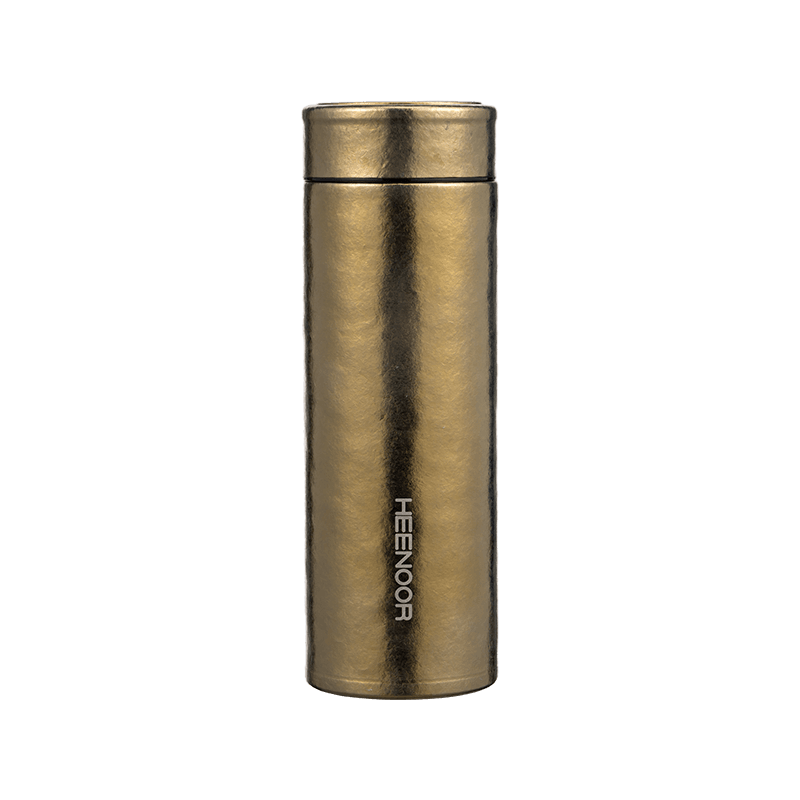
The outer surface features a patented crystallized pattern. This pattern gives the flask a distinctive natural texture instead of presenting a completely smooth, uniform exterior. Visual differentiation is important in a crowded drinkware market, but the surface treatment also serves a practical role.
The textured surface can improve tactile interaction by providing additional grip points for the fingers. A completely smooth bottle may become difficult to hold when hands are wet or when condensation is present. A patterned surface can help users maintain control during opening, carrying, and drinking. The product description specifically identifies the crystallized pattern as contributing to a non-slip effect.
Texture also influences the perceived quality of a product. Premium drinkware is often evaluated through several senses at once: appearance, weight, touch, lid movement, drinking comfort, and the sound or feel of components during use. A carefully controlled crystallized finish can make the product feel more distinctive than a standard painted or polished bottle.
From a manufacturing perspective, a repeatable textured surface requires process discipline. The pattern must be applied or formed consistently across production batches, and the surface must be checked for irregularities that could affect appearance or handling. The finish also needs to work together with the titanium material rather than conceal basic manufacturing inconsistencies.
Tea Filter and Stewing Function
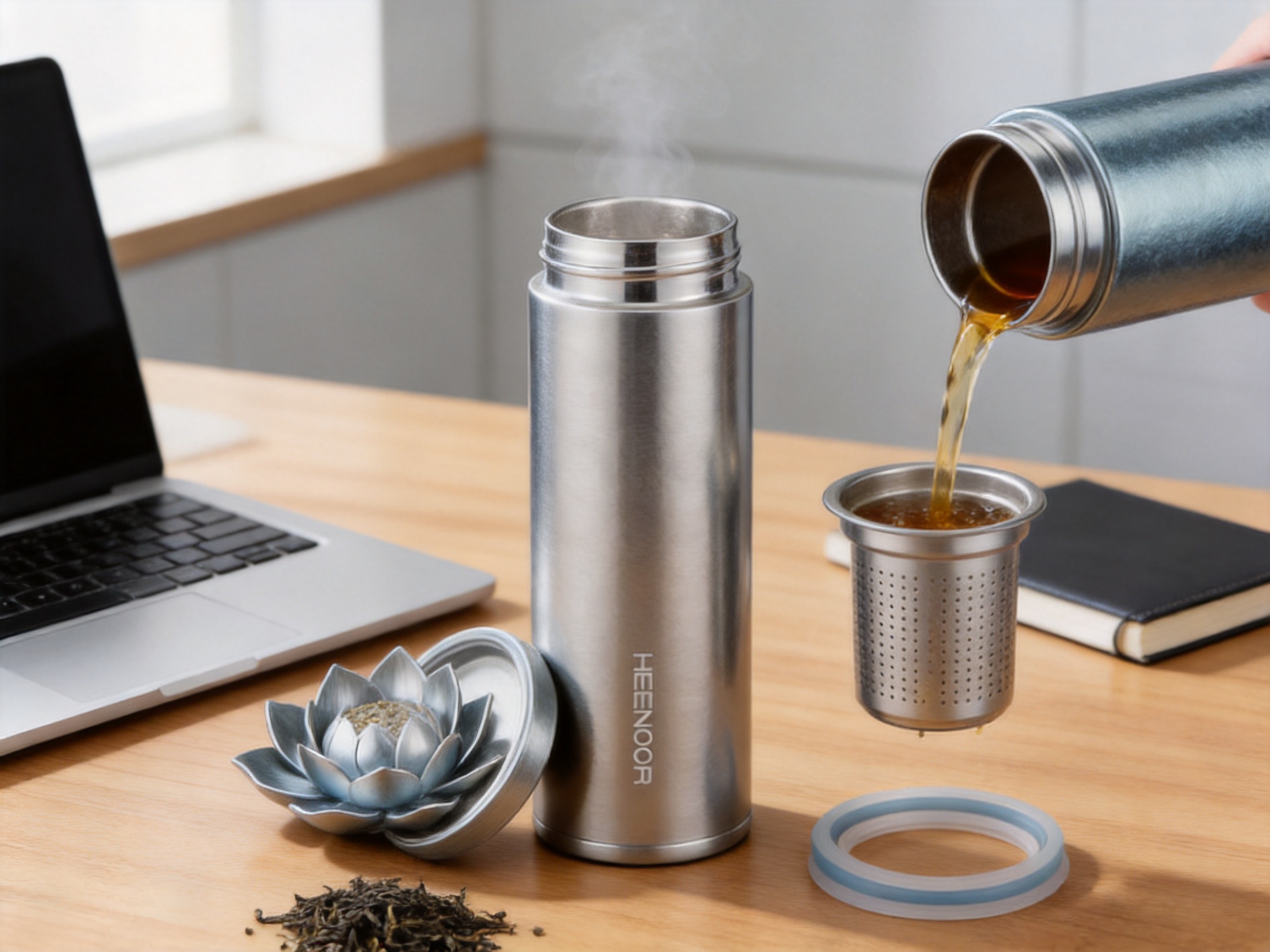
The integrated lotus-shaped filter is one of the product’s most useful functional features. It is designed to separate tea leaves from the liquid, allowing users to brew tea inside the flask without having the leaves freely move into the drinking area. This makes the product more suitable for tea preparation than a simple bottle with no internal separation system.
The filter screen is made from TA1 pure titanium and silicone rubber. Titanium provides a corrosion-resistant filter structure, while the silicone rubber protective ring helps soften the contact between the filter and the cup wall. The protective ring is intended to reduce the risk of scratches caused by direct contact between harder components.
A filter system must perform several tasks simultaneously. It needs to allow water and brewed liquid to pass through, retain tea leaves effectively, remain stable during handling, and be removable or cleanable as required. It should also avoid creating unnecessary crevices where residue can accumulate. The lotus-shaped structure provides a recognizable design feature while supporting the separation function.
For tea drinkers, the filter expands the range of use beyond basic water storage. Users may prepare loose-leaf tea at work, brew a beverage at home, or carry tea during a commute. The product therefore connects the convenience of a vacuum flask with the ritual and flexibility of tea preparation.
The filter also adds value for consumers who prefer to avoid disposable tea bags. Loose-leaf tea can be prepared directly in the vessel, and the filter offers a practical barrier between the leaves and the beverage. As with any reusable filter, it should be rinsed after use and cleaned thoroughly when changing between beverages.
Leak-Resistant Lid Structure
The lid incorporates a heat-resistant silicone rubber sealing ring. The sealing ring supports closure reliability by creating contact between the lid and the flask opening. According to the product description, the lid provides good sealing performance and is designed to help prevent leakage even when the flask is inverted.
Leak resistance is a fundamental requirement for portable drinkware. A bottle may be placed inside a bag, beside electronic equipment, or on a desk with documents nearby. Even a small leak can damage personal belongings or reduce confidence in the product. For this reason, the lid, sealing ring, cup mouth, thread or closure interface, and dimensional tolerances must work as a coordinated system.
The use of heat-resistant silicone rubber is also relevant for users who fill the flask with warm beverages. Silicone seals can maintain flexibility over a broad range of ordinary beverage temperatures, although users should always follow the product’s instructions concerning filling temperature, pressure, and handling. The lid should be closed correctly, and users should take care when opening containers holding hot liquids.
The lid construction combines TA1 pure titanium and PP. This material combination allows the product to retain a premium titanium appearance while using a practical polymer component where appropriate for molding, fit, or internal structural requirements. Combining materials in this manner can support performance without requiring every part of the lid to be manufactured from the same material.
Capacity Options for Different Usage Scenarios
| Model | Capacity | Listed Weight | Filter Screen | Cup Body | Lid |
|---|---|---|---|---|---|
| XN-T311 | 340 ml | 0.17 kg | TA1 pure titanium and silicone rubber | TA1 pure titanium | TA1 pure titanium and PP |
| XN-T312 | 450 ml | 0.21 kg | TA1 pure titanium and silicone rubber | TA1 pure titanium | TA1 pure titanium and PP |
| XN-T313 | 560 ml | 0.25 kg | TA1 pure titanium and silicone rubber | TA1 pure titanium | TA1 pure titanium and PP |
The capacity range is carefully positioned between small personal tumblers and larger sports bottles. The 340 ml size can suit users who prefer a compact serving and do not want to carry a large container. It may also be convenient where desk space or bag capacity is limited.
The 450 ml version represents a versatile everyday option. It provides more liquid than a small coffee cup while remaining compact enough for office use, commuting, and general travel. For many users, this middle size may provide the most balanced combination of portability and capacity.
The 560 ml model is intended for users who want a larger serving without moving to a bulky bottle format. It can be useful during longer commutes, outdoor activities, travel, or workdays when access to a refill station is limited. Its higher listed weight reflects the additional material and capacity while remaining relatively light for a metal vacuum flask.
Offering several sizes also improves the product’s suitability for procurement programs. Retailers, corporate buyers, hospitality projects, and promotional product distributors may require a family of related sizes rather than a single configuration. A common design language across three capacities makes it easier to present a coherent product range.
Advantages Compared with Conventional Drinkware
Compared with Stainless Steel Bottles
Stainless steel remains one of the most common materials in reusable drinkware because it is durable, widely available, and familiar to manufacturers. However, titanium offers a different value proposition. The Pure Titanium Antibacterial Stewing Vacuum Flask emphasizes lighter weight, high corrosion resistance, and a premium pure-metal identity.
For users who find conventional stainless steel bottles too heavy, titanium can offer a more comfortable alternative. The lighter structure may be especially noticeable when the bottle is carried throughout the day. Titanium also appeals to consumers who want a material that feels more specialized than standard stainless steel.
The comparison is not simply about declaring one material universally better. Stainless steel can be highly practical and cost-effective, while titanium products may involve more demanding material and manufacturing requirements. The advantage of this flask is its focused positioning for consumers who value low weight, titanium construction, and a refined user experience.
Compared with Plastic Bottles
Plastic bottles are often lightweight and inexpensive, but some users prefer to minimize plastic in the primary beverage-contact structure. This flask places TA1 pure titanium at the center of the product, using PP only as part of the lid assembly. That gives the user a metal drinking vessel with a more durable and premium tactile character.
Plastic can also absorb or retain odors depending on its formulation, surface condition, and beverage exposure. Titanium’s chemical stability and low odor characteristics make it attractive to users who alternate among water, tea, and other drinks. Proper cleaning remains essential, but the material choice can support a cleaner-feeling long-term experience.
Compared with Glass Bottles
Glass is valued for its neutral taste and transparent appearance, but it is heavier and more vulnerable to breakage than titanium. The titanium flask offers a safer option for commuting, outdoor activities, and travel situations where impact risk is higher.
The textured titanium body also provides a more secure grip than smooth glass. Users can carry the flask with greater confidence, and the non-fragile metal construction is better suited to daily movement. While glass may remain attractive for users who want to see the beverage, titanium is more practical for portability and durability.
Compared with Basic Tumblers
A basic tumbler may provide a simple container but often lacks an integrated tea filter. This product combines a tumbler-like form with a lotus-shaped internal filter, enabling users to prepare and drink tea more conveniently. The sealing ring and textured exterior further extend its functionality beyond that of a plain cup.
The result is a more complete beverage solution: the user receives a container, a brewing aid, a separation mechanism, a protective filter ring, and a portable sealed lid in one coordinated design.
Manufacturing Capabilities and Engineering Strength
A successful titanium drinkware program requires more than access to titanium sheet or components. Titanium can demand careful control during forming, joining, finishing, cleaning, and assembly. Dimensional accuracy is particularly important because the cup body, filter, lid, and sealing ring must interact correctly.
Heenoor Co., Ltd. integrates product design, engineering validation, tooling development, standardized production, and quality management. This integrated structure supports the movement from initial concept to repeatable industrial output. It also allows design decisions to be evaluated against production realities before the product reaches large-scale manufacturing.
Product Design and Development
The design stage addresses the relationship between appearance, ergonomics, capacity, material, and intended use. For this flask, the design program includes the crystallized surface pattern, lotus-shaped filter, silicone protective ring, sealed lid, and three capacity options.
Design development must consider how users hold the product, how they open and close it, how they prepare tea, how they clean the internal components, and how the flask fits into bags or holders. The exterior texture is therefore not merely decorative. It is connected to grip, identity, and the tactile impression of the product.
Engineering Validation
Engineering validation helps determine whether the design performs as intended before standardized production begins. Relevant checks may include dimensional inspection, lid fit, sealing behavior, component assembly, filter stability, surface consistency, and resistance to ordinary handling.
For a vacuum flask, engineering validation is also important for thermal and structural performance. The product description identifies the item as a vacuum flask, so the vacuum construction, insulation system, and related assembly processes must be controlled according to the finalized technical specification. Actual performance should be verified through appropriate internal testing and documented quality procedures.
Validation also helps identify potential issues such as difficult lid operation, inadequate seal compression, interference between the filter and cup wall, inconsistent surface texture, or excessive variation in weight. Resolving these issues early reduces the risk of costly changes during mass production.
Tooling Development
Tooling has a direct influence on dimensional consistency, surface appearance, and production efficiency. Titanium components require tooling designed for the relevant forming and finishing conditions. The crystallized exterior pattern, cup geometry, lid components, and filter shape each require appropriate manufacturing solutions.
Well-developed tooling helps ensure that parts fit together consistently across production lots. This is especially important for the sealing ring, because small dimensional differences at the cup opening or lid interface may affect closure quality. Tooling development also supports the repeatable production of multiple capacities under a common design language.
Standardized Production
Standardized production converts engineering requirements into controlled operating procedures. It can include material verification, process instructions, workstation controls, assembly standards, inspection points, and packaging requirements.
Standardization is particularly valuable for multi-component drinkware. The cup body, filter, protective ring, lid, PP components, and sealing ring must be assembled in the correct sequence and orientation. Consistent procedures reduce variation and make it easier to trace and correct quality issues.
For international customers, standardized production also supports predictable delivery and repeat orders. Brands and procurement teams need confidence that subsequent production runs will maintain the same dimensions, finish, material specification, and functional behavior as the approved sample.
Quality Management
Quality management is the final link between design intent and customer experience. It should cover incoming materials, in-process manufacturing, component inspection, final assembly, functional testing, appearance review, and packaging checks.
For this product, quality priorities include confirming TA1 titanium specifications, checking the crystallized pattern, inspecting the filter and silicone protective ring, verifying the lid and sealing ring, confirming capacity and weight, and evaluating leakage resistance. Packaging inspection is also important because scratches or dents can occur if metal components are not properly protected during storage and transport.
A disciplined quality system does not merely remove defective units. It creates feedback for continuous improvement. If a recurring issue appears in lid fit, surface treatment, filter assembly, or packaging, manufacturing data can be used to identify the cause and improve the process.
Material and Component Configuration
The product’s material configuration is designed to place titanium where it has the greatest influence on the drinking experience. The cup body uses TA1 pure titanium, providing the principal beverage-contact structure. The filter screen also uses TA1 pure titanium, extending the material strategy into the internal tea-separation component.
The filter’s silicone rubber ring performs a protective and functional role. It helps prevent direct contact between the filter and the cup wall, which can reduce scratching during insertion, removal, or movement. It also provides a softer interface that can improve the perceived refinement of the product.
The lid combines TA1 pure titanium with PP. This approach demonstrates that premium drinkware does not necessarily require a single material for every component. Instead, the best design may use each material where its properties are most appropriate. Titanium contributes durability, material identity, and corrosion resistance, while PP can support molded geometry and functional lid construction.
The heat-resistant silicone rubber sealing ring completes the closure system. Silicone is commonly used in beverage containers because it can provide flexibility and sealing contact. Its performance depends on correct dimensions, material quality, assembly, cleaning, and usage conditions.
Practical Use in Daily Life
In an office setting, the flask can function as a compact personal tea or water container. The relatively low weight makes it easy to move between a desk, meeting room, and pantry. The sealed lid helps reduce the risk of spills, while the textured exterior can make the flask easier to handle during busy work periods.
At home, the product can support individual tea preparation without requiring a separate teapot and serving cup. The lotus-shaped filter separates leaves from the brewed liquid, making the process convenient for a single user. The different capacities allow users to choose a size that matches their preferred serving.
For commuting, the lightweight body is a major advantage. A flask that weighs less before filling contributes less to the total load carried in a handbag, backpack, or briefcase. The lid’s sealing structure is also relevant when the flask is placed horizontally during transportation.
For outdoor use, titanium’s durability and corrosion resistance are useful characteristics. The flask can be suitable for walks, travel, short hikes, and other activities where users want a reusable beverage container without the fragility of glass or the bulk of a heavier metal bottle.
Users should observe practical safety measures when carrying hot beverages. The exterior may become warm depending on the beverage temperature and the product’s insulation performance. The lid should be closed securely, and care should be taken when opening the flask because hot liquid or internal pressure may create a burn hazard.
Cleaning and Care Considerations
Proper care is essential for maintaining the hygiene and performance of any reusable flask. After use, the cup body, filter, lid, and sealing ring should be rinsed or washed according to the product’s care instructions. Tea leaves should not be left inside the filter for extended periods because organic residue can create odor and staining.
The removable or accessible components should be inspected regularly. The silicone ring should be checked for residue, deformation, or damage. If the sealing ring no longer sits correctly, leak resistance may be reduced. The filter should also be checked to ensure that the protective ring remains properly positioned.
Although titanium is corrosion-resistant, it should still be cleaned with suitable products and tools. Abrasive cleaners or harsh implements may affect surface appearance. The crystallized texture should be handled with care so that its visual and tactile qualities remain consistent.
Drying is also important. After washing, the lid and filter should be allowed to dry thoroughly. Storing a closed, damp flask for long periods may encourage undesirable odors regardless of the body material. Good cleaning practice supports the hygienic advantages associated with a stable, low-odor titanium contact surface.
Suitability for Brand and Procurement Programs
The product’s three capacities and unified visual identity make it suitable for a range of business applications. Retailers can offer multiple sizes under one product family. Corporate buyers can select different capacities for different departments or usage scenarios. Hospitality and lifestyle brands can position the flask as a premium tea and hydration accessory.
For private-label or custom programs, a manufacturer’s ability to integrate design, engineering, tooling, and production is important. Customers may require changes to packaging, color accents, surface treatment, logo application, capacity selection, or accessory configuration. Such modifications must be evaluated carefully so they do not compromise sealing, material contact, or manufacturing consistency.
Large-volume purchasing also requires supply stability. A suitable supplier should be able to manage material procurement, production scheduling, quality records, inspection, packaging, and international coordination. Heenoor’s stated experience in industrial manufacturing and standardized production supports this type of structured procurement relationship.
Technical clarity is especially valuable for buyers of premium drinkware. Clear material declarations, model numbers, capacities, weights, component descriptions, and quality expectations reduce misunderstandings during development and ordering. The specifications for models XN-T311, XN-T312, and XN-T313 provide a useful foundation for product selection and commercial communication.
Why the Product Stands Out
The competitive strength of the Pure Titanium Antibacterial Stewing Vacuum Flask comes from the combination of several features rather than from one isolated specification. Pure titanium contributes corrosion resistance, low odor, and a premium material profile. The lightweight structure improves portability. The crystallized pattern adds tactile grip and visual distinction. The lotus-shaped filter supports tea preparation. The silicone protective ring helps reduce scratching. The sealed lid supports leak resistance. Multiple capacities broaden the product’s relevance.
Many competing products may offer one or two of these functions, but fewer combine them into a coherent tea-oriented vacuum flask. A conventional bottle may be lightweight but lack a filter. A glass infuser may provide a filter but be fragile. A stainless steel vacuum flask may be durable but heavier or less distinctive. A plastic tumbler may be economical but offer a different material experience.
The product is therefore best understood as a premium, portable, tea-friendly beverage container designed for users who value material safety, lightweight handling, and refined details. Its advantages are practical rather than merely decorative, and its manufacturing value depends on the ability to deliver those advantages consistently at scale.
Q&A
What material is used for the cup body?
The cup body is made from TA1 pure titanium. This material is selected for its chemical stability, corrosion resistance, low odor characteristics, and lightweight structure.
Is the entire product made from titanium?
The cup body and filter screen are specified as TA1 pure titanium. The lid uses TA1 pure titanium together with PP, and the sealing and protective elements use silicone rubber. The product therefore uses titanium extensively while combining it with other materials where their flexibility, molding, or sealing properties are useful.
What are the available capacities?
The flask is available in 340 ml, 450 ml, and 560 ml versions. These capacities are associated with models XN-T311, XN-T312, and XN-T313 respectively.
How much does the flask weigh?
The listed model weights are 0.17 kg, 0.21 kg, and 0.25 kg. The product description also identifies a lightweight configuration weighing approximately 171–176 grams. Exact weight may vary according to model and configuration.
Can the flask be used for loose-leaf tea?
Yes. The lotus-shaped filter is designed to separate tea leaves from the liquid. It allows users to prepare tea inside the flask while reducing the movement of leaves into the drinking area.
What is the purpose of the silicone rubber ring around the filter?
The silicone rubber ring acts as a protective interface between the filter and cup wall. It helps reduce the possibility of scratches caused by direct contact between the components.
Does the lid help prevent leakage?
The lid includes a heat-resistant silicone rubber sealing ring and is designed to provide good sealing performance. The product description states that it helps prevent leakage even when inverted. Correct assembly and closure are necessary for the sealing system to work properly.
Is the product antibacterial?
The product is positioned as an antibacterial vacuum flask, with pure titanium and a design focused on stable, hygienic beverage contact. However, no reusable flask should be treated as self-sterilizing. Regular washing, rinsing, drying, and proper maintenance remain necessary for hygienic use.
What makes titanium advantageous compared with glass?
Titanium is less fragile than glass and can provide a lighter, more portable structure. It is well suited to commuting, travel, and outdoor use where breakage may be a concern.
What makes the product different from a standard stainless steel flask?
The product emphasizes TA1 pure titanium construction, low weight, a distinctive crystallized surface, and an integrated tea filter. These features create a premium alternative for users who want a lighter and more specialized material experience.
Who is the product suitable for?
It is suitable for office workers, tea drinkers, commuters, travelers, outdoor users, and consumers who value lightweight premium drinkware. The three capacities allow the product to serve both compact personal use and higher-volume hydration needs.
Can the product support custom or bulk orders?
The manufacturer’s capabilities include product design, engineering validation, tooling development, standardized production, and quality management. These capabilities are relevant to brands, organizations, procurement teams, and other customers seeking reliable large-volume drinkware programs.
Conclusion
The Pure Titanium Antibacterial Stewing Vacuum Flask offers a carefully integrated response to modern drinkware requirements. Its TA1 pure titanium body and filter provide a premium, corrosion-resistant, low-odor material platform. Its lightweight construction supports convenient portability. The crystallized exterior pattern creates tactile grip and visual character, while the lotus-shaped filter makes the product particularly useful for tea preparation.
The sealed lid, heat-resistant silicone rubber ring, and protective filter ring address practical concerns related to leakage, hot beverages, component contact, and everyday handling. The 340 ml, 450 ml, and 560 ml options allow the product to serve a broad range of personal and commercial applications.
Its strongest competitive advantage is the combination of features. Rather than being only a metal bottle, a tea infuser, or a lightweight tumbler, it brings these functions together in one coordinated product. Compared with glass, it offers greater portability and resistance to breakage. Compared with plastic, it provides a more premium titanium contact surface. Compared with conventional stainless steel drinkware, it emphasizes lower weight, distinctive material value, and tea-oriented functionality.
The product’s commercial potential is further supported by an integrated manufacturing approach. Product development, engineering validation, tooling, standardized production, and quality management help translate the design into stable industrial output. For customers seeking a reliable drinkware manufacturing partner, these capabilities are as important as the visible product features.
For users who want a lightweight, durable, tea-friendly, and visually distinctive beverage container, this pure titanium vacuum flask represents a strong premium option. For brands and procurement teams, it provides a practical platform for developing high-quality drinkware programs with clear specifications and scalable manufacturing support.
References
1. Product specification materials for the Pure Titanium Antibacterial Stewing Vacuum Flask, including model numbers, capacities, weights, materials, and component descriptions.
2. General technical references on TA1 commercially pure titanium, including corrosion resistance, chemical stability, density, and common industrial applications.
3. General references on reusable beverage-container design, including sealing systems, silicone rubber gaskets, filter assemblies, and cleaning considerations.
4. General manufacturing references covering product design, engineering validation, tooling development, standardized production, and quality management for drinkware.
5. General references on tea-infusion equipment and the separation of loose-leaf tea from brewed liquid.
Product: Pure Titanium Antibacterial Stewing Vacuum Flask

You may also like…
Copyright © 2025 Heenoor Co., Ltd. All Rights Reserved.
 Custom Stainless Steel Drinkware Manufacturers
BACK TOP