 English
 中文简体
中文简体 日本語
日本語 Español
 عربى
عربى
Search
Categories
Recommend
Categories
 Lin Yuxi — International Product Sales Manager
Recommend
-
 Industry news
 -
 Industry news
 -
 Industry news
 -
 Industry news
Aug 29, 2026 - By admin
Why 316L Stainless Steel Vacuum Flasks Are Raising the Standard for Everyday Drinkware
Content
- 1 Product Overview and Design Purpose
- 2 316L Stainless Steel for the Inner Liner
- 3 Filter Construction for Tea and Infused Beverages
- 4 Vacuum Insulation and Temperature Retention
- 5 Leak Resistance and Closure Design
- 6 Portability Through Capacity, Weight, and Handle Design
- 7 Surface Finishing and Perceived Product Quality
- 8 Advantages Compared with Common Competing Designs
- 9 Manufacturing Capabilities Supporting Product Reliability
- 10 From Product Concept to Engineering Validation
- 11 Tooling Development and Dimensional Consistency
- 12 Standardized Production and Quality Management
- 13 Material Compatibility and Hygiene Considerations
- 14 Applications in Daily Life and Commercial Channels
- 15 Customization and Private-Label Opportunities
- 16 Purchasing Considerations for Professional Buyers
- 17 Care and Maintenance Guidance
- 18 Why the Product Is Suitable for Long-Term Drinkware Programs
- 19 Questions and Answers
- 19.1 What is the main material used for the inner liner?
- 19.2 What materials are used for the filter?
- 19.3 What capacities are available?
- 19.4 How much does the flask weigh?
- 19.5 Does the product retain both hot and cold temperatures?
- 19.6 What temperature-retention information is provided?
- 19.7 Is the flask suitable for loose-leaf tea?
- 19.8 Is the product leak-resistant?
- 19.9 What makes the product portable?
- 19.10 What is distinctive about the exterior appearance?
- 19.11 Who manufactures the product?
- 19.12 What other material categories does the manufacturer handle?
- 19.13 Can the product be considered for private-label programs?
- 19.14 What should buyers confirm before placing a large order?
- 20 Conclusion
- 21 References
- 22 Product: Goedan Car Stainless Steel Vacuum Flask
Modern drinkware must do more than hold a beverage. A dependable vacuum flask is expected to preserve temperature, resist corrosion, prevent leakage, remain comfortable to carry, and withstand the demands of repeated daily use. At the same time, buyers increasingly examine the materials, manufacturing standards, hygiene characteristics, and long-term value of the products they select. These expectations have encouraged drinkware manufacturers to develop products that combine performance engineering with refined appearance and practical portability.
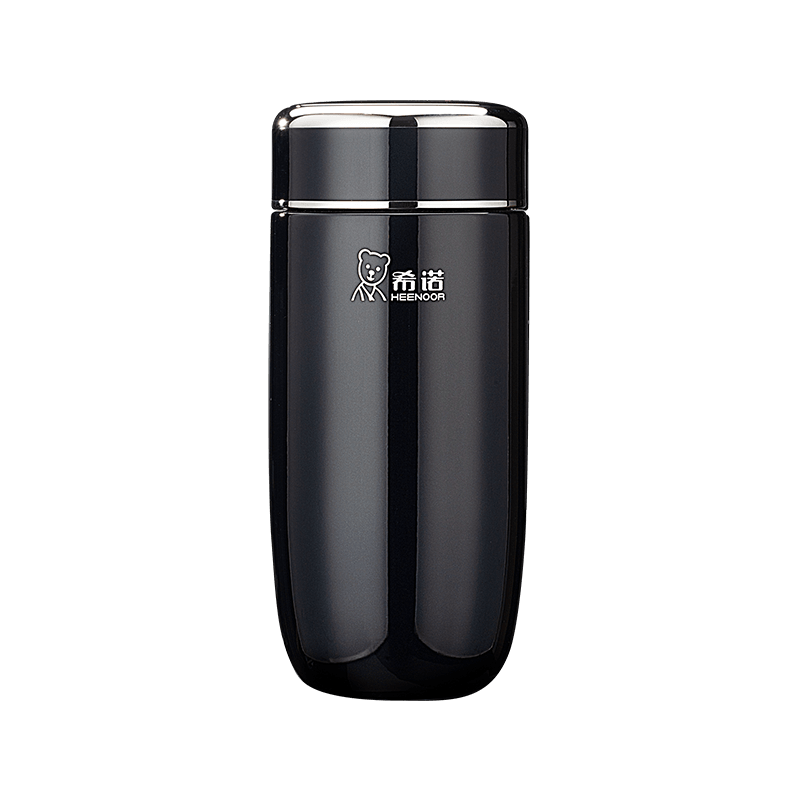
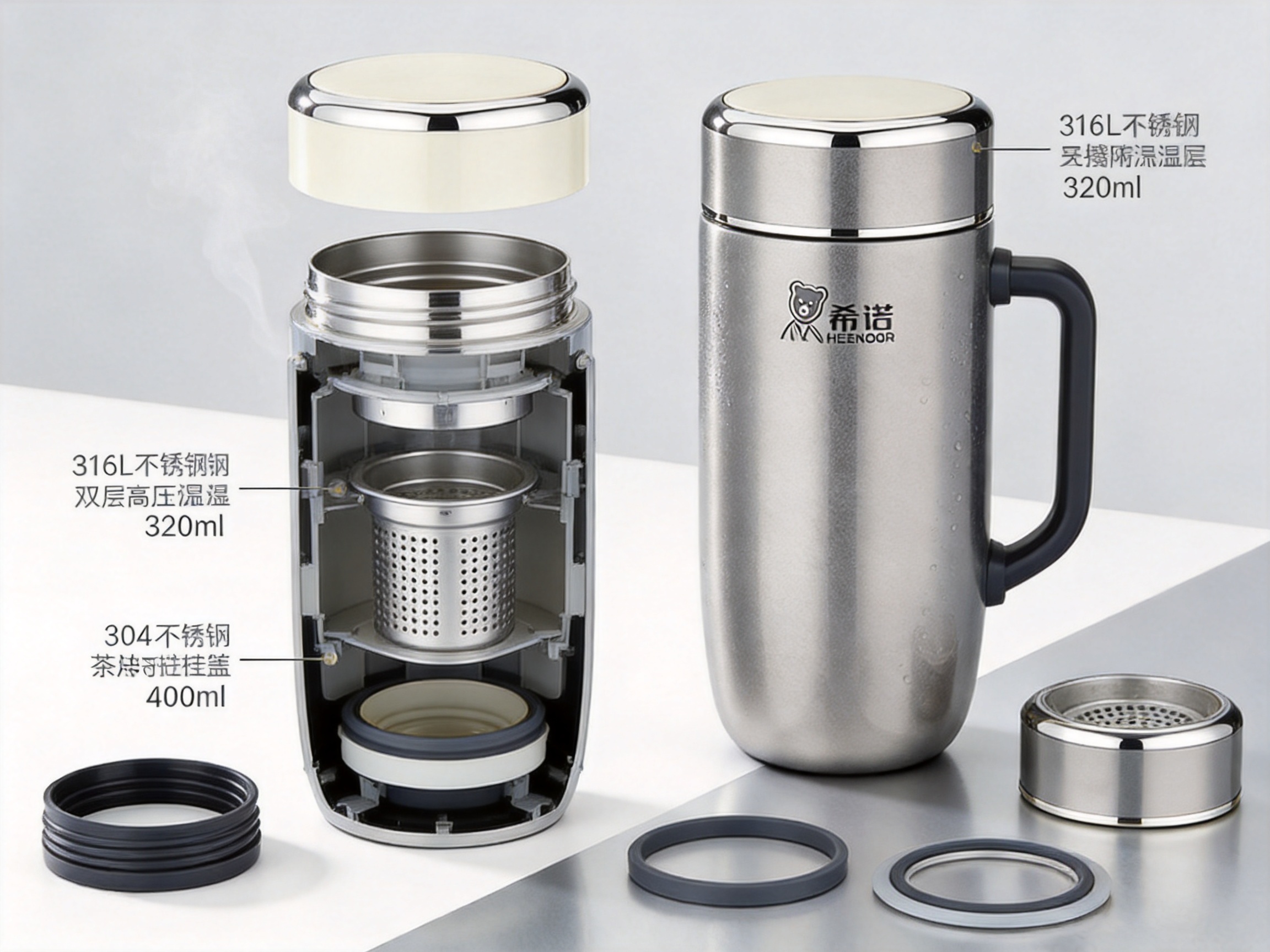
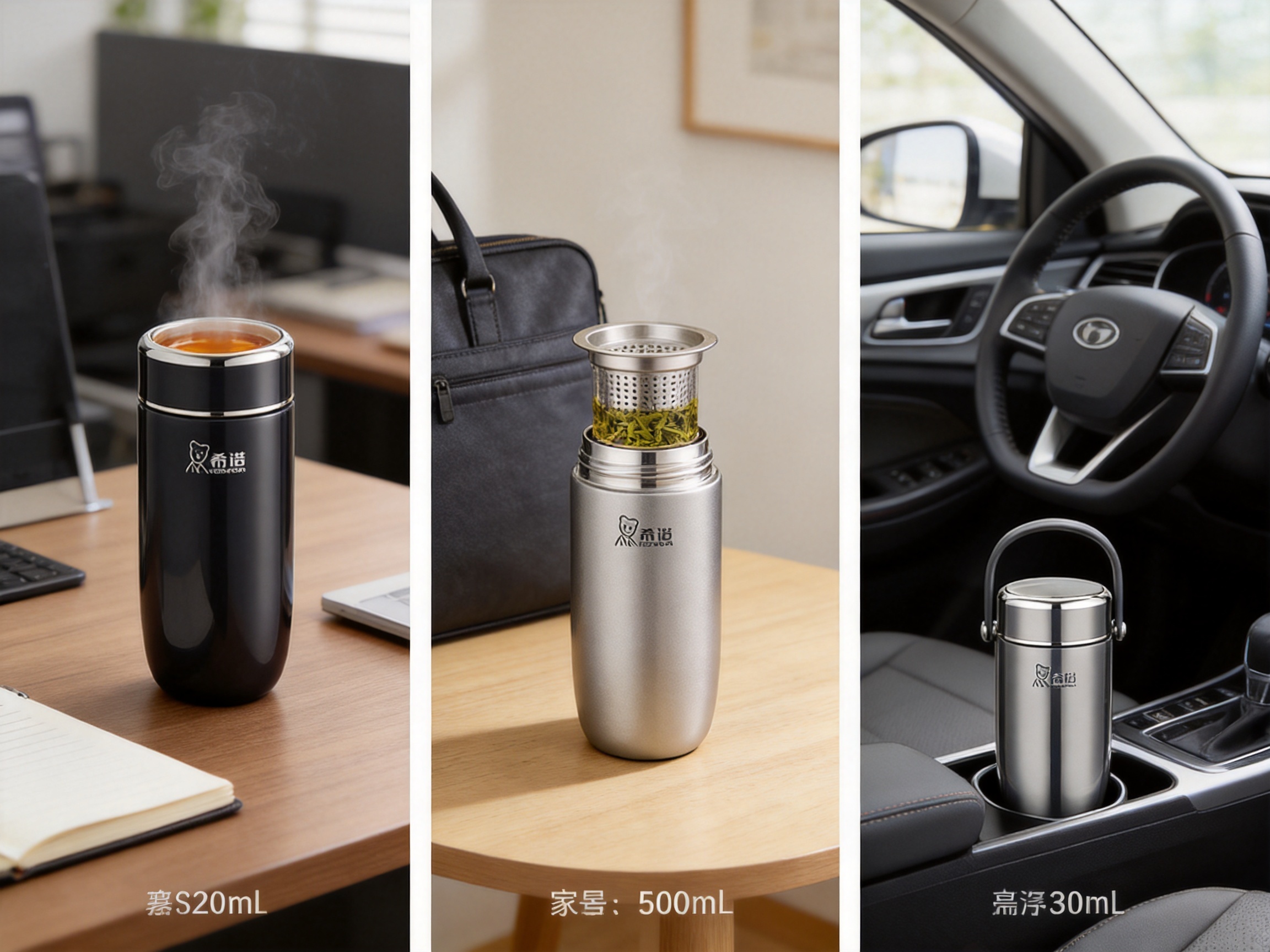
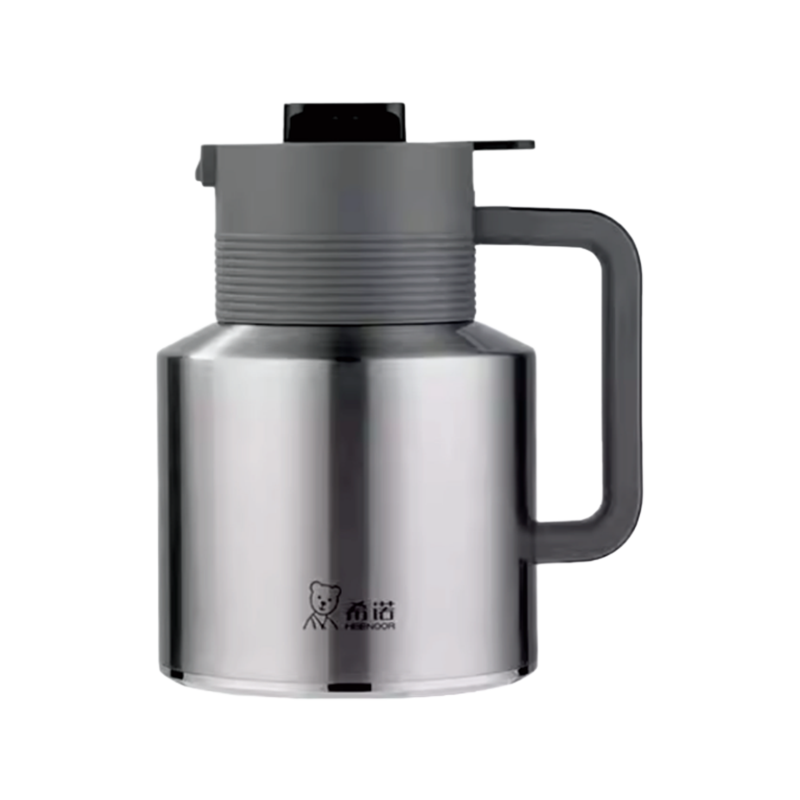
The Goedan Car Stainless Steel Vacuum Flask is designed around these requirements. It combines a 316L stainless steel inner liner, a 304 stainless steel and heat-resistant silicone filter, a double-layer vacuum structure, a heat-resistant silicone sealing ring, and a compact handle-equipped body. Available in 320 ml and 400 ml capacities, it is intended for office use, home tea drinking, commuting, and other everyday scenarios in which users want a practical serving vessel with insulation performance.
Its value is not limited to a single temperature-retention specification. The flask brings together several coordinated design decisions. The corrosion-resistant inner liner supports the storage of tea, coffee, juice, and other common beverages. The removable filter helps separate tea leaves from liquid. The vacuum layer reduces heat transfer. The sealing ring supports leak resistance when the flask is inverted, while the handle makes carrying more convenient. Its pearlescent lid finish and electroplated outer edge also give the product a more polished appearance than many purely utilitarian containers.
This article examines the product in detail, explains the advantages of its construction, compares its design logic with common competing approaches, and explores how the manufacturing capabilities of Heenoor Co., Ltd. support the development of reliable drinkware programs. It also considers the product’s suitable applications, quality factors, customization potential, and purchasing value for brands, distributors, organizations, and professional procurement teams.
Goedan Car Stainless Steel Vacuum Flask
Product Overview and Design Purpose
The Goedan Car Stainless Steel Vacuum Flask belongs to the stainless steel vacuum flask category and is available under models XN-3305 and XN-3306. The two listed capacities are 320 ml and 400 ml, with corresponding weights of approximately 0.26 kg and 0.30 kg. This capacity range places the product between a compact personal tea cup and a larger travel bottle. It is large enough for a useful serving of hot or cold beverage while remaining relatively light for commuting, desk use, and short trips.
The product is designed as a compact insulated flask with integrated tea-drinking functionality. Instead of requiring a separate tea infuser or strainer, it uses a filter positioned at the mouth. The mouth structure is designed to fit the filter securely, helping create a compact assembly. This design is particularly relevant for tea drinkers who want to brew or carry loose-leaf tea without allowing leaves to flow freely into the drinking liquid.
The flask’s construction can be understood as a coordinated system of material layers and functional components. The inner liner is made from 316L stainless steel. The filter uses 304 stainless steel combined with heat-resistant silicone rubber. The sealing ring is also made from heat-resistant silicone rubber. The main body uses a double-layer vacuum design to limit heat transfer between the beverage and the surrounding environment. The lid receives a pearlescent lacquer finish, while the outer edge is polished through electroplating.
Each of these elements addresses a different user requirement. The inner liner focuses on contact durability and corrosion resistance. The filter focuses on separation and controlled brewing. The vacuum structure focuses on temperature retention. The sealing ring focuses on leak resistance. The surface finishing focuses on visual appeal and perceived quality. The handle focuses on portability and grip. The result is a product that is not dependent on one feature alone; its overall value comes from the way multiple features work together.
316L Stainless Steel for the Inner Liner
The inner liner is the part of a drinkware product that has the most direct and continuous contact with the beverage. For this reason, material selection is one of the most important factors in the performance and perceived quality of a vacuum flask. The use of 316L stainless steel gives the product an inner liner designed for strong corrosion resistance and long-term contact with a variety of common beverages.
According to the product specifications, the 316L inner liner is resistant to corrosion from acids and alkalis. This makes it suitable for tea, coffee, juice, and other beverages that may have different chemical characteristics. Tea and coffee contain naturally occurring compounds, while many juices have an acidic profile. A material selected for resistance to these environments can help support the appearance, durability, and cleanliness of the internal surface over repeated use.
The “L” designation in 316L stainless steel is commonly associated with a lower carbon content than standard 316 stainless steel. In appropriate manufacturing conditions, this can support corrosion resistance after welding or other heat-related processing. For a drinkware manufacturer, this material choice provides a useful foundation for producing an inner container that must remain stable through forming, joining, cleaning, filling, and repeated thermal cycles.
Compared with ordinary lower-grade metal constructions, a 316L inner liner offers an important positioning advantage. Users do not need to view the flask solely as a short-term promotional container. Instead, the material supports a more durable, premium-oriented product concept. For brands and distributors, the inner liner can become a meaningful specification when communicating quality to customers who pay attention to food-contact materials and long-term use.
The inner liner also supports a broad beverage range. Some flasks are marketed primarily for water and may be less suitable for users who regularly carry tea, coffee, or fruit-based beverages. This model is designed with a more versatile usage profile. It can serve office workers who prepare coffee in the morning, tea drinkers who prefer loose leaves, commuters who carry a warm drink, and home users who want a compact vessel for individual servings.
Material selection alone does not guarantee product quality. The liner must be formed accurately, joined correctly where necessary, cleaned thoroughly, and inspected as part of a controlled production process. The value of 316L stainless steel is therefore strongest when it is supported by disciplined engineering, tooling, production, and quality management. This connection between material capability and manufacturing execution is central to the product’s overall positioning.
Filter Construction for Tea and Infused Beverages
The filter is one of the product’s most distinctive practical features. It is made from 304 stainless steel combined with heat-resistant silicone rubber. This pairing provides a balance between rigidity, filtering function, thermal tolerance, and secure fitting. The stainless steel component provides the main screening structure, while the silicone element can support contact, cushioning, and sealing around the filter assembly.
Loose-leaf tea drinkers often face a choice between using a separate infuser, accepting sediment in the cup, or using a container that does not provide adequate separation. An integrated filter helps simplify the routine. Tea leaves can be placed in the intended brewing area, while the filter allows liquid to pass through and helps keep larger particles away from the drinking portion.
The use of 304 stainless steel for the filter is appropriate for a component that must remain strong, washable, and stable during contact with hot beverages. The filter may be exposed to repeated temperature changes, moisture, tea compounds, and manual cleaning. A stainless steel screening element can support durability in this environment, while its structure can be designed for repeated insertion and removal.
Heat-resistant silicone rubber adds another layer of practicality. Silicone can help the filter sit more securely within the mouth structure and reduce direct hard contact between different components. It may also help improve the fit when the flask is assembled. Since the filter is used with hot liquids, the selection of a heat-resistant grade is important to the product’s intended application.
Compared with a flask that requires an external strainer, the integrated approach can reduce the number of separate accessories a user must carry and clean. Compared with a basic bottle without any filter, it offers greater flexibility for tea and infused drinks. This gives the product a clear advantage in markets where tea drinking is part of the daily routine or where buyers are looking for a compact beverage vessel with more than simple storage functionality.
The filter also contributes to the product’s visual and structural identity. A properly fitted filter can help maintain a compact mouth assembly rather than creating a bulky attachment. This is important because an oversized or poorly integrated infuser can interfere with drinking comfort, cleaning, and portability. The product’s mouth is designed to fit the filter securely, supporting a more unified form.
Vacuum Insulation and Temperature Retention
The primary performance role of a vacuum flask is to reduce heat transfer. The Goedan Car Stainless Steel Vacuum Flask uses a double-layer vacuum design. By creating a vacuum space between the inner and outer layers, the structure reduces the movement of heat through the surrounding air. This supports the preservation of hot or cold beverage temperatures for longer than a conventional single-wall cup.
The listed performance information states that the product maintains a temperature of no less than 44°C for six hours and no less than 48°C for twelve hours. These figures are part of the product’s stated insulation description and are intended to demonstrate its ability to retain warmth over an extended period. Actual results can vary according to initial beverage temperature, ambient conditions, filling level, lid position, opening frequency, and other usage factors.
One notable aspect of the stated figures is that the product is positioned for both shorter and longer use periods. A user may fill the flask before leaving home and still have a warm beverage during a workday or commute. The same structure also supports cooling for cold beverages, making the flask more versatile across seasons and beverage preferences.
Many competing drinkware products emphasize only a headline temperature claim. A more useful evaluation considers the complete insulation system. The quality of the inner and outer body, the integrity of the vacuum space, the fit of the lid, and the sealing ring all influence the practical result. If the lid leaks air or liquid, if the mouth is poorly aligned, or if the vacuum structure is inconsistent, the nominal insulation design may not deliver a satisfying user experience.
This is why the product’s vacuum system should be evaluated together with its closure and sealing components. The double-layer structure limits heat transfer through the body, while the lid and heat-resistant silicone sealing ring help close the opening. The coordinated design can reduce unnecessary exposure of the beverage to the outside environment and support the flask’s intended insulation performance.
For commercial buyers, insulation performance can be especially important because it affects product reviews, return rates, and customer trust. A flask that looks attractive but fails to preserve temperature may quickly lose value in the market. By combining the vacuum structure with suitable materials and a compact closure design, this product is positioned as a practical performance item rather than merely a decorative cup.
Leak Resistance and Closure Design
A vacuum flask must be convenient not only when it is standing upright but also when it is placed inside a bag, carried by hand, or temporarily inverted. The product uses a heat-resistant silicone sealing ring to support leak resistance when the cup is inverted. This feature is important for commuters, office workers, students, and anyone who transports a beverage alongside personal belongings.
Silicone rubber is commonly used in drinkware sealing applications because it can remain flexible across a broad temperature range and form a close contact between mating surfaces. In this product, the heat-resistant specification is consistent with the flask’s use for hot tea, coffee, and other warm drinks. The ring also supports repeated opening and closing, provided it is properly maintained and replaced when necessary after extended use.
The mouth and filter design are also related to closure performance. A secure filter fit helps prevent movement within the mouth area and contributes to a compact internal structure. When the filter, lid, and sealing ring are correctly matched, the closure can feel more stable and controlled during everyday use.
Leak resistance is an area where products often differ significantly even when they have similar capacities. A loose cap, poorly fitted gasket, or unstable infuser can result in liquid escaping into a bag. The product’s sealing ring and integrated mouth design address these concerns as part of the initial architecture rather than treating them as optional accessories.
Users should still follow sensible care practices. The lid should be closed fully, the sealing ring should be seated correctly, and the product should be cleaned after use. A seal can lose effectiveness if beverage residue accumulates in the contact area. Regular inspection is particularly important for commercial users who expect a flask to remain in service through frequent daily cycles.
Portability Through Capacity, Weight, and Handle Design
The 320 ml and 400 ml capacities are practical for personal beverage consumption. The smaller version is suitable for users who prefer a compact tea serving or a lighter carry option. The larger version offers additional volume while remaining within a portable format. This two-size structure allows brands and distributors to serve different customer preferences without moving into an entirely different product platform.
The listed weights are approximately 0.26 kg and 0.30 kg. These weights help position the flask as lightweight and portable for its insulated construction. A double-wall vacuum product naturally requires more material and structural complexity than a simple cup, so weight control becomes an important design consideration. Excessive weight can discourage users from carrying a flask regularly, particularly when it is already filled with a beverage.
The handle design contributes to transport convenience. A handle can provide a more secure grip than holding a smooth cylindrical body, especially when the product contains a hot beverage or when the user is moving between locations. It can also make the flask easier to pick up from a desk, countertop, or vehicle console.
The product’s name suggests suitability for car-related use, but its applications extend beyond the vehicle. The compact form can fit naturally into office routines, home tea preparation, short commutes, and personal beverage service. The handle is helpful when carrying the product from a kitchen to a meeting room or from a vehicle to a workplace.
Compared with larger high-volume bottles, this flask offers a more focused personal-serving format. Compared with small non-insulated cups, it provides stronger temperature management and greater beverage flexibility. This balance between capacity, weight, and function is one of its main competitive advantages.
Surface Finishing and Perceived Product Quality
Functional performance is essential, but appearance influences purchasing decisions and brand perception. The lid surface uses a pearlescent lacquer finish, and the outer edge is polished through electroplating. These treatments give the product a refined gloss and help distinguish it from plain utility-oriented drinkware.
A pearlescent finish can create subtle visual depth as light moves across the surface. This type of appearance may be attractive in office, home, gift, and lifestyle channels where the product is expected to complement its surroundings. The electroplated outer edge adds a polished visual detail that can reinforce the impression of a carefully finished product.
Surface treatment must be considered as part of the complete manufacturing system. Coating consistency, edge preparation, adhesion, handling, and inspection all influence the final result. A refined finish is most valuable when it remains uniform across production batches and does not compromise the functional performance of the lid or sealing components.
For private-label and branded drinkware programs, the finish can also support product differentiation. A basic vacuum flask may be technically adequate but difficult to distinguish in a crowded marketplace. Decorative details such as pearlescent lacquer and polished electroplated edges can help create a more recognizable product identity without changing the fundamental capacity or insulation platform.
The product therefore appeals to two purchasing motivations at once. It offers practical features for users who care about tea preparation, temperature retention, portability, and leakage control. It also offers aesthetic details for users who want an item that looks refined on a desk, dining table, or in a vehicle.
Advantages Compared with Common Competing Designs
Compared with Basic Single-Wall Cups
Single-wall cups are often lightweight and inexpensive, but they provide limited insulation. Their exterior can become hot when filled with a warm beverage, and their contents can cool quickly in changing environments. The double-layer vacuum structure of this product provides a more advanced approach to thermal management and can support longer retention of hot or cold temperatures.
The product also offers a lid, sealing ring, and filter system that a basic open cup may not include. These additions make it more suitable for transport and for beverage preparation away from the kitchen.
Compared with Plastic Insulated Bottles
Plastic bottles may offer low weight and impact resistance, but stainless steel provides a more premium material experience and is often selected for durability and repeated beverage contact. The 316L inner liner gives this product a strong specification for users who are concerned about corrosion resistance and long-term contact with tea, coffee, and juice.
The stainless steel construction also supports a more refined appearance. With pearlescent lacquer and electroplated detailing, the product can occupy a higher perceived-value position than a basic plastic bottle.
Compared with Standard Stainless Steel Water Bottles
Many standard stainless steel bottles are designed primarily for water. They may not include a tea filter, or their opening may not be optimized for loose-leaf tea. This product offers a more specialized beverage experience by integrating a 304 stainless steel and silicone filter into the mouth structure.
The combination of a tea filter, compact capacity, handle, and refined lid finish gives the flask a distinct position between a traditional tea cup and a general-purpose travel bottle.
Compared with Separate Infuser Systems
A separate infuser may be versatile, but it adds another component to carry, wash, and store. The integrated filter approach reduces the need for extra equipment and can make the daily tea routine simpler. It also allows the product to maintain a compact overall form.
The secure fit between the mouth and filter is particularly important. A filter that is integrated into the product architecture can be easier to use than an accessory that shifts or must be balanced independently inside a cup.
Compared with Larger High-Capacity Flasks
Larger flasks can provide more beverage volume, but they may be heavier and less convenient for short trips or office use. The 320 ml and 400 ml options are directed toward personal servings and everyday portability. The lower weight and handle design help make frequent carrying more manageable.
This does not mean that the product replaces every large-capacity bottle. Instead, it offers a focused alternative for users who value compactness, portion control, and convenient tea drinking over maximum volume.
Manufacturing Capabilities Supporting Product Reliability
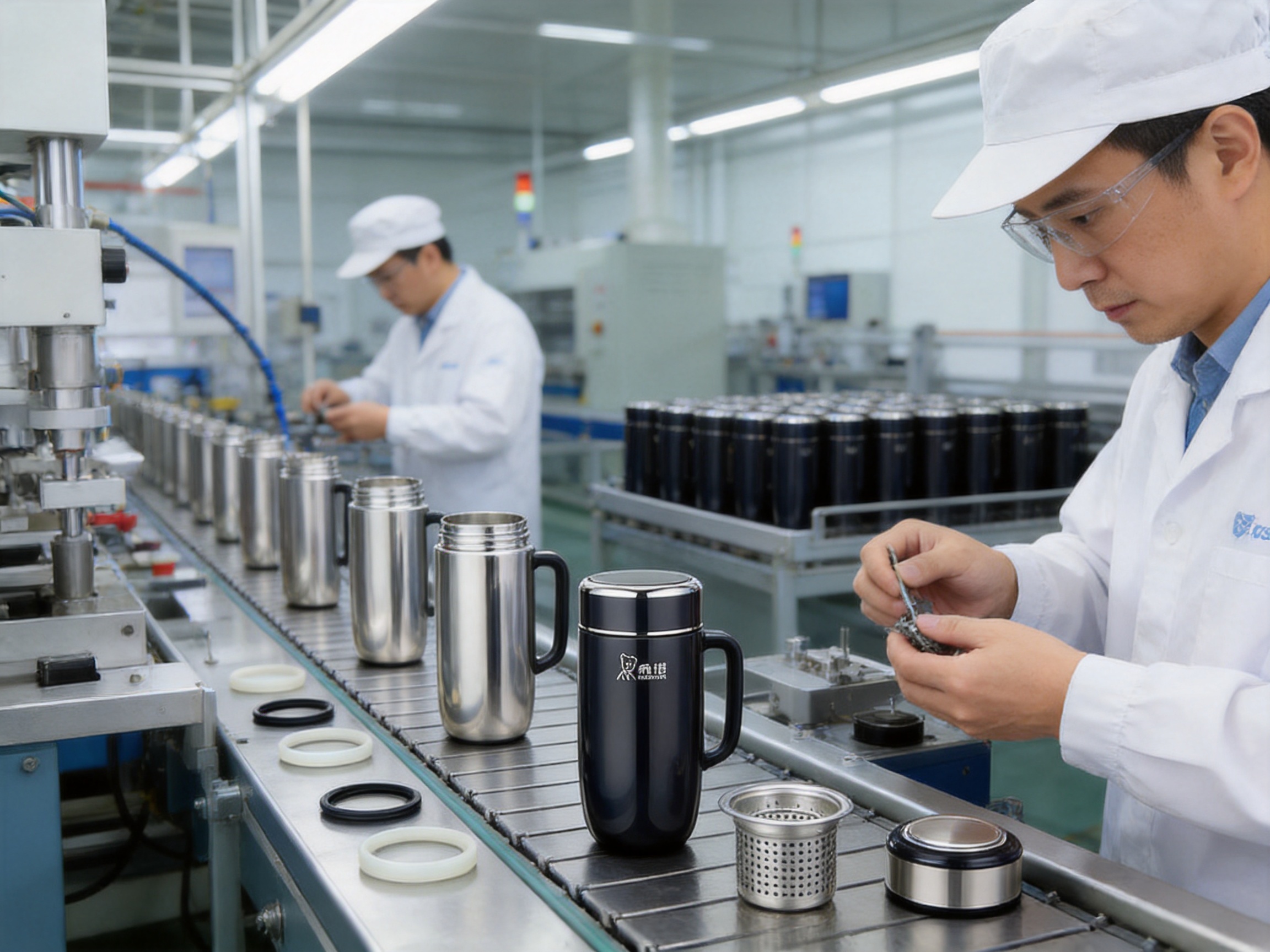
The product’s material and design advantages must be supported by reliable manufacturing execution. Heenoor Co., Ltd. was founded in 1999 and has developed into a large-scale drinkware manufacturer focused on product development and industrial manufacturing. Its stated capabilities include product design, engineering validation, tooling development, standardized production, and quality management.
This integrated structure is valuable because drinkware quality depends on decisions made at multiple stages. Product design determines how the components fit together. Engineering validation examines whether the concept can perform consistently. Tooling development affects dimensional accuracy and repeatability. Standardized production helps control large-volume output. Quality management provides the procedures for monitoring and verifying results.
When these functions are separated among unrelated suppliers, communication gaps can occur. A design may be attractive but difficult to manufacture. A tool may produce inconsistent dimensions. A sealing ring may be specified without sufficient consideration of the lid geometry. An integrated manufacturing partner can evaluate these relationships earlier and make adjustments before mass production.
For the Goedan Car Stainless Steel Vacuum Flask, this integrated approach is relevant to the inner liner, filter, sealing ring, lid, surface treatment, handle, and vacuum body. Each part must fit its neighbors. The filter must align with the mouth. The sealing ring must match the closure surfaces. The lid finish must be applied without interfering with functional areas. The vacuum body must maintain a consistent structure while remaining lightweight enough for portability.
Heenoor’s experience with stainless steel, titanium, plastic, and glass drinkware also supports material-specific product development. Different materials require different forming, joining, finishing, testing, and handling considerations. A manufacturer with experience across several drinkware materials can provide broader technical judgment when brands are comparing product platforms or exploring new designs.
The company’s emphasis on manufacturability, durability, scalability, and lifecycle performance is especially relevant for professional customers. A product is not successful only because the first sample looks good. It must remain stable during repeated production, packaging, shipping, retail handling, and consumer use. Manufacturing discipline helps transform a product concept into a dependable supply program.
From Product Concept to Engineering Validation
Product development begins with defining the intended use. For this flask, the intended users may include tea drinkers, office workers, commuters, home beverage users, and customers seeking a compact insulated vessel. These use cases influence capacity, handle placement, filter configuration, lid geometry, surface treatment, and weight targets.
Engineering validation then translates the concept into measurable requirements. Important areas include temperature retention, leak resistance, component fit, material compatibility, filter stability, coating appearance, and carrying comfort. Validation may also consider the effect of repeated opening and closing, exposure to hot and cold beverages, cleaning cycles, and transport vibration.
A well-developed product must balance these requirements rather than maximizing one feature at the expense of another. A thicker body may improve perceived strength but increase weight. A very narrow opening may improve compactness but make cleaning more difficult. A decorative finish may improve appearance but require careful protection during assembly. A dense filter may separate fine particles more effectively but restrict liquid flow. Engineering validation helps establish a practical balance.
For procurement teams, the importance of validation is often reflected in consistency. A product specification should not exist only on paper. It should be connected to production methods, inspection criteria, approved materials, and repeatable assembly practices. This is one reason an experienced manufacturer can be valuable to brands seeking dependable long-term supply rather than one-time purchasing.
Tooling Development and Dimensional Consistency
Tooling development is a key part of industrial drinkware production. The tools used to form, shape, position, and assemble components influence the final dimensions and repeatability of the product. A flask with a filter and sealing ring requires particular attention to interfaces, because small dimensional differences can affect fit and leakage performance.
Accurate tooling supports consistency in the inner liner, outer body, lid, filter seat, handle attachment, and other structural areas. It can also help maintain a consistent visual profile across production batches. For a branded product, this matters because customers expect every unit to look and perform like the approved sample.
Tooling decisions also affect scalability. A design that is suitable for a prototype may need modification before high-volume production. Manufacturing engineers must consider cycle time, material flow, ease of assembly, inspection access, and maintenance requirements. These factors contribute to cost control and supply stability without necessarily reducing the product’s functional quality.
Heenoor’s stated experience in tooling development allows the company to support this transition from design intent to repeatable production. For customers developing customized colors, logos, packaging, or related models, tooling expertise can reduce the risk of late-stage redesign and production delays.
Standardized Production and Quality Management
Standardized production is essential when a drinkware product is manufactured in large quantities. It establishes consistent procedures for material handling, forming, component assembly, surface finishing, cleaning, inspection, and packaging. Standardization is particularly important for products with several interacting components, such as a vacuum flask with a filter and decorative lid.
Quality management can address both incoming materials and finished products. Materials such as 316L stainless steel, 304 stainless steel, and heat-resistant silicone rubber should be controlled according to approved specifications. Production processes should be monitored to identify variation before it reaches the customer. Finished units can then be checked for appearance, assembly, leakage, and other applicable requirements.
For vacuum drinkware, quality attention commonly includes verification of body integrity, closure fit, and thermal performance. The exact testing program may vary by product and customer requirement, but the underlying principle remains the same: functional claims should be supported by controlled processes and measurable checks.
A manufacturer’s quality system also contributes to traceability and corrective action. If a recurring issue is discovered, a structured organization can investigate the source, identify affected batches, implement improvements, and verify the result. This is an important strength for brands that need reliable international supply and consistent customer experience.
The product’s competitive position is therefore based not only on visible features. It also depends on the manufacturer’s ability to repeat those features accurately at scale. A well-designed flask can lose market value if production quality varies widely. Standardized manufacturing and quality management help protect the product’s performance and the customer’s confidence.
Material Compatibility and Hygiene Considerations
Drinkware is used directly with beverages, so material compatibility and hygiene are central purchasing considerations. The 316L stainless steel inner liner, 304 stainless steel filter, and heat-resistant silicone sealing ring are selected for components that contact or influence the beverage environment.
The smoothness and accessibility of the internal structure can affect cleaning. A compact filter system should be removable or sufficiently accessible for routine washing. Users should clean the liner, filter, lid, and sealing ring according to appropriate care instructions and allow components to dry thoroughly when not in use.
Tea and coffee can leave residues, while juices may contain sugars or acids. Regular cleaning helps preserve taste and appearance and reduces the buildup of residue around the filter and sealing ring. The product’s material selection supports repeated use, but good maintenance remains essential for hygiene and service life.
For professional buyers, material documentation and production controls can help support internal purchasing reviews. Organizations may want to confirm the material grades, intended use conditions, cleaning recommendations, packaging requirements, and inspection procedures before placing a large order. A manufacturer with experience in international drinkware programs can assist in organizing this technical information.
Applications in Daily Life and Commercial Channels
Office Use
The 320 ml and 400 ml capacities are well suited to individual office beverages. The flask can hold tea or coffee for a work session without occupying the space required by a large bottle. Its refined lid finish allows it to function comfortably in professional environments, while the handle supports convenient movement between desks, meeting rooms, and break areas.
Home Tea Drinking
The integrated filter makes the product suitable for personal tea preparation at home. Users can enjoy loose-leaf tea in a compact vessel without setting up a full teapot. The insulated body can help maintain a warm serving temperature while reducing the need to drink immediately after preparation.
Commuting
For commuting, the product’s light weight, handle, sealing ring, and compact capacity are valuable. It can be prepared before departure and carried to the workplace or another destination. The leak-resistant design is particularly relevant when the flask is placed in a bag or carried alongside electronic devices and documents.
Vehicle and Travel Use
The product is also appropriate for use during vehicle-based travel, short journeys, and personal transport. Its compact size can be easier to manage than a large bottle, while the vacuum insulation supports hot or cold beverage use over a longer period. Users should always place drinkware securely and avoid handling hot beverages in a way that distracts from safe driving.
Corporate and Promotional Programs
Its combination of practical utility and refined appearance makes the flask a candidate for corporate gifting, hospitality programs, employee benefits, and promotional campaigns. A product that is used repeatedly can provide longer-lasting visibility than a disposable promotional item. Buyers can evaluate customization options, color coordination, packaging, and quantity requirements with the manufacturer.
Retail and E-Commerce
For retail and online channels, the product offers several clear selling points: 316L stainless steel, tea filtration, vacuum insulation, compact capacity, portable weight, leak-resistant sealing, and decorative finishing. These features can be organized into product specifications, comparison charts, packaging content, and customer education materials.
Customization and Private-Label Opportunities
Drinkware brands often need a product that can be adapted to their market identity. Customization may involve color, surface finish, logo application, packaging, capacity selection, or accessory configuration. The existing product platform provides a starting point for discussing these requirements.
The 320 ml and 400 ml choices allow a brand to target different user groups or create a coordinated product series. The smaller size may appeal to compact lifestyle and tea-focused channels, while the larger version may suit customers who prefer a more generous personal serving.
Surface finishing can also support brand positioning. The pearlescent lacquer and polished electroplated edge create a premium visual foundation that may be adapted to different color directions, subject to production feasibility and testing. A manufacturer with integrated design, engineering, tooling, and production capabilities can help evaluate how a requested appearance affects durability, cost, lead time, and minimum order planning.
Packaging is another important part of the commercial product. A well-designed package should protect the lid finish and body during transportation while clearly communicating the materials, capacity, care instructions, and intended use. For international customers, packaging content may need to be adapted to language, retail requirements, and local compliance expectations.
Private-label customers should also consider the relationship between customization and quality control. Each change to material, color, logo, filter configuration, or sealing component may require additional validation. The safest approach is to confirm an approved sample, documented specifications, and inspection standards before mass production.
Purchasing Considerations for Professional Buyers
Professional buyers should evaluate the product from both a consumer perspective and a supply-chain perspective. From the consumer perspective, the main questions involve comfort, appearance, insulation, leakage, cleaning, and beverage compatibility. From the supply-chain perspective, buyers should examine production capability, material control, quality management, order scalability, packaging, and communication.
The material specification should be clearly documented. The inner liner is 316L stainless steel, the filter is 304 stainless steel combined with silicone rubber, and the sealing ring is heat-resistant silicone rubber. These details should appear consistently in technical documentation, product labeling where appropriate, and quality records.
Capacity and weight should also be confirmed for each model. The stated capacities are 320 ml and 400 ml, with approximate weights of 0.26 kg and 0.30 kg. Buyers may need to confirm whether these figures refer to the finished product without packaging and whether there are acceptable production tolerances.
Performance claims should be discussed in relation to testing conditions. The stated temperature-retention information gives a useful indication of the intended performance, but commercial buyers may request samples and conduct their own evaluations under representative conditions. Testing may include hot and cold beverages, repeated opening, inverted storage, transport, and cleaning.
Appearance approval is important for products using decorative finishes. The pearlescent lacquer and electroplated edge should be reviewed under suitable lighting, and the acceptable range of color or gloss variation should be defined. Consistent appearance is especially important when products are sold as part of a coordinated collection.
Finally, buyers should evaluate communication and project management. Heenoor’s stated focus on international project support, scalable manufacturing, and long-term supply stability can be relevant to companies that need a manufacturing partner rather than a simple spot supplier. Clear technical communication at the beginning of the project can reduce misunderstandings later.
Care and Maintenance Guidance
To maintain the product’s performance, users should rinse and clean the flask after each use. Tea leaves, coffee residue, and juice compounds should not be allowed to remain inside for extended periods. The filter should receive particular attention because small particles can collect in its openings or around the silicone contact area.
The sealing ring should be removed when practical for cleaning, then returned to its correct position before use. Users should check that the ring is not twisted, displaced, or contaminated with residue. A properly seated seal is important for leak resistance.
The flask should be allowed to dry after washing. Storing the lid separately or leaving the product open during drying can help reduce retained moisture and odors. Care instructions should always follow the manufacturer’s specific recommendations, especially regarding cleaning tools, detergents, and temperature limits.
Users should also avoid treating the flask as indestructible. Strong impacts can damage the exterior, lid, handle, or vacuum structure. If the body becomes severely dented or the sealing components show visible damage, the product should be inspected before continued use.
Good maintenance extends the useful life of the drinkware and helps preserve the benefits of the chosen materials. It also supports a better user experience by maintaining taste neutrality, clean appearance, smooth lid operation, and dependable closure performance.
Why the Product Is Suitable for Long-Term Drinkware Programs
Brands and procurement teams often need products that remain relevant beyond a single selling season. The Goedan Car Stainless Steel Vacuum Flask has a combination of features that support continued market use: durable stainless steel materials, a practical personal capacity, integrated tea functionality, vacuum insulation, portable weight, a handle, and a refined appearance.
The product can be positioned in several channels without requiring a completely different design. It can be presented as an office tea flask, a commuting cup, a compact insulated bottle, a corporate gift, or a lifestyle drinkware item. This flexibility can help distributors manage inventory across multiple customer segments.
The product also offers a useful foundation for product-line expansion. Related sizes, colors, finishes, packaging styles, or complementary drinkware could potentially be developed around the same manufacturing expertise. Working with a company experienced in stainless steel, titanium, plastic, and glass drinkware may support broader category planning over time.
Long-term value ultimately depends on consistency. A manufacturer must be able to maintain material standards, control production variation, respond to quality issues, and support delivery requirements. Heenoor’s integrated capabilities in design, validation, tooling, standardized production, and quality management are aligned with these needs.
Questions and Answers
What is the main material used for the inner liner?
The inner liner is made from 316L stainless steel. The product information identifies this material as resistant to corrosion from acids and alkalis and suitable for tea, coffee, juice, and other beverages.
What materials are used for the filter?
The filter uses 304 stainless steel combined with heat-resistant silicone rubber. This construction is intended to separate tea leaves from liquid while providing a secure and heat-tolerant fit within the mouth structure.
What capacities are available?
The flask is available in 320 ml and 400 ml capacities. These options are designed for personal beverage use in offices, homes, vehicles, and during commuting.
How much does the flask weigh?
The listed weights are approximately 0.26 kg for one size and 0.30 kg for the other. The exact weight may vary slightly according to the selected capacity, production tolerance, and final configuration.
Does the product retain both hot and cold temperatures?
Yes. Its double-layer vacuum design is intended to reduce heat transfer and support insulation for hot drinks as well as cooling for cold beverages.
What temperature-retention information is provided?
The product information states that the temperature is maintained at no less than 44°C for six hours and no less than 48°C for twelve hours. Actual performance depends on initial temperature, ambient conditions, filling level, lid opening frequency, and other usage factors.
Is the flask suitable for loose-leaf tea?
Yes. The integrated filter is designed to separate tea leaves from the liquid. Its 304 stainless steel and heat-resistant silicone construction supports repeated use with hot tea.
Is the product leak-resistant?
The product uses a heat-resistant silicone sealing ring to support leak resistance when the cup is inverted. For best results, the lid must be fully closed and the sealing ring must be correctly positioned and kept clean.
What makes the product portable?
The compact capacities, relatively low listed weights, and integrated handle all contribute to portability. The product is intended for office use, home tea drinking, commuting, and vehicle-related travel.
What is distinctive about the exterior appearance?
The lid surface uses a pearlescent lacquer finish, and the outer edge is polished through electroplating. These details give the product a refined gloss and help distinguish it from plain stainless steel drinkware.
Who manufactures the product?
The product is manufactured by Heenoor Co., Ltd., a drinkware manufacturer founded in 1999. The company states that it integrates product design, engineering validation, tooling development, standardized production, and quality management.
What other material categories does the manufacturer handle?
Heenoor states that it has experience with stainless steel, titanium, plastic, and glass drinkware. This broader material experience can support customers developing different types of drinkware products.
Can the product be considered for private-label programs?
It can serve as a potential platform for brand, retail, corporate, and procurement programs. Buyers should discuss logo application, color, packaging, capacity selection, order quantity, testing, and other customization requirements directly with the manufacturer.
What should buyers confirm before placing a large order?
Buyers should confirm material specifications, capacity, weight, finish standards, insulation testing conditions, sealing performance, filter fit, packaging, inspection requirements, lead times, and approved samples. Written technical documentation helps maintain consistency throughout the project.
Conclusion
The Goedan Car Stainless Steel Vacuum Flask is a compact drinkware product built around a practical combination of material quality, insulation, tea functionality, portability, and appearance. Its 316L stainless steel inner liner supports corrosion resistance for a wide range of beverages. The 304 stainless steel and heat-resistant silicone filter provides an integrated solution for tea leaves. The double-layer vacuum structure helps reduce heat transfer, while the sealing ring supports leak resistance when the product is inverted.
The 320 ml and 400 ml capacities, lightweight construction, and handle design make the flask suitable for personal use in offices, homes, vehicles, and during commuting. Its pearlescent lacquer lid and electroplated outer edge add a refined visual dimension that can help it compete in both practical and lifestyle-oriented drinkware markets.
Its strongest advantage over simpler competing products is the integration of several functions within a compact form. It is not merely a stainless steel container, nor only a tea cup. It combines insulated storage, tea filtration, portable handling, closure protection, and decorative finishing in one coordinated product.
The manufacturing capabilities of Heenoor Co., Ltd. provide an additional basis for commercial consideration. The company’s stated experience in product development, engineering validation, tooling development, standardized production, quality management, and multiple drinkware materials supports its role as a potential long-term manufacturing partner for brands and procurement teams.
For buyers seeking a personal-size vacuum flask with tea-drinking functionality and a more refined appearance, this product offers a balanced specification. Its value is strongest when the material advantages, design details, manufacturing controls, and intended use cases are evaluated together.
References
1. Product specification sheet for the Goedan Car Stainless Steel Vacuum Flask, models XN-3305 and XN-3306.
2. Product material information for 316L stainless steel inner liners in insulated drinkware.
3. Product material information for 304 stainless steel filters and heat-resistant silicone rubber components.
4. General engineering principles of double-layer vacuum insulation in beverage containers.
5. General manufacturing principles for stainless steel forming, tooling development, surface finishing, and quality management.
6. Company information supplied for Heenoor Co., Ltd., including its product development, engineering validation, standardized production, and international supply capabilities.
Product: Goedan Car Stainless Steel Vacuum Flask

You may also like…

Copyright © 2025 Heenoor Co., Ltd. All Rights Reserved.
 Custom Stainless Steel Drinkware Manufacturers
BACK TOP