 English
 中文简体
中文简体 日本語
日本語 Español
 عربى
عربى
Search
Categories
Recommend
Categories
 Lin Yuxi — International Product Sales Manager
Recommend
-
 Industry news
 -
 Industry news
 -
 Industry news
 -
 Industry news
Sep 18, 2026 - By admin
Elegant Jade-Style Vacuum Flask: Materials, Design, Performance, and Manufacturing Value
Content
- 1 Product Concept and Market Position
- 2 Material Engineering and Beverage Safety
- 3 Vacuum Flask Construction and Thermal Use
- 4 Design Details That Differentiate the Product
- 5 Packaging, Cultural Meaning, and Gift Value
- 6 Manufacturing Strengths Behind the Product
- 7 Advantages Compared with Conventional Competitors
- 8 Applications for Brands, Institutions, and Procurement Teams
- 9 Responsible Use and Maintenance
- 10 Quality and Sourcing Considerations for Buyers
- 11 Why Integrated Manufacturing Matters
- 12 Q&A
- 12.1 What type of product is the Elegant Jade-Style Vacuum Flask?
- 12.2 What capacities are available?
- 12.3 Why is 316L stainless steel used for the inner liner?
- 12.4 Can the filter be removed for cleaning?
- 12.5 What makes the lid different from a conventional vacuum flask lid?
- 12.6 Does the product use genuine jade?
- 12.7 Is the flask suitable for tea?
- 12.8 Can it be used for coffee and milk?
- 12.9 What is the significance of the pearlescent finish?
- 12.10 What packaging is provided?
- 12.11 Who may benefit from this product?
- 12.12 What manufacturing capabilities support the product?
- 12.13 How should buyers evaluate the product before placing an order?
- 13 Conclusion
- 14 References
- 15 Product: Elegant Jade-style Vacuum flask
In the modern drinkware market, a vacuum flask must do more than keep a beverage warm or cold. Buyers increasingly expect a product to combine dependable thermal performance, safe materials, convenient maintenance, distinctive appearance, and a clear design story. For gift programs, premium retail collections, hospitality applications, and private-label drinkware ranges, the challenge is even greater: the flask must be visually memorable while remaining practical, scalable, and reliable in production.
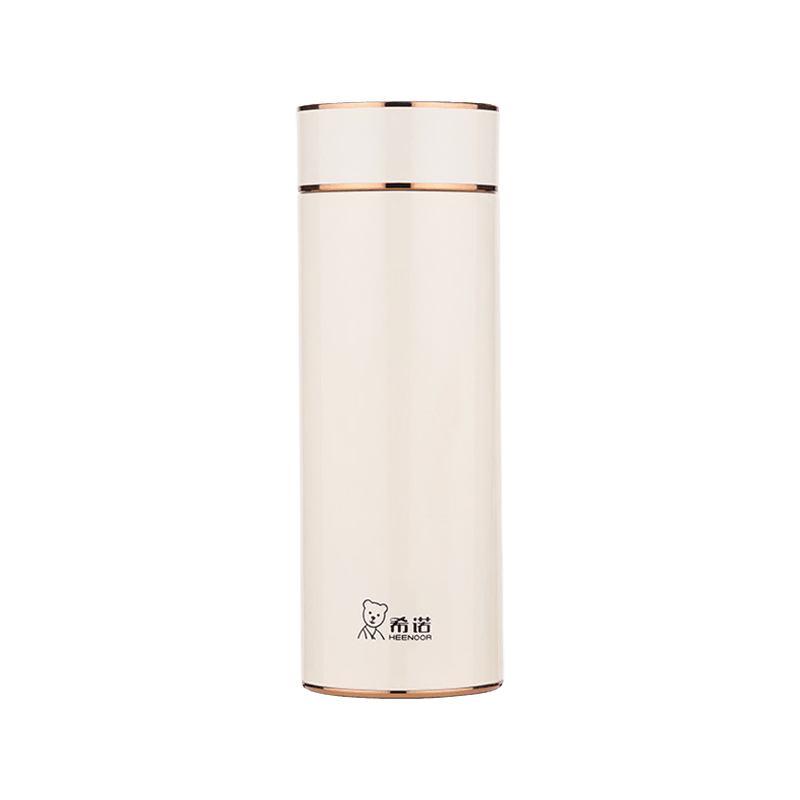
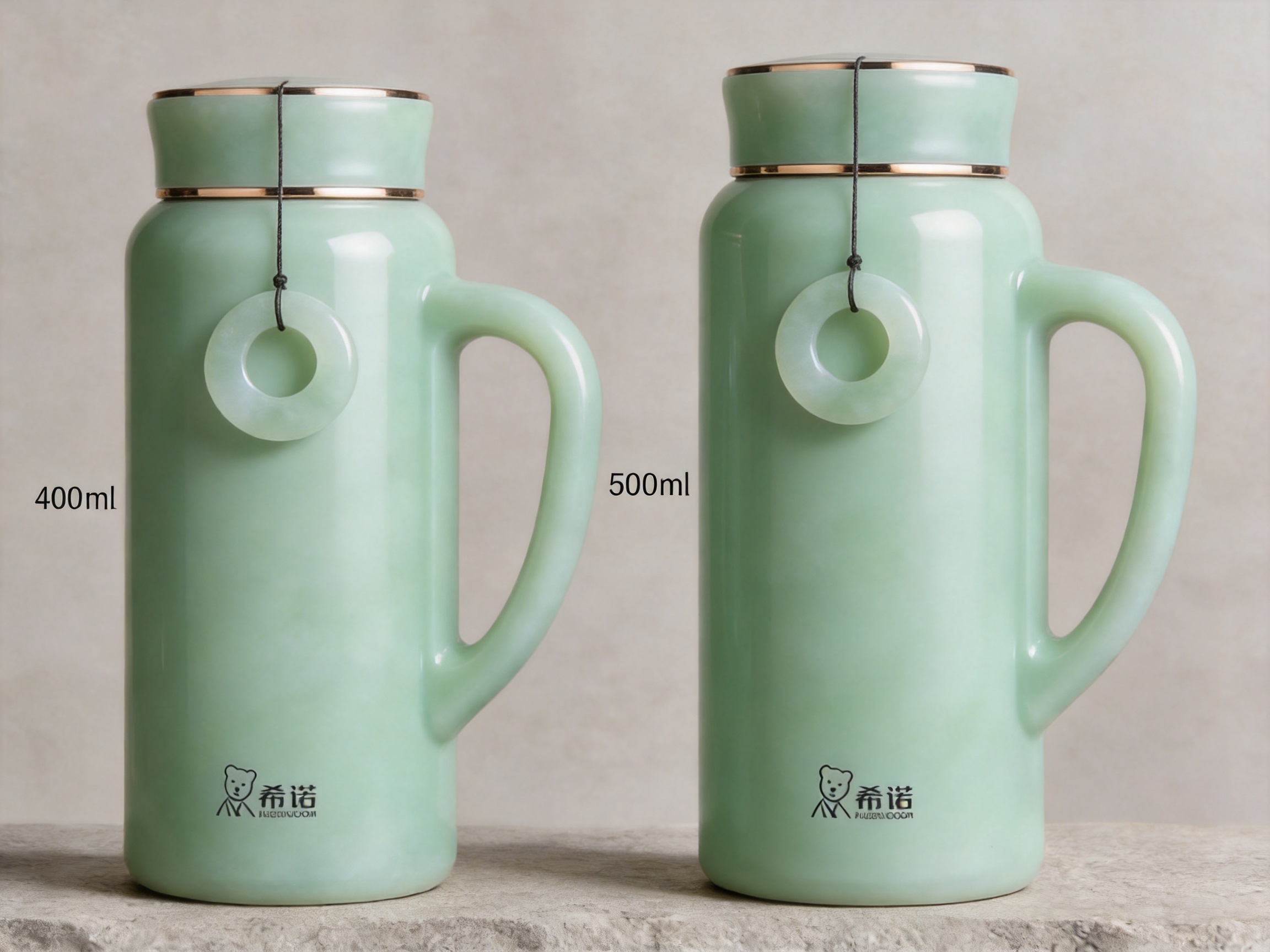
The Elegant Jade-Style Vacuum Flask responds to these expectations through a combination of 304 stainless steel, 316L stainless steel, natural calcite jade, food-grade silicone rubber, and a carefully considered structural design. Available in 400 ml and 500 ml capacities, the flask is positioned as a refined stainless steel vacuum flask for tea, coffee, milk, water, and other everyday beverages. Its appearance is inspired by traditional jade culture, while its construction follows the functional requirements of contemporary drinkware.
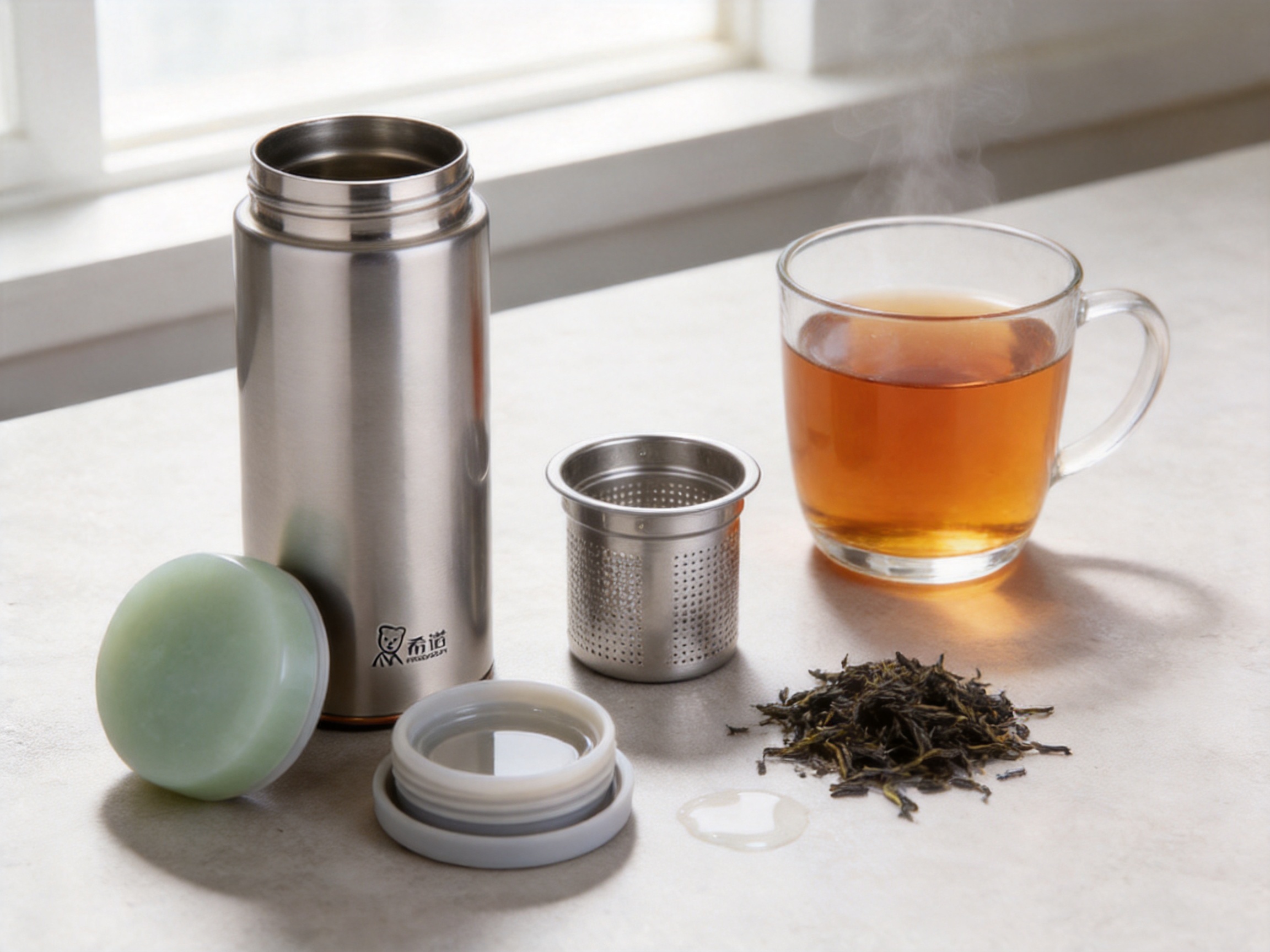
At the center of the product is a 316L stainless steel inner liner. This material is selected for its strong corrosion resistance and odorless properties, making it suitable for regular contact with beverages that may vary in acidity, aroma, and composition. The product also includes a 316L stainless steel filter combined with food-grade silicone rubber. Because the filter can be disassembled, users can clean the components more thoroughly than they might with a permanently enclosed filter structure.
The design distinguishes itself from ordinary vacuum bottles through its natural jade lid, pearlescent cup finish, ring-shaped jade wall, and restrained geometric styling. These elements do not simply add decoration. They create a product with a recognizable visual identity while preserving the portability and daily usability expected from a modern flask.
Behind the product is Heenoor Co., Ltd., a drinkware manufacturer founded in 1999. The company integrates product design, engineering validation, tooling development, standardized production, and quality management. Its experience covers stainless steel, titanium, plastic, and glass drinkware, allowing it to support projects that require both technical development and stable large-volume manufacturing.
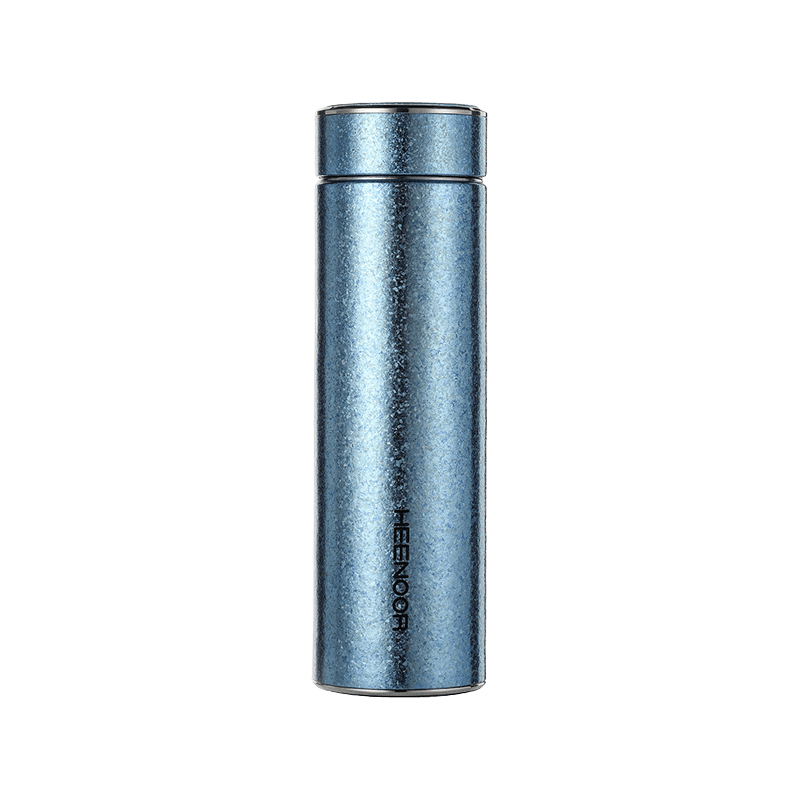
Elegant Jade-style Vacuum flask
Product Concept and Market Position
The Elegant Jade-Style Vacuum Flask occupies a space between functional everyday drinkware and premium cultural gifting. Conventional vacuum flasks often prioritize insulation and durability, but their designs may be visually generic. Decorative bottles, by contrast, may provide a stronger visual impression but offer less attention to material compatibility, cleaning, or production consistency. This product aims to balance both sides.
Its design language is based on the appreciation of jade associated with the Song Dynasty and the classical Chinese image of “pillowing on flowing water and rinsing with stones.” Rather than reproducing historical ornament literally, the product translates the mood of jade into modern geometric forms. The ring-shaped jade wall on the lid suggests the central opening of an ancient jade disc. The soft reflective surface of the cup body recalls the depth and calmness of polished stone.
This approach gives the flask a stronger product narrative than a standard cylindrical bottle. A buyer is not simply purchasing a container with a vacuum layer. The buyer is receiving an object that communicates restraint, integrity, refinement, and cultural continuity. These qualities can be especially valuable for corporate gifts, business presentations, commemorative programs, museum-related retail, cultural tourism, and premium consumer collections.
At the same time, the product does not depend exclusively on symbolic meaning. It retains a practical capacity range, a compact form, a stainless steel filter, a corrosion-resistant inner liner, and a lid assembled from multiple functional materials. The cultural reference therefore supports the product experience instead of replacing it.
Key Product Specifications
| Specification | Details |
|---|---|
| Product category | Stainless steel vacuum flask |
| Item numbers | XN-325L / XN-326L |
| Product name | Ruqin Shuyu Cup |
| Available capacities | 400 ml / 500 ml |
| Container dimensions | 40 × 186 × 66 mm / 43 × 200 × 71 mm |
| Filter material | 316L stainless steel and silicone rubber |
| Cup body and inner liner | 304 stainless steel / 316L stainless steel |
| Cup lid materials | 304 stainless steel, 316L stainless steel, silicone rubber, PP, and natural jade |
| Gift packaging | Heaven-and-earth cover structure |
| Included documentation | Gem and jade appraisal certificate |
The two capacity options allow the product to serve different drinking habits. The 400 ml version is suitable for users who prefer a compact personal serving, while the 500 ml version offers additional volume for commuting, office use, travel, and extended periods between refills. Providing both sizes also allows distributors and brand owners to create a coordinated product assortment without changing the central design concept.
Material Engineering and Beverage Safety
Material selection is one of the product’s most important advantages. The cup body uses 304 stainless steel, while the inner liner is made from 316L stainless steel. This combination reflects the different demands placed on the outer and inner components. The exterior requires strength, formability, and a suitable surface for finishing. The inner liner has direct and repeated contact with beverages, so corrosion resistance, cleanliness, and odor neutrality are especially important.
316L stainless steel is widely valued for its resistance to corrosion in demanding environments. In a drinkware application, this property is relevant because the flask may be used for tea, coffee, milk, flavored beverages, or water. Different beverages leave different residues and may expose the liner to different chemical conditions. A corrosion-resistant inner material helps support long-term product reliability when the flask is properly cleaned and used according to normal instructions.
The stated odorless property of the 316L inner liner is also significant for daily use. Stainless steel is generally preferred over materials that can retain strong aromas or transfer unwanted tastes. A neutral inner surface helps users switch between beverages without the flavor of a previous drink dominating the next one. This is particularly useful for consumers who alternate between tea, coffee, milk, and plain water.
The filter is made from 316L stainless steel and food-grade silicone rubber. This combination addresses both structural and sealing requirements. Stainless steel provides a rigid filtering surface, while silicone rubber can support flexible contact, sealing, and user handling. The filter can be taken apart for cleaning, which is a meaningful advantage over filter assemblies that trap residue in inaccessible spaces.
Cleaning is not a minor consideration in a reusable beverage container. Tea particles, coffee oils, milk residue, and mineral deposits can accumulate around a filter or lid if the construction is difficult to access. A detachable filter gives users a more practical way to inspect and clean the assembly. For commercial buyers, this feature can also improve the perceived quality of the product because it demonstrates that maintenance was considered during development.
Why the Material Combination Matters
Using one material throughout a drinkware product can simplify a bill of materials, but it may not provide the best balance of performance, appearance, and manufacturability. The Elegant Jade-Style Vacuum Flask instead uses different materials where they are most appropriate. The cup body, liner, filter, lid, sealing elements, and decorative component each perform different functions.
304 stainless steel offers a practical base for the main cup structure. 316L stainless steel is assigned to the beverage-contacting liner and filter, where its corrosion resistance is particularly valuable. Food-grade silicone rubber is used where flexibility and sealing are required. PP is incorporated into the lid assembly as a lightweight functional polymer component. Natural calcite jade adds a distinctive visual and tactile element that cannot be achieved through ordinary painted plastic or a standard metal cap.
This division of material roles is one way the product can differentiate itself from lower-cost vacuum flasks. A basic flask may rely on a generic steel grade, a fixed plastic filter, and a conventional molded lid. Such a design may be functional, but it is less capable of communicating premium quality through both specifications and appearance. The present product creates a more deliberate relationship between performance materials and design materials.
Material selection must always be accompanied by appropriate production controls. Stainless steel grades need to be correctly identified and used in the intended components. Silicone and polymer parts must be formed to the specified dimensions and assembled without damage. Natural jade components require additional attention to consistency, surface quality, and documentation. A manufacturer with integrated product development and quality management capabilities is better positioned to coordinate these requirements than a supplier focused only on final assembly.
Vacuum Flask Construction and Thermal Use
The principal functional purpose of a vacuum flask is to reduce heat transfer between the beverage inside and the surrounding environment. This product uses a stainless steel vacuum flask structure designed for daily beverage storage. The lid and liner work together to help maintain a comfortable drinking temperature over time. The product description emphasizes “just-right heat retention,” meaning the design is intended to keep beverages warm without making the user experience excessively hot or unpleasantly cool.
Thermal performance is influenced by many factors, including the vacuum structure, wall construction, lid fit, sealing components, beverage volume, starting temperature, ambient conditions, and frequency of opening. For this reason, performance should be evaluated under defined test conditions rather than judged by a single generalized claim. A professional drinkware manufacturer can use engineering validation to examine these factors during product development.
The product’s value is therefore not limited to a claim of heat retention. It is the result of a system in which the liner, outer body, lid, filter, sealing components, and user interface must function together. A well-designed lid can help limit unnecessary heat exchange and reduce leakage risk when properly closed. A stable inner liner can preserve beverage quality. A practical filter can support tea preparation and easier cleaning. A compact shape can make the flask more convenient to carry and handle.
The 400 ml and 500 ml versions also allow users to choose a capacity that matches their routine. Smaller volumes can be convenient for a handbag, desk, or short commute. The larger option may suit users who want more beverage without carrying a larger conventional bottle. The listed dimensions show that the two versions retain a relatively narrow, portable format while offering different capacities.
Daily Beverage Applications
The flask is suitable for a range of ordinary beverage scenarios. Tea drinkers can use the filter to separate leaves from the liquid while carrying the drink. Coffee users can store a prepared beverage in a stainless steel interior that is designed to resist unwanted odor retention. Milk can also be held for routine consumption, provided the product is cleaned promptly and according to suitable hygiene practices. Water remains the simplest and most frequent application.
For tea, the detachable filter is particularly useful. A fixed filter may limit cleaning access and can become difficult to maintain after repeated use. A removable stainless steel filter gives the user more control over the brewing and cleaning process. It also supports the product’s cultural design story, since tea preparation is closely associated with refined tableware and traditional drinking practices.
For coffee and milk, cleaning discipline is important. Although the 316L liner is selected for beverage compatibility and corrosion resistance, no reusable flask should be treated as maintenance-free. Residual milk or sweetened coffee should not be left inside for extended periods. Users should empty the container, disassemble accessible parts, wash them thoroughly, and allow them to dry before storage.
Design Details That Differentiate the Product
The product’s most visible distinction is its use of natural calcite jade in the lid. Many vacuum flasks use painted metal, molded plastic, wood-effect coatings, or decorative inserts. Natural jade creates a different impression because each piece can possess its own subtle variation in color, texture, and light response. The included gem and jade appraisal certificate provides a formal commitment to the use of genuine, high-quality materials.
The jade element is not placed randomly on the lid. It is formed as a ring-shaped jade wall suspended at the top. The Xino logo is set subtly within the ring, echoing the central hole of an ancient jade disc. When the cup is lifted or moved under light, the surface can produce a gentle reflective effect. This gives the lid visual depth without relying on excessive decoration.
The cup body uses a pearlescent finish with a jade-toned hue. Its appearance changes subtly under different lighting conditions, creating a surface that feels more refined than a flat solid-color coating. The finish also contributes to the tactile impression of the flask. The product is designed to feel cool and smooth in the hand, while its ergonomic grip supports comfortable handling.
Instead of covering the body with elaborate patterns, the design uses a restrained geometric vocabulary. The ring-shaped jade wall, the controlled reflective surface, and the ergonomic grip work together as the primary design features. This restraint is one of the product’s advantages over highly decorated competitors. A heavily ornamented flask may attract immediate attention, but a minimalist design can remain relevant for a longer period and suit a wider range of personal styles.
The visual concept also supports premium gifting. The product can appear appropriate in a professional office, a tea room, a study, or a modern home. It is decorative enough to communicate value but sufficiently practical to be used every day. That balance is important because a gift that remains unused has less practical and emotional value than one that becomes part of the recipient’s routine.
Packaging, Cultural Meaning, and Gift Value
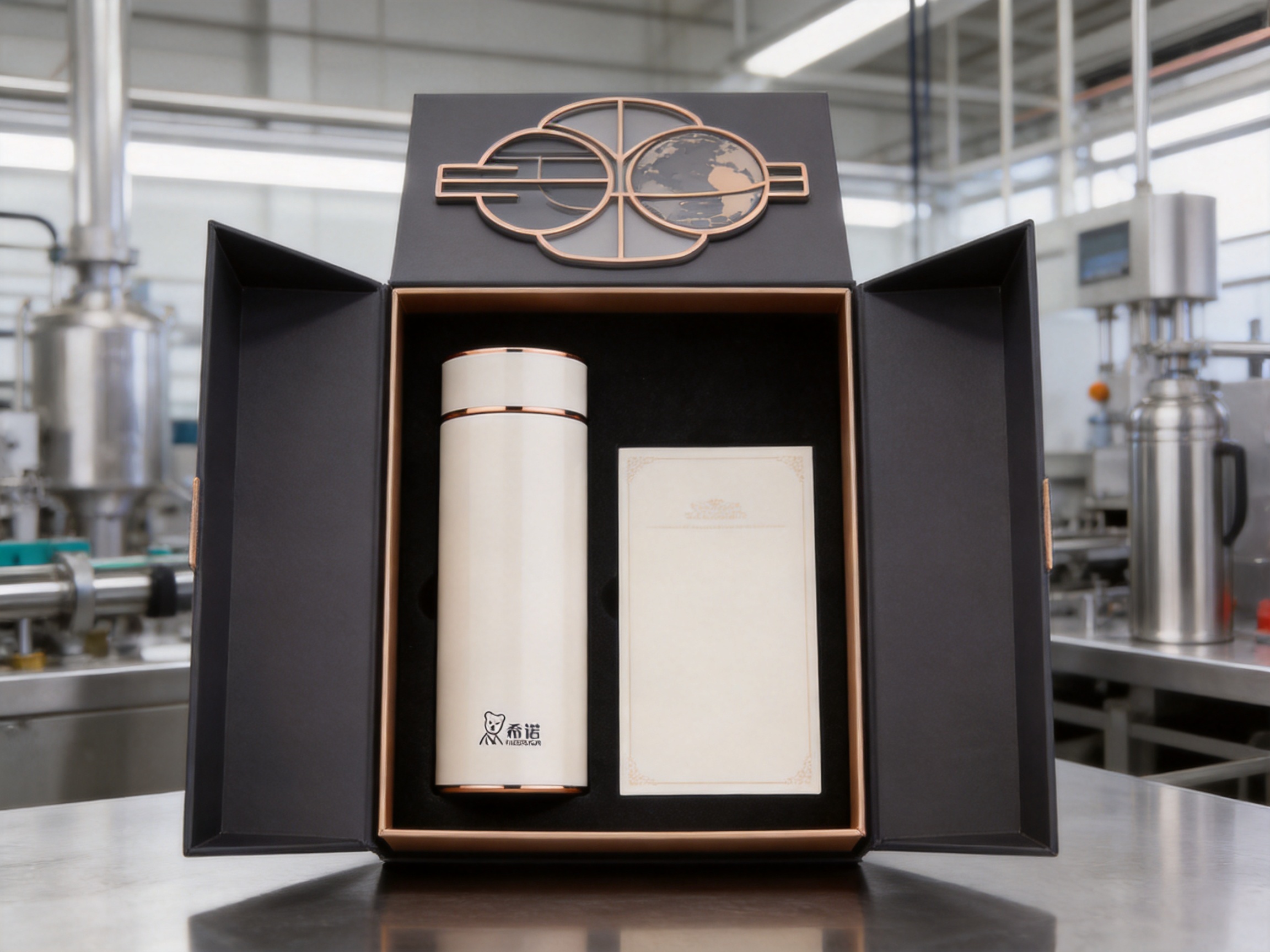
The gift box adopts a “heaven-and-earth cover” structure, referring to the traditional concept of round heaven and square earth. This packaging choice extends the product’s design language beyond the flask itself. It transforms the opening experience into part of the product story and provides a more intentional presentation for gifting.
The associated meaning is also carefully defined. Giving the flask conveys a wish that the recipient can maintain personal principles amid life’s changes while navigating relationships with integrity and flexibility. Such symbolism can make the product suitable for business appreciation gifts, anniversary programs, cultural events, executive recognition, and premium personal presents.
Packaging is particularly important when a drinkware item includes natural materials. A well-structured box can protect the product during handling and shipping while also presenting the jade detail in an orderly way. It can help prevent the flask from appearing like a standard mass-market bottle and reinforce the distinction between a functional commodity and a designed gift object.
The gem and jade appraisal certificate included in the box adds another layer of confidence. Natural decorative materials can create uncertainty for buyers if their origin or authenticity is unclear. A certificate does not replace responsible quality control, but it provides supporting documentation and communicates that the jade component is treated as a genuine material rather than an imitation effect.
Manufacturing Strengths Behind the Product
A sophisticated drinkware product requires more than an attractive concept. It must be converted into a repeatable manufacturing process that can maintain dimensional accuracy, surface quality, material consistency, and assembly reliability across production batches. Heenoor Co., Ltd. describes its capabilities as integrating product design, engineering validation, tooling development, standardized production, and quality management.
This integrated structure is valuable because problems can arise when design and manufacturing are separated too sharply. A decorative component may be attractive but difficult to assemble. A lid may look elegant but require tight dimensional control. A filter may function in a prototype but become difficult to clean or install in volume production. Early coordination between designers, engineers, tooling specialists, and production teams can identify these issues before they become costly.
Product Design and Engineering Validation
Product design begins with the intended user experience and functional requirements. For this flask, the design must accommodate two capacities, a stainless steel vacuum structure, a removable filter, a multi-material lid, a natural jade component, and a comfortable external form. Engineering validation then examines whether these requirements can coexist in a stable product.
Validation may include checking component fit, lid engagement, filter removal, sealing behavior, surface transitions, and handling comfort. It may also examine whether the product can be consistently assembled without damaging the jade, silicone, polymer, or finished metal surfaces. While individual test procedures depend on the final production plan, the general principle is clear: the design must be assessed as a complete system rather than as a collection of isolated parts.
Engineering validation is especially important when a product contains different materials with different tolerances and behaviors. Stainless steel, silicone rubber, PP, and natural jade do not respond identically to pressure, temperature, handling, or dimensional variation. A coordinated development process helps ensure that these materials work together in the lid and filter assemblies.
Tooling Development
Tooling development supports the transition from a design concept to repeatable production. The cup body, lid components, filter, polymer parts, and packaging structure may each require dedicated tools or forming solutions. Tooling quality influences the consistency of dimensions, surface finish, assembly fit, and production efficiency.
For a product with a pearlescent exterior and a geometric jade lid, visible defects can significantly affect perceived value. Tooling and forming processes must therefore be managed with attention to surface condition and part alignment. Small variations that might be acceptable in a basic utility bottle can become noticeable in a premium product with smooth minimalist surfaces.
Tooling development also supports scalability. A product intended for large-volume drinkware programs must be capable of moving beyond one-off prototypes. Production tools should support stable cycle times, repeatable part geometry, practical maintenance, and controlled replacement procedures. The manufacturer’s experience in tooling development can help align the desired appearance with a process that remains commercially viable.
Standardized Production
Standardized production is essential for maintaining consistency across orders. A drinkware program may involve multiple capacities, large quantities, different packaging requirements, or brand-specific procurement schedules. Standardized work instructions and controlled assembly procedures can reduce variation between production lots.
For the Elegant Jade-Style Vacuum Flask, standardization is relevant to several areas. The 400 ml and 500 ml versions must maintain a consistent design identity while preserving their individual dimensional specifications. The stainless steel filter must be installed correctly. Silicone components must be seated properly. Lid elements must align with the intended visual structure. Jade components must be handled in a way that protects their surfaces and reduces the risk of damage during assembly.
Standardization does not mean removing craftsmanship from the product. Instead, it provides a controlled foundation on which premium details can be reproduced. The goal is to ensure that the first shipment and subsequent shipments meet the same documented expectations.
Quality Management
Quality management connects material control, process control, inspection, and corrective action. For a multi-material vacuum flask, quality cannot be judged only by the appearance of the final exterior. It should also consider the condition of the inner liner, the integrity of the lid, the fit of the filter, the quality of seals, the surface finish, packaging protection, and the accuracy of product information.
A systematic quality approach can help identify issues at different stages rather than waiting until final packing. Incoming material checks can confirm that the specified stainless steel, silicone, polymer, and jade components are available and suitable for production. In-process checks can monitor forming, assembly, and finishing. Final inspections can review appearance, dimensions, functionality, and packaging presentation.
For international buyers, this manufacturing discipline can reduce communication risk. Buyers often need clear answers about materials, capacities, dimensions, packaging, and production feasibility. A company that combines engineering, tooling, standardized production, and quality management is better equipped to provide structured information throughout the project lifecycle.
Advantages Compared with Conventional Competitors
The product’s competitive value can be understood through several dimensions rather than one single feature. A conventional vacuum flask may offer adequate insulation, but the Elegant Jade-Style Vacuum Flask adds a more carefully developed material system, a distinctive cultural design, and a premium packaging concept.
| Evaluation area | Common conventional approach | Elegant Jade-Style Vacuum Flask |
|---|---|---|
| Inner liner | General stainless steel specification may be emphasized less clearly | 316L stainless steel liner selected for corrosion resistance and odorless beverage contact |
| Filter | Fixed or less accessible filter construction | 316L stainless steel and food-grade silicone rubber filter that can be disassembled |
| Exterior design | Plain painted metal or generic molded plastic | Pearlescent jade-toned finish with minimalist geometric styling |
| Lid identity | Standard cap with limited decorative value | Natural calcite jade ring-shaped wall integrated into the lid |
| Gift presentation | Basic carton or utility packaging | Heaven-and-earth cover gift box with cultural meaning |
| Material documentation | May focus mainly on product labeling | Gem and jade appraisal certificate included |
| Capacity range | Often one standard size | 400 ml and 500 ml options for different routines |
| Manufacturing support | May emphasize supply alone | Design, validation, tooling, standardized production, and quality management integration |
The first advantage is the clarity of the material specification. Buyers can identify which stainless steel is used in the cup body, inner liner, and filter. This transparency is useful for procurement teams that need to compare products based on more than appearance or price.
The second advantage is cleanability. The removable filter responds to a common weakness in reusable drinkware: the difficulty of cleaning small internal parts. Easy disassembly may support better hygiene habits and extend the perceived usability of the product.
The third advantage is product identity. The natural jade lid and pearlescent exterior give the flask a visual signature that can stand apart from a large field of similar cylinders. This is important for brands and organizations seeking a gift or retail item with a stronger emotional and cultural dimension.
The fourth advantage is presentation. The gift box and appraisal certificate help create a more complete value proposition. A product intended for gifting must perform well before use, during unboxing, and throughout its service life. Packaging, documentation, and design all contribute to that experience.
The fifth advantage is manufacturing support. Heenoor’s stated integration of design, engineering validation, tooling development, standardized production, and quality management can help buyers move from concept approval to reliable volume delivery. This is particularly relevant for organizations that need stable supply rather than a one-time sample.
These advantages do not mean that every conventional competitor is inferior in every respect. Different bottles may be optimized for sports use, extreme outdoor environments, ultra-lightweight travel, or specialized thermal applications. The strength of this product is its specific combination of refined aesthetics, corrosion-resistant beverage-contact materials, cleanable filtration, cultural meaning, and manufacturing readiness.
Applications for Brands, Institutions, and Procurement Teams
The product can serve multiple market channels. In premium retail, its appearance and material story can support a higher-value product segment. In corporate gifting, the cultural meaning and presentation can help communicate respect and appreciation. In hospitality, it may be used as an in-room or executive amenity where presentation matters. In cultural and tourism retail, its jade-inspired form can connect contemporary utility with traditional design references.
For private-label brands, the product offers a foundation that can be evaluated according to capacity, packaging, finishing, and target market requirements. The two existing capacity options support assortment planning. A brand may choose to position the 400 ml size as a compact personal flask and the 500 ml size as a more generous everyday option.
For corporate procurement teams, the product’s specification structure can simplify preliminary evaluation. Item numbers, capacities, dimensions, material information, filter construction, and lid composition are identified in the product data. These details can be used as the basis for sample review, technical discussions, packaging confirmation, and quality documentation.
For organizations purchasing gifts in volume, manufacturing stability is often as important as design. A visually attractive product that cannot be reproduced consistently can create delivery and quality problems. The manufacturer’s experience with industrial manufacturing and large-scale drinkware programs supports a more dependable procurement process.
Responsible Use and Maintenance
Even a well-designed flask benefits from correct use. Users should wash the cup, lid, filter, and sealing components before first use. The filter should be removed periodically so that all surfaces can be cleaned. Beverage residue should not be allowed to remain inside for long periods, particularly when the flask is used for milk, coffee, sweetened drinks, or other beverages that may leave deposits.
The natural jade component should be handled with reasonable care. Although jade is a durable natural material, it can still be damaged by hard impact, sharp contact, or improper storage. The exterior should be cleaned with suitable methods that do not unnecessarily scratch the pearlescent finish. Abrasive cleaners and rough tools may reduce the visual quality of the surface over time.
Users should also inspect silicone components during regular maintenance. Sealing parts can collect residue or become displaced if they are not installed correctly after cleaning. Reassembling the filter and lid carefully helps preserve the intended user experience. The product’s detachable construction is most beneficial when users take advantage of that access.
These maintenance practices are not unique to this flask, but they are especially relevant to a premium multi-material product. Good care helps preserve both functional performance and visual value, allowing the flask to remain a useful daily item rather than becoming a decorative object that is quickly abandoned.
Quality and Sourcing Considerations for Buyers
Professional buyers evaluating the product should consider the complete supply program. Important discussion points may include the selected capacity, production quantity, packaging configuration, inspection requirements, sample approval, surface finish, jade documentation, and delivery schedule. Because the product contains natural jade, buyers may also wish to clarify acceptable variation in color, pattern, translucency, and surface character.
Natural materials are not identical in the way that molded plastic parts can be. Controlled variation can be part of their appeal, but expectations should be defined before production. A clear approval standard helps both the buyer and manufacturer distinguish acceptable natural variation from unacceptable damage or workmanship defects.
Buyers should also review the consistency of the 400 ml and 500 ml versions. The two sizes have different dimensions and should be assessed separately for fit, handling, packaging placement, and appearance. If both versions are ordered for the same program, a shared visual standard can help maintain a coherent assortment.
For beverage-contact products, documentation and production traceability are valuable. Material specifications, inspection records, and quality procedures can support internal purchasing requirements and customer confidence. Heenoor’s stated focus on quality management and long-term international project support provides a foundation for these discussions.
Another important consideration is manufacturability. The flask’s multi-material lid and jade component create a more complex assembly than a basic one-piece cap. Buyers should therefore evaluate not only the sample but also the manufacturer’s ability to control the process at the required production volume. Questions about tooling, assembly procedures, inspection points, packaging protection, and replacement components can help establish a realistic project plan.
Why Integrated Manufacturing Matters
Integrated manufacturing can reduce the distance between product intention and delivered result. When design, engineering, tooling, production, and quality teams communicate within one coordinated system, the manufacturer can respond more effectively to practical constraints. This is especially helpful for products in which appearance and function are equally important.
In the case of the Elegant Jade-Style Vacuum Flask, the design depends on precise relationships between several parts. The jade ring must occupy the intended position. The lid must present a coherent visual structure. The filter must be removable but secure during use. The liner must be appropriate for beverage contact. The exterior must retain its pearlescent appearance after forming and finishing. Packaging must protect the product without compromising its premium presentation.
Each of these requirements can affect another. A change in the lid may alter the assembly sequence. A change in the filter may influence cleaning access. A change in the surface finish may require adjustments to handling or packaging. Integrated development allows these relationships to be examined earlier and managed more systematically.
Heenoor’s experience since 1999 provides an established foundation for this type of work. Its product range includes stainless steel, titanium, plastic, and glass drinkware, which indicates familiarity with different material systems and manufacturing requirements. The company’s stated focus on product development and industrial manufacturing also aligns with the needs of buyers seeking durable, scalable products rather than isolated prototypes.
Q&A
What type of product is the Elegant Jade-Style Vacuum Flask?
It is a stainless steel vacuum flask designed for everyday beverages such as tea, coffee, milk, and water. It combines a 304 stainless steel cup body, a 316L stainless steel inner liner, a removable 316L stainless steel and silicone rubber filter, and a multi-material lid that includes natural calcite jade.
What capacities are available?
The product is available in 400 ml and 500 ml versions. The smaller capacity is suited to compact personal use, while the larger version provides additional beverage volume for commuting, office use, travel, and longer periods between refills.
Why is 316L stainless steel used for the inner liner?
The inner liner is made from 316L stainless steel because it offers strong corrosion resistance and an odorless surface suitable for regular beverage contact. This makes it appropriate for a variety of daily drinks when the flask is cleaned and maintained correctly.
Can the filter be removed for cleaning?
Yes. The filter is designed to be taken apart for cleaning. It combines 316L stainless steel with food-grade silicone rubber, allowing users to access the components more thoroughly than with a permanently enclosed filter structure.
What makes the lid different from a conventional vacuum flask lid?
The lid incorporates natural calcite jade in a ring-shaped jade wall design. The ring is suspended at the top and visually references the central opening of an ancient jade disc. This gives the lid a distinctive cultural and premium appearance while remaining part of a functional drinkware assembly.
Does the product use genuine jade?
The product specification identifies natural jade as part of the lid construction, and a gem and jade appraisal certificate is included in the gift box. Buyers requiring specific standards for jade variation, documentation, or inspection should confirm the details during procurement.
Is the flask suitable for tea?
Yes. The removable filter is especially useful for tea preparation and for separating tea leaves from the beverage. Users should remove and clean the filter regularly to prevent residue accumulation.
Can it be used for coffee and milk?
The 316L stainless steel inner liner is intended for daily beverages including coffee and milk. Because these drinks can leave residue, users should empty and clean the flask promptly after use and avoid storing perishable beverages for unnecessarily long periods.
What is the significance of the pearlescent finish?
The pearlescent finish creates a subtle change in appearance as light moves across the jade-toned cup body. It supports the product’s reference to polished jade while avoiding excessive ornamentation. The result is a refined exterior that can fit both personal and formal settings.
What packaging is provided?
The gift box uses a heaven-and-earth cover structure inspired by the traditional idea of round heaven and square earth. The packaging supports the cultural story of the product and is intended to provide a more meaningful presentation for gifting.
Who may benefit from this product?
The flask may suit premium drinkware retailers, corporate gifting programs, cultural and tourism shops, hospitality buyers, private-label brands, and consumers who want a functional bottle with a distinctive design and material story.
What manufacturing capabilities support the product?
Heenoor integrates product design, engineering validation, tooling development, standardized production, and quality management. The company has experience with stainless steel, titanium, plastic, and glass drinkware and supports large-volume drinkware programs.
How should buyers evaluate the product before placing an order?
Buyers should review the sample, capacity, dimensions, material specifications, filter construction, jade appearance, certificate documentation, packaging, inspection standards, and production capability. For volume orders, it is also useful to agree on acceptable natural variation and final appearance criteria before production begins.
Conclusion
The Elegant Jade-Style Vacuum Flask demonstrates how a daily drinkware product can combine functional engineering with cultural design. Its 304 stainless steel body provides a practical structural foundation, while the 316L stainless steel inner liner and filter add corrosion resistance and beverage-contact value. The detachable filter improves access for cleaning, and the use of food-grade silicone rubber supports the flexible elements of the assembly.
Its strongest visual distinction comes from the natural calcite jade lid and pearlescent jade-toned finish. The ring-shaped jade wall creates a refined focal point, while the minimalist geometry avoids the visual excess often associated with decorative gift products. The 400 ml and 500 ml capacity options broaden its practical appeal, and the heaven-and-earth cover gift box gives the item a stronger presentation and cultural meaning.
From a sourcing perspective, the product is supported by a manufacturing organization that combines design, engineering validation, tooling development, standardized production, and quality management. This integrated approach is important for a multi-material product whose performance depends on the relationship between the liner, filter, lid, seals, exterior finish, natural jade, and packaging.
Compared with a conventional vacuum flask, this product offers a more complete proposition: clearly specified stainless steel materials, a cleanable filter, distinctive natural jade detailing, meaningful packaging, and manufacturing support suitable for professional drinkware programs. It is not designed to compete only on basic insulation or low price. Its value lies in bringing together dependable everyday function, refined appearance, cultural symbolism, and scalable industrial execution.
References
Heenoor Co., Ltd. Product specification for the Ruqin Shuyu Cup, item numbers XN-325L and XN-326L.
Heenoor Co., Ltd. Product material information covering 304 stainless steel, 316L stainless steel, silicone rubber, PP, and natural jade.
Heenoor Co., Ltd. Corporate information concerning product development, engineering validation, tooling development, standardized production, and quality management.
General technical literature on stainless steel grades and their use in food and beverage equipment.
General guidance on reusable beverage-container cleaning, maintenance, and hygienic handling.
General references on traditional Chinese jade culture, Song Dynasty aesthetics, and the symbolic concept of heaven and earth in gift presentation.
Product: Elegant Jade-style Vacuum flask

You may also like…
Copyright © 2025 Heenoor Co., Ltd. All Rights Reserved.
 Custom Stainless Steel Drinkware Manufacturers
BACK TOP