 English
 中文简体
中文简体 日本語
日本語 Español
 عربى
عربى
Search
Categories
Recommend
Categories
 Lin Yuxi — International Product Sales Manager
Recommend
-
 Industry news
 -
 Industry news
 -
 Industry news
 -
 Industry news
Aug 31, 2026 - By admin


304 Stainless Steel Chopstick Sets: Durable, Hygienic, and Manufacturing-Ready Tableware
Content
- 1 Product Overview
- 2 Why 304 Stainless Steel Is Suitable for Chopsticks
- 3 Surface Finishing and User Comfort
- 4 Anti-Slip Tip Design
- 5 Comparison with Other Chopstick Materials
- 6 Hygiene and Cleaning Advantages
- 7 Manufacturing Capabilities and Process Strengths
- 8 Integrated Manufacturing Experience
- 9 Applications for Different Markets
- 10 Wholesale and Custom Supply Considerations
- 11 Recommended Quality Inspection Points
- 12 Care and Maintenance Guidance
- 13 Sustainability and Long-Term Value
- 14 Why Choose a Specialized Manufacturing Partner
- 15 Q&A
- 15.1 What material are the chopsticks made from?
- 15.2 What is the length of the chopstick set?
- 15.3 Are the chopsticks painted or waxed?
- 15.4 Do the chopsticks have anti-slip features?
- 15.5 Are the chopsticks one piece?
- 15.6 Can the chopsticks be cleaned in a dishwasher?
- 15.7 Can the chopsticks be used in high-temperature disinfection environments?
- 15.8 How do stainless steel chopsticks compare with wooden chopsticks?
- 15.9 How do they compare with bamboo chopsticks?
- 15.10 How do they compare with ceramic chopsticks?
- 15.11 Are the chopsticks suitable for restaurants and hotels?
- 15.12 Can the product be used for outdoor dining?
- 15.13 Can buyers request custom packaging or branding?
- 15.14 What manufacturing capabilities does the supplier provide?
- 15.15 What should buyers confirm before placing a wholesale order?
- 16 Conclusion
- 17 References
- 18 Product: Stainless Steel Chopstick Sets
Stainless steel chopsticks have become an increasingly practical choice for households, restaurants, hospitality businesses, catering operations, institutional dining facilities, and outdoor users. Among the available options, a well-designed 304 stainless steel chopstick set offers a combination of durability, cleanliness, heat resistance, and long-term value that is difficult to achieve with many traditional materials. These chopsticks are designed for repeated daily use while maintaining a smooth appearance, stable structure, and dependable handling performance.
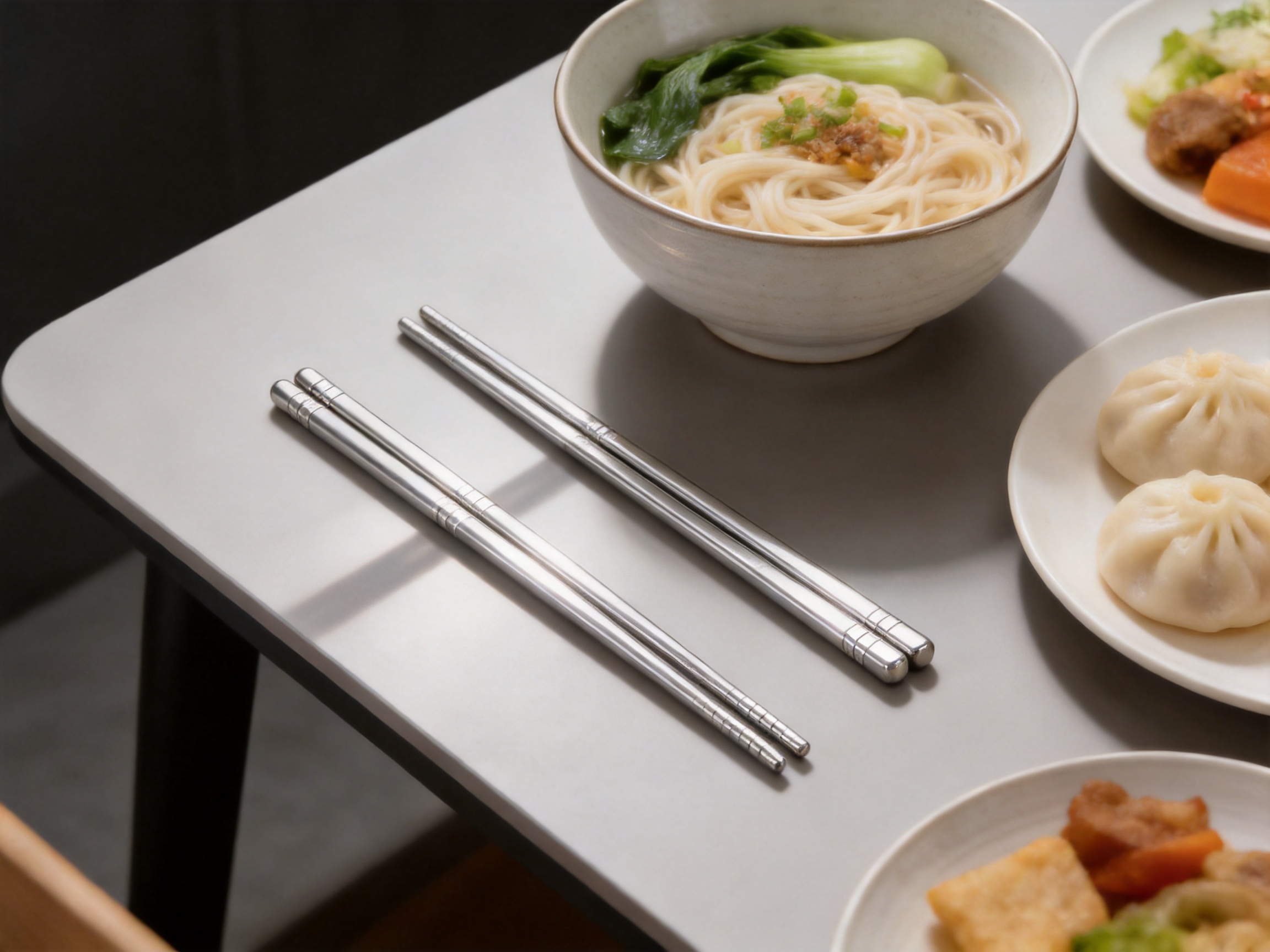
The stainless steel chopstick set described in this article is manufactured from high-quality 304 stainless steel. It features a solid one-piece construction, a polished metallic surface, rounded edges, and specially designed anti-slip grooves at the tips. With a length of 23.9 centimeters, the chopsticks are proportioned for comfortable everyday dining and provide a stable balance between reach, control, and portability.
In addition to the product’s material advantages, the manufacturing process is an important part of its value. Precision polishing, multiple grinding stages, dimensional control, quality management, and standardized production all contribute to the finished product’s reliability. Heenoor Co., Ltd., established in 1999, combines product development, engineering validation, tooling development, industrial manufacturing, and quality management to support dependable drinkware and tableware programs for professional customers.
This article examines the structure, material, usability, hygiene, manufacturing process, competitive advantages, application scenarios, customization potential, and purchasing considerations associated with 304 stainless steel chopstick sets.
Stainless Steel Chopstick Sets
Product Overview
The product is a stainless steel chopstick set classified under stainless steel chopsticks, spoons, and forks. Each chopstick is produced as a solid, integrated piece rather than as a combination of separate components. This construction improves structural stability and helps reduce the risk of loosening, splitting, or deformation during long-term use.
The chopsticks are made from 304 stainless steel, a widely used material for food-contact applications. The material is known for its corrosion resistance, strength, clean appearance, and suitability for repeated washing. Unlike painted or coated utensils, the chopsticks do not depend on an external decorative layer to achieve their metallic finish. The surface presents the natural luster of polished stainless steel.
The product surface undergoes precise polishing and multiple grinding processes. These operations are intended to remove roughness, improve smoothness, refine the appearance, and create rounded contact areas. A smooth surface is especially important for tableware because it improves hand comfort, simplifies cleaning, and reduces areas where food residue may remain.
The chopsticks retain a classic Chinese design concept based on the traditional idea of “round heaven and square earth.” This design approach gives the product a recognizable cultural character while maintaining practical functionality. The rounded outer areas support comfortable handling, while the carefully shaped tips provide better contact with food.
Anti-slip grooves are incorporated into the tip section. These grooves increase friction between the chopsticks and food, helping users pick up noodles, vegetables, meat, dumplings, and other items with improved control. The textured tips are particularly useful when handling smooth or moist foods that may slide easily from completely plain metal surfaces.
| Product Feature | Specification or Benefit |
| Primary material | 304 stainless steel |
| Product type | Stainless steel chopstick set |
| Length | 23.9 centimeters |
| Construction | Solid one-piece structure |
| Surface treatment | Precision polishing and multiple grinding processes |
| Tip design | Anti-slip grooves for improved food grip |
| Finish | Natural polished metallic luster |
| Intended use | Daily dining, banquets, outdoor use, dishwashing, and high-temperature disinfection environments |
Why 304 Stainless Steel Is Suitable for Chopsticks
Material selection directly affects the service life, safety, appearance, and maintenance requirements of tableware. 304 stainless steel is widely used in kitchen equipment, food-service tools, drinkware, cookware, and processing environments because it provides a balanced combination of corrosion resistance, mechanical strength, and practical manufacturability.
For chopsticks, these characteristics are valuable because the product is exposed to food moisture, sauces, oils, salt, heat, repeated washing, and frequent handling. A suitable material must remain stable under these conditions and should not easily absorb liquids or odors.
Corrosion resistance
304 stainless steel offers strong resistance to ordinary atmospheric exposure and many common food-related conditions. When properly processed and maintained, it is not easily affected by water, food moisture, or routine cleaning. This helps the chopsticks retain their functional condition over extended use.
Corrosion resistance is especially important for tableware used in restaurants, hotels, catering operations, and institutional kitchens. These environments may require repeated washing and rapid turnaround between meals. A corrosion-resistant utensil is less likely to develop visible deterioration than a material that absorbs moisture or depends on a fragile surface coating.
Low moisture absorption
Wood and bamboo can absorb moisture if they are not properly dried and maintained. Over time, this may contribute to staining, odor retention, cracking, or mold growth. Stainless steel is non-porous, so it does not absorb food liquids in the same way. This makes it easier to rinse, sanitize, and dry.
The low-absorption characteristic also supports more consistent hygiene practices. Food residues remain on the surface rather than penetrating into a porous structure, allowing standard cleaning procedures to remove them more effectively.
Heat resistance
Stainless steel chopsticks are more resistant to heat-related deformation than many wooden or plastic alternatives. They can be used with hot foods and are suitable for environments that require high-temperature cleaning or disinfection, provided that the cleaning procedure is compatible with the overall utensil system.
The solid metal structure also provides uniform heat conduction along the chopstick. Users should still exercise care when handling very hot food or when the chopsticks have been exposed to high temperatures, because stainless steel can transfer heat more readily than wood or many plastics. This characteristic is a material property rather than a defect and should be considered during use.
Mechanical strength
The one-piece construction gives the chopsticks a stable and firm feel. Stainless steel is resistant to ordinary bending and impact, while the absence of joints or assembled sections minimizes potential weak points. Compared with fragile ceramic chopsticks, stainless steel is less likely to shatter if dropped or knocked against a hard surface.
Strength is also beneficial for commercial users. In a busy dining environment, utensils may be collected, transported, washed, stacked, and redistributed many times each day. A durable product can reduce replacement frequency and contribute to more predictable operating costs.
Surface Finishing and User Comfort
Surface finishing is not only an aesthetic step. It influences tactile comfort, cleanability, corrosion performance, and the perceived quality of the finished chopsticks. The product described here undergoes precision polishing and multiple grinding processes to refine the surface from the initial formed condition to a smoother and more uniform finish.
Multiple grinding processes
Grinding can help eliminate irregularities, sharp edges, and rough areas produced during forming or cutting. Multiple stages allow the manufacturer to progressively refine the surface instead of relying on one aggressive operation. This controlled approach supports more consistent results across production batches.
For a utensil that is held close to the mouth and used repeatedly, edge control is essential. The ends and outer surfaces should feel smooth during normal handling. Rounded edges also help reduce discomfort when the chopsticks are rotated or adjusted in the hand.
Polished metallic appearance
The polished stainless steel surface provides a clean, contemporary appearance without requiring paint or wax. The natural metallic luster can complement modern table settings as well as traditional dining environments. Because the finish is integrated with the stainless steel surface, routine use does not depend on maintaining a separate decorative film.
A polished surface can also make visible residue easier to identify during inspection. This is useful in commercial food-service environments where staff need to check utensils before distribution. The combination of visual clarity and easy cleaning supports consistent sanitation procedures.
Comfortable handling
The 23.9-centimeter length is designed to provide a practical reach without making the chopsticks excessively long or difficult to control. Length affects balance, leverage, and hand positioning. A well-proportioned chopstick should allow users to pick up food confidently while maintaining a stable grip.
The appropriate weight of stainless steel gives the chopsticks a solid feel. Some users prefer the controlled movement of a slightly heavier utensil because it provides clear feedback during use. The balanced structure can also be advantageous when eating firm foods or when using the chopsticks for longer meals.
Anti-Slip Tip Design
One of the most functional design features is the anti-slip groove pattern near the tips. Smooth stainless steel is easy to clean, but an entirely smooth tip may offer less friction against slippery food. The grooves provide a controlled textured area that helps improve grip without compromising the overall cleanability of the utensil.
The tip structure is suitable for a wide range of foods, including noodles, vegetables, meat slices, tofu, dumplings, fruit, and rice-based dishes. The grooves can help hold food in place when the user applies moderate pressure. This reduces the need for excessive squeezing and can make the chopsticks more comfortable for regular dining.
Tip geometry also affects precision. If the ends are too blunt, users may find it difficult to separate small portions. If they are too sharp, they may be uncomfortable or unsuitable for certain users. The product uses a carefully finished tip with rounded and polished edges while retaining enough definition for practical food handling.
For professional buyers, tip consistency is important. A reliable manufacturing process should ensure that groove depth, spacing, alignment, and edge finishing remain within an acceptable range. Consistent tip design helps preserve the expected user experience across large quantities of chopstick sets.
Comparison with Other Chopstick Materials
Different chopstick materials serve different preferences and applications. Wood and bamboo may offer a lightweight, warm, natural feel, while ceramic can provide a distinctive decorative appearance. However, each material also has limitations when subjected to repeated washing, moisture, impact, or high-temperature sanitation.
| Material | Common Advantages | Potential Limitations Compared with Stainless Steel |
| 304 stainless steel | Durable, corrosion-resistant, non-porous, heat-resistant, easy to clean, suitable for repeated use | May feel cooler or heavier than wood; conducts heat more readily |
| Wood | Lightweight, warm touch, traditional appearance | May absorb moisture, stain, crack, or require more careful drying |
| Bamboo | Lightweight, natural appearance, renewable material source | Can split, crack, absorb moisture, or develop surface wear with prolonged use |
| Ceramic | Decorative, smooth, distinctive appearance | May break or chip if dropped; generally less impact-resistant |
| Plastic | Lightweight and available in many colors | May deform under heat or show wear depending on the material formulation |
Compared with wooden chopsticks
Wooden chopsticks are familiar and comfortable, but they are porous materials. They may retain moisture if they are not fully dried after washing. In humid storage conditions, this can create an environment that encourages mold or unpleasant odors. Surface wear may also produce splinters or roughness over time.
Stainless steel avoids many of these issues because it does not absorb water and can be thoroughly cleaned. It is also less likely to crack during ordinary use. For customers seeking a low-maintenance utensil for frequent washing, stainless steel can be a more practical long-term option.
Compared with bamboo chopsticks
Bamboo chopsticks are often selected for their natural appearance and light weight. However, bamboo can split or develop cracks, especially when repeatedly exposed to hot water, detergents, rapid drying, or mechanical stress. Cracks can make cleaning more difficult and may shorten the product’s service life.
The solid stainless steel structure provides greater resistance to this type of structural deterioration. The absence of a fibrous grain also produces a more uniform surface that is easier to inspect and maintain.
Compared with ceramic chopsticks
Ceramic chopsticks can offer a polished and decorative appearance, but they may break when dropped or struck against a hard surface. Chipped areas may become uncomfortable to handle and more difficult to clean. Stainless steel provides a more resilient alternative for busy kitchens, outdoor dining, and commercial environments where accidental impact is possible.
Compared with coated or painted metal chopsticks
Some metal utensils rely on paint, color coatings, or wax-like treatments for their appearance. These surface layers may wear, scratch, or change after repeated contact with utensils, food, detergents, or heat. The product described here is free from paint and wax and showcases the natural luster of polished 304 stainless steel.
A natural metallic finish simplifies long-term appearance management. Instead of depending on a decorative layer, the product’s visual quality is supported by the underlying stainless steel and the polishing process.
Hygiene and Cleaning Advantages
Tableware hygiene depends on material properties, surface condition, cleaning procedures, storage, and user behavior. No utensil can replace proper sanitation practices, but a non-porous and corrosion-resistant material can make those practices more straightforward.
The smooth stainless steel surface helps reduce the retention of food residue. After use, the chopsticks can be rinsed and washed using standard dishwashing methods appropriate for stainless steel tableware. Their resistance to moisture also makes them suitable for operations that require frequent cleaning cycles.
The product is particularly suitable for environments that use dishwasher cleaning or high-temperature disinfection. Restaurants, hotels, schools, hospitals, catering businesses, and company cafeterias may prefer utensils capable of supporting standardized sanitation routines. Stainless steel’s heat resistance and dimensional stability make it an effective choice for such applications.
After cleaning, the chopsticks should be dried or stored in a manner that allows water to drain and evaporate. Although 304 stainless steel is corrosion-resistant, proper care remains important, especially in environments involving concentrated salt, strong chemicals, or prolonged exposure to aggressive cleaning agents.
Users should also avoid mixing stainless steel utensils with unsuitable chemicals or abrasive materials that could damage the polished finish. Ordinary non-abrasive cleaning methods are generally sufficient for routine maintenance. Careful handling helps preserve the surface luster and reduces unnecessary scratches.
Manufacturing Capabilities and Process Strengths
The performance of a stainless steel chopstick set depends on more than the selected raw material. Forming accuracy, edge control, polishing quality, groove consistency, cleaning, inspection, packaging, and production discipline all influence the finished result. A supplier with integrated manufacturing capabilities can manage these stages more effectively.
Heenoor Co., Ltd. was founded in 1999 and has developed into a large-scale manufacturer focused on product development and industrial manufacturing. Its capabilities include product design, engineering validation, tooling development, standardized production, and quality management. These functions create a structured path from an initial product concept to repeatable commercial production.
Product development
Product development begins with understanding the intended application. For stainless steel chopsticks, this includes evaluating length, weight, grip, tip geometry, surface texture, cleanability, packaging, and target market requirements. A development team can use these considerations to create a product that is not only visually appealing but also practical to manufacture and use.
The 23.9-centimeter length, solid structure, anti-slip tip, and rounded edges represent a balance between traditional appearance and modern usability. Product development should consider both end-user comfort and the requirements of large-scale production so that the design remains consistent and commercially viable.
Engineering validation
Engineering validation helps confirm whether a design can meet expected performance requirements. For a chopstick set, validation may involve checking dimensional stability, surface smoothness, tip alignment, resistance to routine handling, cleaning compatibility, and packaging protection.
Validation is especially important when a product is intended for wholesale or private-label programs. Buyers need confidence that the product will perform consistently across repeated orders. Engineering review can identify potential issues before mass production and reduce the risk of costly changes after tooling or production has begun.
Tooling development
Tooling affects the accuracy and repeatability of formed metal products. Properly developed tooling supports consistent dimensions, stable shapes, and efficient production. It also helps the manufacturer manage transitions from prototype quantities to larger commercial orders.
When product geometry includes anti-slip grooves, rounded edges, or specific profile details, tooling and forming control become particularly important. The manufacturer must preserve the design features while avoiding excessive sharpness, distortion, or variation between pieces.
Standardized production
Standardized production establishes repeatable procedures for material preparation, forming, grinding, polishing, inspection, cleaning, and packing. Standardization improves production efficiency while helping maintain consistent quality from one batch to another.
For wholesale customers, reliable standardization can be as important as the product specification itself. A chopstick set may be used under a brand, included in a hospitality program, or distributed through multiple sales channels. Consistency in appearance and function supports customer satisfaction and reduces quality-related returns.
Quality management
Quality management should cover incoming materials, in-process operations, and final inspection. For this product, relevant checkpoints may include stainless steel grade verification, dimensional measurement, surface inspection, edge smoothness, groove formation, cleanliness, quantity control, and packaging condition.
A disciplined quality system helps identify deviations before products leave the facility. It also creates a basis for continuous improvement by allowing recurring production issues to be analyzed and corrected rather than treated as isolated incidents.
Integrated Manufacturing Experience
Heenoor’s experience extends across stainless steel, titanium, plastic, and glass drinkware. This broader material knowledge can support a more complete understanding of forming, finishing, assembly, surface treatment, inspection, and packaging requirements. Although chopsticks are a relatively compact product, the same manufacturing principles apply: the design must be functional, durable, scalable, and suitable for consistent production.
The company’s industrial background enables it to support everyday, professional, and premium product programs. This range is useful for customers with different requirements. A basic wholesale chopstick order may prioritize durability and cost control, while a premium hospitality program may require refined polishing, custom packaging, controlled branding, or coordinated tableware sets.
Heenoor emphasizes manufacturable and scalable product development. This means that designs are considered not only from an appearance perspective but also in relation to tooling, production efficiency, quality control, and long-term supply stability. Such an approach is valuable for procurement teams planning repeat orders or multi-stage product launches.
The company also works with brands, organizations, and procurement teams that value technical clarity and dependable international project support. Clear specifications help reduce misunderstandings regarding material, size, finish, packaging, tolerances, and inspection expectations. A professional manufacturing partner should be able to discuss these points before production begins.
Applications for Different Markets
Household dining
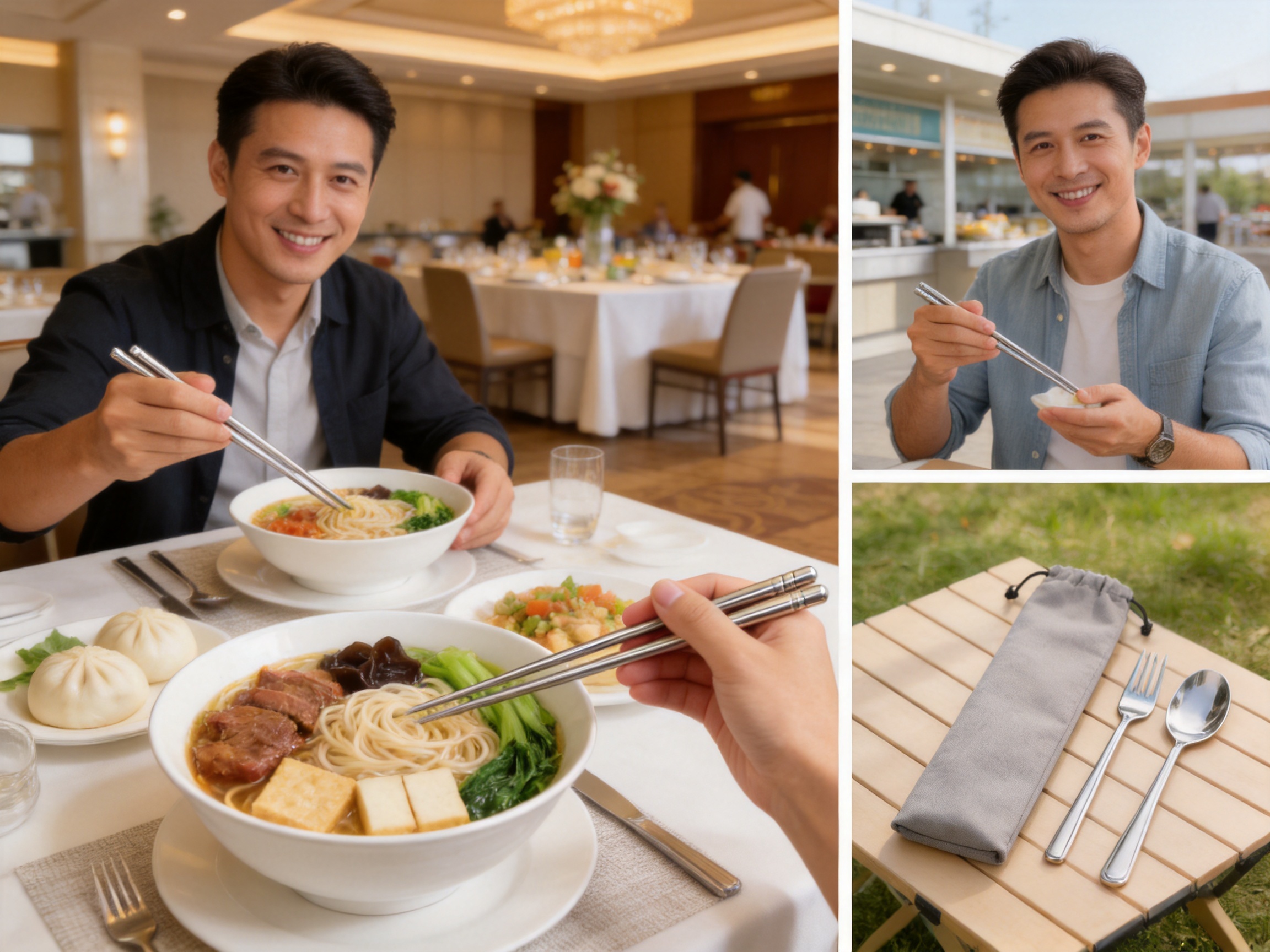
For home use, stainless steel chopsticks offer a durable alternative to utensils that require frequent replacement. They can be used for regular meals, packed lunches, family gatherings, and special occasions. Their polished appearance works with a wide variety of plates, bowls, and serving ware.
Restaurants and food-service businesses
Restaurants need utensils that can withstand repeated handling and cleaning. Stainless steel chopsticks are suitable for dining rooms, buffet areas, takeout programs, and commercial kitchens. Their resistance to moisture and heat supports efficient washing and reuse.
The anti-slip tips can also improve the dining experience by helping customers handle common menu items more easily. For restaurant operators, the solid structure can reduce breakage and replacement compared with ceramic or fragile alternatives.
Hotels and hospitality programs
Hotels may use chopsticks in guest rooms, restaurants, banquet halls, conference facilities, and room-service programs. A consistent metallic finish presents a clean and professional appearance. The product can also be coordinated with stainless steel spoons, forks, serving utensils, or drinkware to create a unified table setting.
Business banquets and events
Business banquets and formal events require tableware that combines presentation with dependable performance. The classic Chinese design provides cultural character, while the polished finish contributes to a refined appearance. The durability of stainless steel is beneficial when utensils must be transported, arranged, collected, and cleaned in large quantities.
Outdoor picnics and travel
Outdoor users often need reusable utensils that are less fragile than ceramic and more durable than thin plastic. Stainless steel chopsticks are suitable for picnics, camping, travel, workplace meals, and portable dining kits. Their solid construction helps them withstand transportation and repeated use.
Because stainless steel does not absorb food odors or moisture easily, it is also practical for users who want to carry reusable utensils in a case or travel pouch. The chopsticks should be cleaned and dried before storage to maintain good hygiene.
Institutional and professional environments
Schools, hospitals, corporate cafeterias, senior-care facilities, and other institutions may value tableware that supports standardized cleaning and disinfection. Stainless steel’s heat resistance and non-porous surface make it suitable for controlled sanitation processes when used according to the facility’s operating procedures.
Wholesale and Custom Supply Considerations
Buyers sourcing stainless steel chopstick sets should evaluate more than the unit price. The total value of a product includes material reliability, production consistency, surface quality, packaging, order flexibility, delivery coordination, and after-sales support.
Material confirmation is a fundamental step. Buyers should specify 304 stainless steel when that grade is required and request appropriate documentation or verification procedures as part of the procurement process. Clear material specifications help avoid confusion between different stainless steel grades or unverified metal compositions.
Dimensions should also be confirmed. This product has a stated length of 23.9 centimeters. Buyers may need to clarify acceptable dimensional tolerances, weight range, tip profile, groove details, and surface finish. Such information is particularly important when the chopsticks must match existing tableware or fit a particular packaging format.
Surface requirements should be described in practical terms. For example, buyers may specify polished metallic luster, smooth edges, no paint, no wax, uniform grinding, and freedom from visible burrs. Detailed criteria make inspection more objective and help align expectations between the buyer and manufacturer.
Packaging can be adapted for different sales channels. Bulk packaging may be suitable for restaurants or distributors, while individual boxes, paper sleeves, reusable cases, or gift packaging may be more appropriate for retail and promotional programs. Packaging requirements should consider protection, labeling, storage, transportation, and environmental objectives.
Private-label customers may request custom logos, packaging graphics, product inserts, or coordinated utensil sets. These requirements should be reviewed during the development stage because they may influence tooling, printing, packaging dimensions, minimum order quantities, and lead times.
Recommended Quality Inspection Points
A practical inspection plan helps buyers confirm that the delivered products match the approved sample and specification. The following checkpoints are relevant for stainless steel chopstick sets.
| Inspection Area | What to Review |
| Material | Specified 304 stainless steel and supporting documentation where required |
| Length | Compliance with the stated 23.9-centimeter specification |
| Structure | Solid one-piece construction without looseness, cracks, or deformation |
| Edges | Smooth, rounded, and free from burrs or sharp irregularities |
| Surface | Uniform polish, consistent metallic luster, and no unwanted coating defects |
| Tips | Correct alignment, appropriate shape, and consistent anti-slip grooves |
| Cleanliness | No visible oil, residue, polishing compound, or foreign matter |
| Packaging | Correct quantity, protection, labeling, and carton condition |
Inspection should be performed according to an agreed sampling plan or customer quality standard. For long-term supply programs, buyers may also consider periodic factory audits, production sample approval, shipment inspections, and corrective-action procedures.
Care and Maintenance Guidance
Although 304 stainless steel chopsticks are designed for durability, proper care can extend their useful life and preserve their appearance. After use, rinse away food residue rather than allowing sauces or salty foods to dry on the surface for an extended period.
Wash the chopsticks with a suitable dishwashing detergent and a non-abrasive sponge or brush. Pay attention to the grooved tip area because food particles may collect in the texture. Rinse thoroughly and allow the chopsticks to dry before storage.
If the chopsticks are cleaned in a dishwasher, place them securely so they do not strike other metal objects unnecessarily. Excessive contact with abrasive items can create cosmetic scratches even when the structural performance remains unaffected.
Do not use harsh chemicals unless they are confirmed to be compatible with stainless steel. Strong chlorine-based products, concentrated acids, or prolonged chemical exposure may affect the surface under certain conditions. Commercial operators should follow their sanitation supplier’s instructions.
Stainless steel may occasionally show water spots or discoloration due to minerals, detergents, or environmental exposure. These marks do not necessarily indicate material failure. Appropriate stainless steel cleaning methods can usually restore the appearance, provided the surface has not been severely damaged.
Sustainability and Long-Term Value
Reusable stainless steel tableware can support waste reduction by replacing disposable chopsticks and short-life utensils. Its durability enables repeated use over a long service period, reducing the need for frequent replacement. At the end of its useful life, stainless steel is also a recyclable material within appropriate recycling systems.
Long-term value should be assessed through the complete product lifecycle. A low-cost utensil that cracks, molds, breaks, or deforms quickly may create higher replacement and disposal costs. A more durable stainless steel product can provide better value when used regularly in demanding conditions.
Manufacturing efficiency also contributes to responsible sourcing. Standardized production, controlled material usage, reliable tooling, and quality management can help reduce avoidable defects and production waste. When a supplier integrates design, engineering, tooling, manufacturing, and quality functions, it can identify opportunities to improve resource efficiency while maintaining product performance.
Why Choose a Specialized Manufacturing Partner
A specialized manufacturer can provide more than a finished product. It can help buyers evaluate product feasibility, select suitable materials, refine dimensions, confirm surface treatments, develop packaging, and establish repeatable quality requirements.
Heenoor Co., Ltd. combines long-term industry experience with capabilities in product design, engineering validation, tooling development, standardized production, and quality management. This integrated structure is useful for customers who need dependable supply rather than a one-time trading transaction.
The company’s experience with stainless steel, titanium, plastic, and glass products supports a broad technical perspective. It can serve customers across everyday, professional, and premium markets, helping them develop products that are durable, manufacturable, scalable, and suitable for international distribution.
For procurement teams, supply stability is a significant consideration. A supplier with established production systems and clear communication processes can help reduce uncertainty during repeat orders. Technical clarity regarding specifications, quality standards, packaging, and delivery expectations further improves cooperation.
For brands, the product can serve as a foundation for custom tableware programs. The basic design may be adapted through packaging, branding, finish coordination, or combination with spoons and forks. Any customization should be assessed early to ensure that the finished product remains practical, cost-effective, and compatible with the planned production volume.
Q&A
What material are the chopsticks made from?
The chopsticks are made from 304 stainless steel. This material is selected for its corrosion resistance, strength, non-porous surface, heat resistance, and suitability for repeated cleaning and daily dining use.
What is the length of the chopstick set?
The stated length is 23.9 centimeters. This length provides a practical balance of reach, control, and comfortable handling for everyday meals, restaurants, banquets, and outdoor dining.
Are the chopsticks painted or waxed?
No. The chopsticks are described as free from paint and wax. Their appearance comes from the natural metallic luster of stainless steel and the product’s polishing and grinding processes.
Do the chopsticks have anti-slip features?
Yes. The tips include anti-slip grooves designed to improve friction and help users grip food more securely, particularly when handling smooth, moist, or slippery ingredients.
Are the chopsticks one piece?
Yes. They feature a solid one-piece structure. This design provides a stable grip and reduces the risk of joint loosening, splitting, or component separation.
Can the chopsticks be cleaned in a dishwasher?
They are suitable for environments that require dishwasher cleaning, provided the dishwasher program and detergent are compatible with stainless steel tableware. Users should avoid unnecessary contact with abrasive objects and dry the chopsticks properly after cleaning.
Can the chopsticks be used in high-temperature disinfection environments?
They are suitable for environments requiring high-temperature disinfection because stainless steel provides strong heat resistance and does not deform as easily as many wooden or plastic alternatives. The specific sanitation process should always follow the operating requirements of the facility.
How do stainless steel chopsticks compare with wooden chopsticks?
Stainless steel chopsticks are less porous, more resistant to moisture, easier to sanitize, and less likely to crack or develop mold-related problems when properly maintained. Wooden chopsticks may feel warmer and lighter, but they typically require more careful drying and replacement management.
How do they compare with bamboo chopsticks?
Stainless steel chopsticks generally offer greater resistance to cracking, splitting, moisture absorption, and heat-related deterioration. Bamboo may provide a natural appearance and lightweight feel, but stainless steel is often more suitable for high-frequency washing and long-term commercial use.
How do they compare with ceramic chopsticks?
Stainless steel is more impact-resistant and less likely to shatter if dropped. Ceramic chopsticks can have a distinctive decorative appearance, but chips or breaks may make them unsuitable for continued use.
Are the chopsticks suitable for restaurants and hotels?
Yes. Their durability, cleanable surface, heat resistance, and professional polished appearance make them suitable for restaurants, hotels, banquets, catering businesses, cafeterias, and other food-service environments.
Can the product be used for outdoor dining?
Yes. The solid stainless steel structure is suitable for picnics, travel, camping, workplace meals, and other reusable outdoor dining applications. The chopsticks should be cleaned and dried before storage in a travel case or container.
Can buyers request custom packaging or branding?
Custom packaging, labeling, branding, or coordinated tableware programs may be possible depending on the order requirements. Buyers should discuss artwork, packaging structure, quantities, tooling, and quality expectations with the manufacturer before production.
What manufacturing capabilities does the supplier provide?
Heenoor Co., Ltd. integrates product design, engineering validation, tooling development, standardized production, and quality management. These capabilities support the development and manufacture of durable, scalable products for different market segments.
What should buyers confirm before placing a wholesale order?
Buyers should confirm the stainless steel grade, length, construction, surface finish, tip design, acceptable tolerances, packaging, branding requirements, inspection procedures, order quantity, delivery schedule, and documentation expectations.
Conclusion
A 304 stainless steel chopstick set provides a durable and practical solution for modern tableware programs. Its corrosion-resistant, non-porous, heat-resistant material is well suited to repeated dining, washing, and sanitation. The solid one-piece construction improves stability, while the polished surface and rounded edges support comfort and easy maintenance.
The anti-slip grooves at the tips add functional value by improving control when picking up food. The 23.9-centimeter length and balanced weight make the chopsticks suitable for household dining, restaurants, business banquets, outdoor use, and professional food-service environments.
Compared with wooden, bamboo, ceramic, and coated alternatives, stainless steel offers a strong combination of durability, cleanability, resistance to moisture, and long-term service value. These advantages are reinforced when the product is manufactured through controlled grinding, polishing, engineering validation, tooling development, standardized production, and quality management.
With experience dating back to 1999 and capabilities spanning stainless steel, titanium, plastic, and glass products, Heenoor Co., Ltd. is positioned to support wholesale buyers, brands, organizations, and procurement teams seeking reliable manufacturing cooperation. Its integrated approach helps connect product design with practical production, quality control, and long-term supply stability.
For customers seeking reusable, durable, and professional tableware, a carefully manufactured 304 stainless steel chopstick set is a strong choice. It combines traditional design influence with modern material performance and provides a dependable foundation for everyday dining and customized commercial programs.
References
1. ASTM International. Standard specifications and guidance related to stainless steel products and corrosion-resistant materials.
2. International Organization for Standardization. General principles for food-contact materials, hygienic design, and quality management.
3. Food and Agriculture Organization of the United Nations. Guidance on food hygiene and the handling of reusable food-service equipment.
4. United States Food and Drug Administration. General considerations for materials and articles intended for food contact.
5. European Committee for Standardization. General guidance concerning materials and articles intended to come into contact with food.
6. Stainless Steel Information Center. Technical background on stainless steel properties, corrosion resistance, maintenance, and recycling.
7. Heenoor Co., Ltd. Product information for 304 stainless steel chopstick sets and integrated drinkware manufacturing capabilities.
Product: Stainless Steel Chopstick Sets

You may also like…
Copyright © 2025 Heenoor Co., Ltd. All Rights Reserved.
 Custom Stainless Steel Drinkware Manufacturers
BACK TOP