 English
 中文简体
中文简体 日本語
日本語 Español
 عربى
عربى
Search
Categories
Recommend
Categories
 Lin Yuxi — International Product Sales Manager
Recommend
-
 Industry news
 -
 Industry news
 -
 Industry news
 -
 Industry news
Sep 02, 2026 - By admin
Stainless Steel Tea Water Separation Stewing Teakettle: A Practical Guide to Vacuum-Insulated Beverage Service
Content
- 1 Product Positioning and Everyday Purpose
- 2 Core Construction and Material Selection
- 3 How the Vacuum Insulation System Works
- 4 Tea Water Separation and Beverage Control
- 5 One-Touch Dispensing for Easier Serving
- 6 Spout, Handle, and Base Design
- 7 Available Models and Specifications
- 8 Advantages Compared with Common Alternatives
- 9 Applications in Home, Office, and Outdoor Settings
- 10 Manufacturing Capabilities Behind the Product
- 11 Why Manufacturing Integration Matters to Buyers
- 12 Design Features That Support Product Differentiation
- 13 Recommended Use and Care Practices
- 14 Procurement Considerations for Wholesale Buyers
- 15 Technical Value for Brands and Organizations
- 16 Q&A
- 16.1 What is the main purpose of this vacuum kettle?
- 16.2 What material is used for the inner liner?
- 16.3 Does the kettle include a tea filter?
- 16.4 What capacities are available?
- 16.5 How much do the two models weigh?
- 16.6 Can it be used for cold beverages?
- 16.7 How does the one-touch dispensing system work?
- 16.8 What is the purpose of the pull-to-open lid?
- 16.9 Is the product suitable for office meetings?
- 16.10 Is it suitable for outdoor use?
- 16.11 What materials are used in the lid?
- 16.12 What are the product’s main advantages over a plain flask?
- 16.13 What are the product’s main advantages over a glass tea pot?
- 16.14 Can the product be customized?
- 16.15 What should buyers confirm before placing a bulk order?
- 17 Conclusion
- 18 References
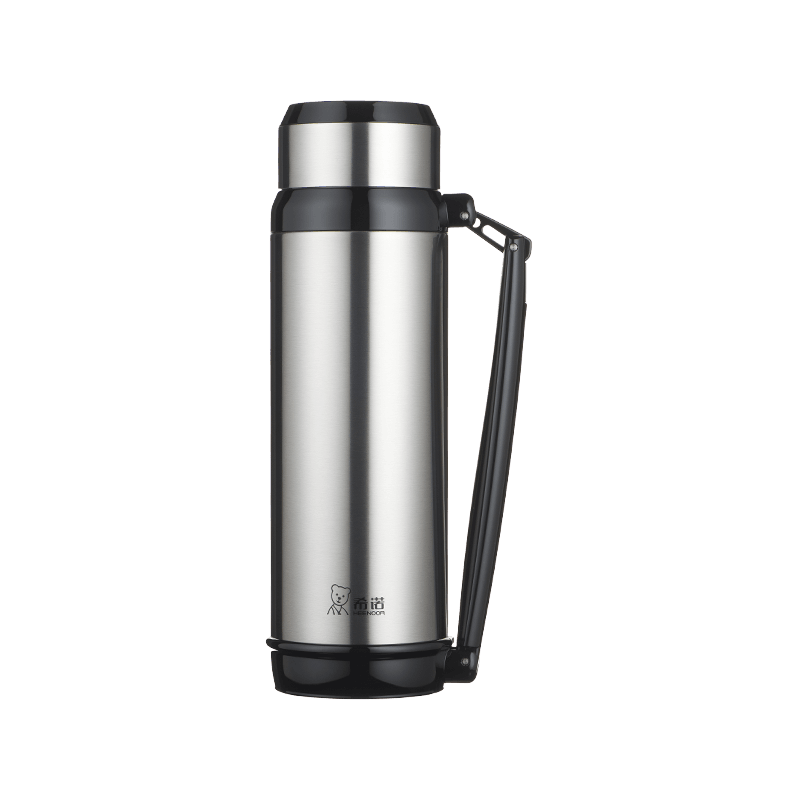
- 19 Product: Stainless Steel Tea Water Separation Stewing Teakettle
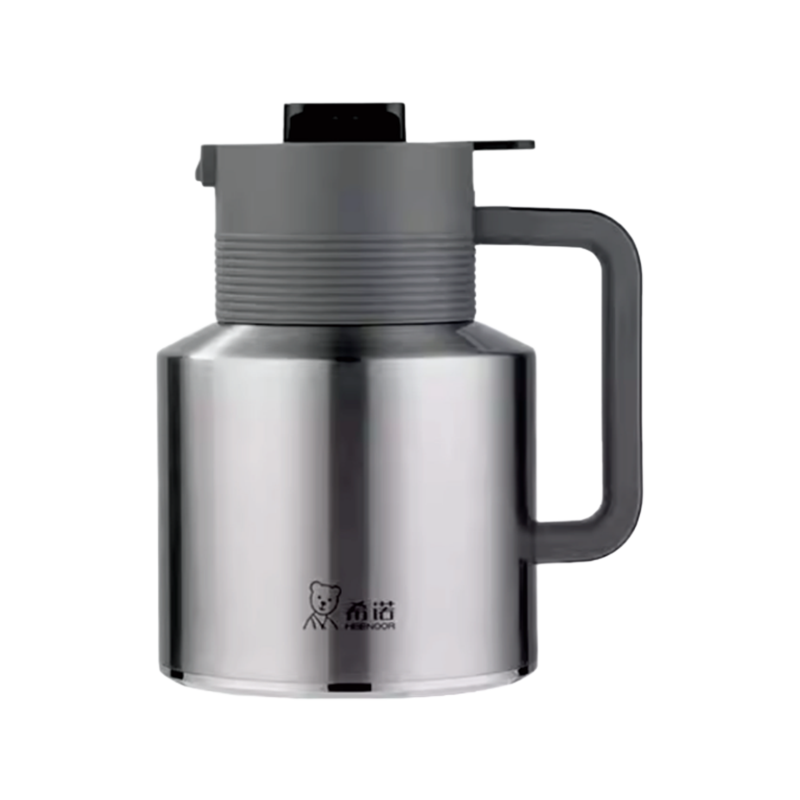
A reliable beverage vessel should do more than hold hot or cold liquid. It should preserve temperature, protect flavor, provide controlled pouring, remain stable during use, and withstand the demands of everyday handling. The Stainless Steel Tea Water Separation Stewing Teakettle is designed around these practical requirements. It combines a 304 stainless steel inner liner, vacuum insulation, a stainless steel filter screen, a one-touch dispensing button, a pull-to-open lid, and an ergonomically shaped handle in one large-capacity kettle.
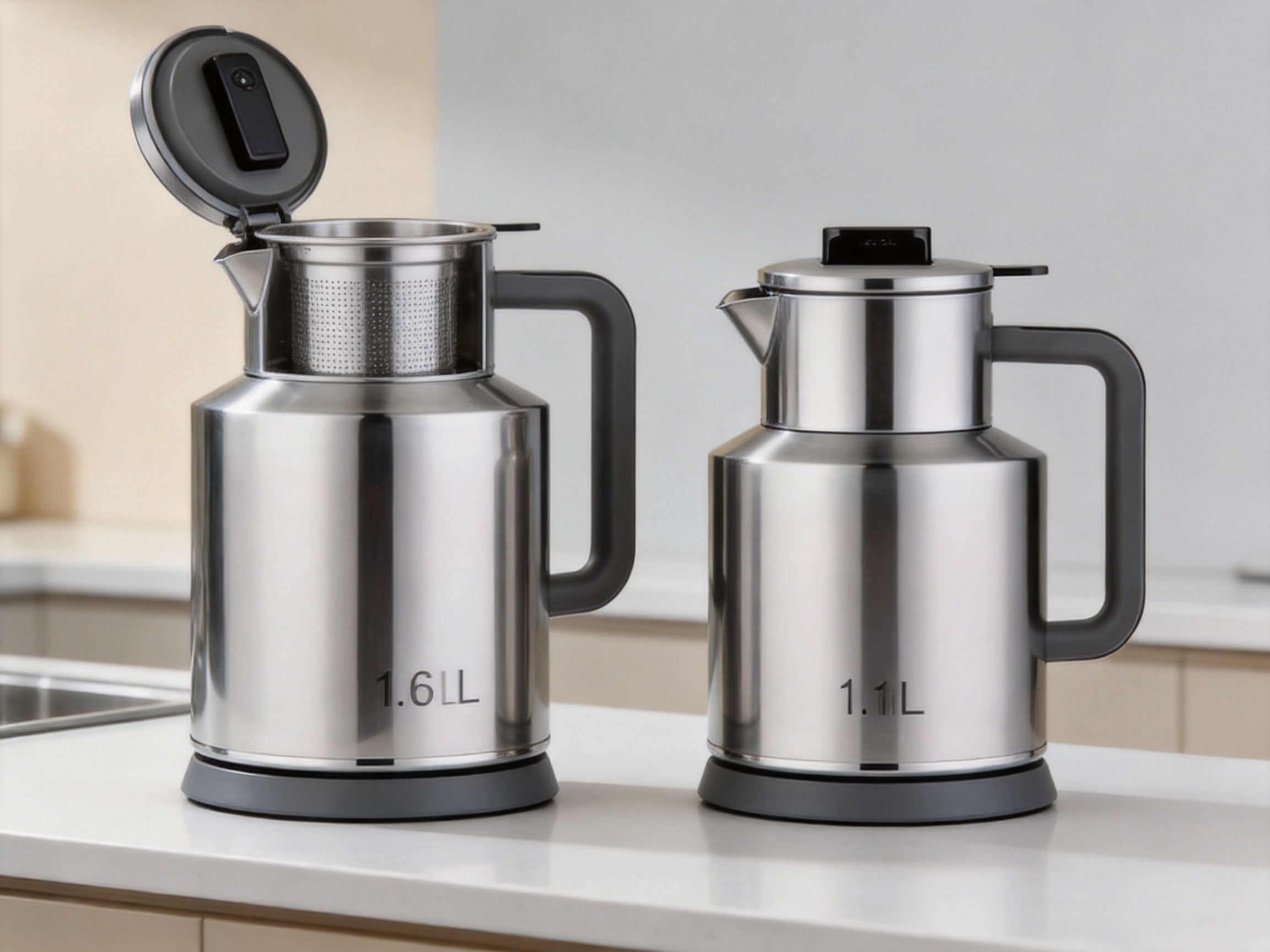
Available in two configurations, the product is intended for home kitchens, offices, meetings, hospitality settings, family gatherings, and outdoor picnics. The 1.6-liter model, identified as XN-8851, weighs approximately 1.1 kilograms. The 1.1-liter model, identified as XN-8852, weighs approximately 0.88 kilograms. Both versions use a 304 stainless steel inner liner and filter screen, while the lid combines 304 stainless steel with PP and PC components.
For buyers comparing vacuum kettles, tea pots, thermal carafes, and insulated water dispensers, this product offers a balanced combination of capacity, material selection, temperature retention, tea filtration, and convenient operation. Its value is not based on a single feature. Instead, it comes from the way several functions work together in a unified design.
Stainless Steel Tea Water Separation Stewing Teakettle
Product Positioning and Everyday Purpose
The Stainless Steel Tea Water Separation Stewing Teakettle belongs to the stainless steel vacuum kettle category. It is designed for users who want to prepare, store, and serve beverages from one container without repeatedly transferring liquid between a brewing vessel and a serving pot. The integrated design is particularly useful for tea, infused water, hot water, coffee-style beverages, and other drinks that benefit from controlled temperature and convenient pouring.
Traditional serving methods often involve several separate items. A user may need a kettle for boiling water, a tea pot for steeping, a strainer for separating leaves, and a jug or carafe for serving. Every additional transfer can create spills, increase cleanup, and expose the beverage to more heat loss. A tea water separation kettle simplifies this process by bringing thermal storage and filtered pouring into a single product.
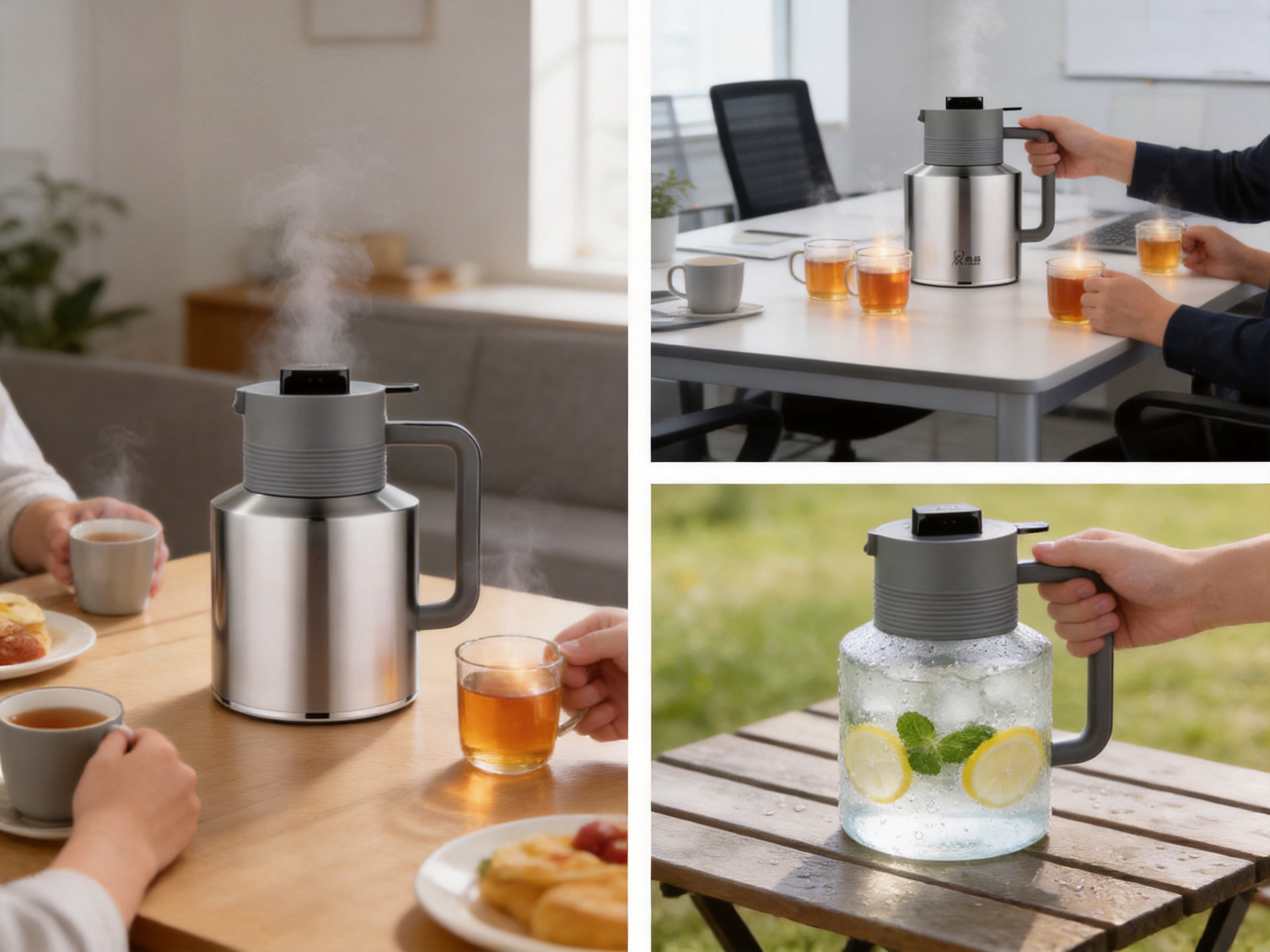
The kettle is suitable for both hot and cold beverages. In winter, the vacuum insulation helps slow the loss of heat from freshly prepared drinks. In summer, the same insulation principle helps reduce the rate at which chilled beverages warm up. This dual-season function makes the product more versatile than a container designed only for hot water or only for cold drinks.
The large-capacity format is also important. A 1.1-liter vessel can serve a small family, an individual workday, or a compact meeting. The 1.6-liter version is more suitable for group use, shared meals, office gatherings, or extended outdoor activities. By offering two sizes, the product can serve different hydration requirements without forcing every user to purchase an oversized container.
Core Construction and Material Selection
304 Stainless Steel Inner Liner
The inner liner is manufactured from 304 stainless steel. This material is widely used in food-contact and beverage applications because it offers a useful balance of corrosion resistance, strength, durability, and cleanability. In a kettle that may hold water, tea, fruit-infused beverages, or other liquids, resistance to rust and corrosion is especially important.
A stainless steel liner also supports a neutral beverage experience. The product information identifies the inner liner as safe and odorless, helping beverages retain their intended taste and aroma. Unlike some porous materials, stainless steel does not readily absorb beverage odors. This is helpful when the kettle is used for different drinks over time.
The use of 304 stainless steel contributes to long-term practicality. A plastic-only interior may be lighter, but repeated exposure to hot liquids, cleaning cycles, and mechanical handling can affect its appearance or service life. Stainless steel provides a more robust internal surface for regular use. It also gives manufacturers a dependable material platform for forming, welding, finishing, and quality inspection.
304 Stainless Steel Filter Screen
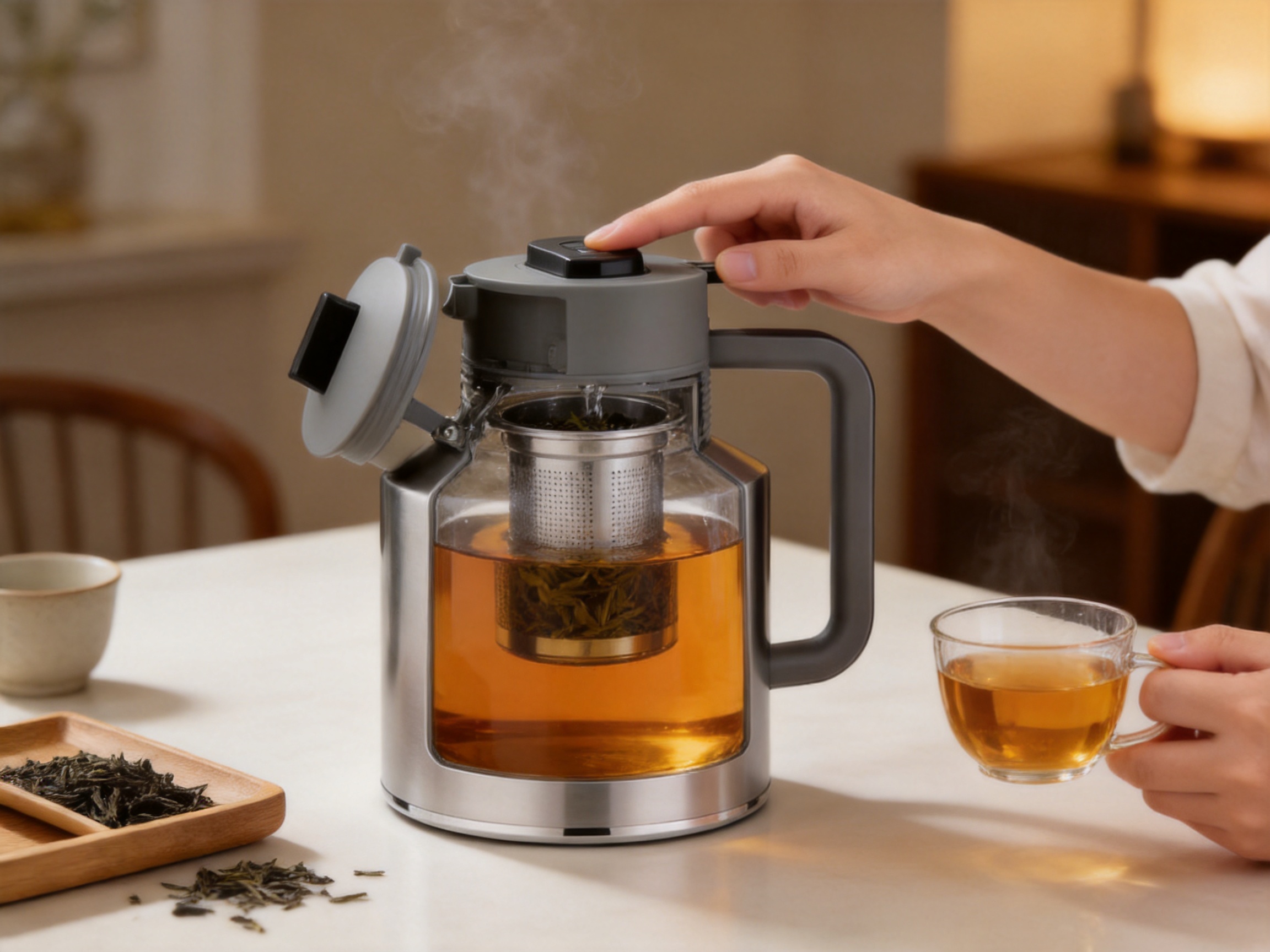
The filter screen is also made from 304 stainless steel. This feature supports tea preparation and water separation by helping retain tea leaves, larger particles, or other solid ingredients while allowing liquid to pass through. It is a useful addition for users who prefer loose-leaf tea instead of individually packaged tea bags.
The filter screen adds functional value without requiring a separate strainer. A separate strainer can be misplaced, require additional washing, or create another point where liquid may spill. Integrating the filter into the kettle keeps the preparation and service process more organized.
Because the filter screen uses the same general stainless steel grade as the liner, the internal material system is consistent. This can be advantageous for maintenance and user confidence. The screen is intended to work as part of the beverage path, so material selection is important for hygiene, corrosion resistance, and durability.
Multi-Material Lid Assembly
The lid uses a combination of 304 stainless steel, PP, and PC. Each material can contribute different performance characteristics within the assembly. Stainless steel supports durability and a premium appearance, while polypropylene and polycarbonate are commonly used in functional components that require dimensional stability, low weight, or impact resistance.
The pull-to-open lid structure is designed to make access straightforward. Users can open the kettle without dealing with a complex locking sequence. This is useful during breakfast, meetings, meal service, or outdoor use, when speed and simple operation matter.
The lid also forms part of the sealed structure that supports insulation. A vacuum body alone cannot deliver practical thermal performance if the top assembly is poorly fitted. The lid must work with the mouth, sealing elements, and dispensing path to help reduce unnecessary heat exchange and limit leakage during normal handling.
How the Vacuum Insulation System Works
The product relies on a vacuum insulation layer to slow heat transfer. In a conventional single-wall container, heat can move relatively easily from the hot beverage to the surrounding environment. A vacuum layer contains very little air, which reduces conductive and convective heat transfer between the inner and outer walls.
The insulated structure does not create heat and does not freeze a beverage. Its purpose is to reduce the speed of temperature change. A hot drink will gradually cool, and a cold drink will gradually warm, but the vacuum layer helps delay that process compared with a standard non-insulated container.
The sealed design complements the vacuum structure. Reducing openings and controlling the lid interface can limit the movement of warm air and help prevent unnecessary temperature exchange. In practical use, users should close the lid properly after filling and avoid leaving the dispensing mechanism open for extended periods.
Thermal performance depends on several factors beyond the container itself. Initial beverage temperature, ambient temperature, filling level, lid position, frequency of opening, and the amount of liquid remaining can all influence results. A full or nearly full kettle generally experiences less rapid temperature change than a container with only a small amount of liquid, because there is less surface area relative to the stored volume.
The product’s dual hot-and-cold function gives it a broader application range than a traditional serving pot. It can be prepared in the morning for hot tea, used during a work meeting for warm water, or filled with chilled water for a summer gathering. This versatility may reduce the need for separate seasonal containers.
Tea Water Separation and Beverage Control
Tea preparation requires more control than simply adding leaves to hot water. Steeping time, water temperature, leaf quantity, and separation all influence the final taste. If tea leaves remain immersed for too long, the beverage may become overly strong or bitter. If the leaves are separated too early, the drink may not reach the desired intensity.
The integrated filter screen supports a more controlled preparation routine. Users can add tea leaves to the appropriate internal area, pour in hot water, and use the filter to keep leaves from entering the serving stream. This is especially convenient when several people want tea from the same kettle.
The separation function is also useful beyond traditional tea. It may help retain fruit pieces in infused water, larger herbs in botanical beverages, or other non-liquid ingredients that users do not want in the cup. The exact suitability depends on particle size and beverage preparation, but the basic principle remains the same: the filter helps distinguish the liquid portion from larger solids.
Compared with a plain vacuum flask, this product offers a more complete preparation-and-serving experience. A basic flask may preserve temperature effectively, but it may not include a dedicated filter screen, controlled tea separation, or a serving-oriented pouring design. Compared with a simple glass tea pot, this product provides a more durable stainless steel construction and vacuum insulation.
One-Touch Dispensing for Easier Serving
The one-touch water dispensing button is one of the product’s most practical user-interface features. It is designed for operation with one hand, allowing the user to control the liquid outlet while holding a cup or stabilizing the kettle with the other hand.
One-handed dispensing can be valuable in many situations. At an office meeting, a user may hold a cup in one hand and press the button with the other. At home, the function can make serving easier when the kettle is placed on a dining table. During a picnic, it can reduce the need to balance a lid separately while pouring.
A push-button mechanism may also support more controlled dispensing than lifting and tilting a conventional open pitcher. The user can activate the outlet when needed and release it when the cup has received enough liquid. This can help reduce splashing and unnecessary spills, although careful handling is still recommended with very hot beverages.
The operating system is designed around convenience rather than complicated settings. There are no temperature programs, electrical controls, or charging requirements described for the product. This keeps the kettle suitable for locations where simple mechanical operation is preferred, including outdoor settings and areas without easy access to power.
Spout, Handle, and Base Design
Protected Spout Opening
The spout incorporates a hole design intended to help prevent dust and dirt from entering the outlet area. This can be useful when the kettle is placed on a kitchen counter, office table, or picnic surface between uses. The design also supports smoother water flow and helps reduce splashing during dispensing.
Maintaining a clean spout is still part of normal care. The protected opening can reduce exposure to external contaminants, but users should wash and dry the dispensing area regularly. Any beverage residue should be removed according to the product’s care instructions before it hardens or affects the flow path.
Ergonomic Handle
The handle is ergonomically designed to support a comfortable grip. This matters because the larger model can contain approximately 1.6 liters of liquid, and the combined weight of the beverage and kettle can be substantial. A handle that is easy to hold can improve control when moving the product from a counter to a table or when positioning it for service.
Ergonomics involve more than appearance. Handle shape, grip clearance, balance, and the relationship between the handle and the kettle body all influence how the product feels in use. The design aims to provide a stable and effort-conscious grip for regular serving.
Reinforced Base
The reinforced base is intended to improve durability, wear resistance, and stability. A kettle is repeatedly placed on counters, tables, shelves, and other surfaces. A stronger base helps protect the lower section of the body from routine contact and supports more secure placement.
Stability is particularly important for a tall or large-capacity vessel. A secure base can reduce rocking and help the kettle remain upright when it is not being held. Users should still place it on a level, dry surface and avoid positioning it near the edge of a table.
Available Models and Specifications
The product is available in two models. XN-8851 provides the larger 1.6-liter capacity and has a listed weight of approximately 1.1 kilograms. XN-8852 provides a 1.1-liter capacity and has a listed weight of approximately 0.88 kilograms. Both models share the core material configuration described for the product.
Specification |
XN-8851 |
XN-8852 |
Capacity |
1.6 liters |
1.1 liters |
Listed weight |
1.1 kilograms |
0.88 kilograms |
Inner liner |
304 stainless steel |
304 stainless steel |
Filter screen |
304 stainless steel |
304 stainless steel |
Lid material |
304 stainless steel + PP + PC |
304 stainless steel + PP + PC |
Primary use profile |
Group serving and extended use |
Home, office, and compact serving |
The choice between the two versions should be based on serving volume, storage space, portability, and expected frequency of refilling. The 1.6-liter model can reduce refill frequency when several people share the beverage. The 1.1-liter model may be more convenient for smaller households, personal workspaces, or users who prioritize a lighter vessel.
Advantages Compared with Common Alternatives
Compared with Ordinary Non-Insulated Tea Pots
A conventional non-insulated tea pot may offer attractive visual styling, but it generally allows temperature to change more quickly. The vacuum-insulated body of this product is designed to slow that change, making it more suitable for beverages that need to remain warm or cool over a longer serving period.
The stainless steel construction also provides a different durability profile from fragile ceramic or glass. Stainless steel is less vulnerable to shattering from accidental impact. This does not mean the product is indestructible, but it can be a practical choice for busy kitchens, offices, and outdoor use.
Compared with Basic Vacuum Flasks
A basic vacuum flask may preserve temperature but often focuses mainly on storage and drinking. The Stainless Steel Tea Water Separation Stewing Teakettle adds a filter screen for tea preparation, a spout designed for smooth serving, and a one-touch dispensing button. These additions make it more suitable for shared service and brewed beverages.
The larger 1.1-liter and 1.6-liter formats also position the product between a personal bottle and a commercial beverage dispenser. It can hold enough liquid for multiple servings while remaining manually operated and easy to relocate.
Compared with Electric Kettles
An electric kettle is useful for heating water, but it normally requires a power source and is not intended to store a beverage for extended service. The vacuum kettle serves a different purpose. It stores and serves an already prepared beverage without relying on electricity during use.
This distinction is valuable for office conference rooms, dining tables, outdoor gatherings, travel situations, and locations where a power outlet is unavailable. Users can prepare the liquid separately, fill the kettle, and serve as needed.
Compared with Plastic Beverage Jugs
Plastic jugs can be lightweight and affordable, but they may not provide the same combination of stainless steel internal construction, vacuum insulation, and tea filtration. The Stainless Steel Tea Water Separation Stewing Teakettle is designed for users who place greater emphasis on temperature retention, material durability, and beverage preparation control.
The result is a more specialized product for hot and cold beverage service. It may be especially attractive to buyers seeking a reusable, durable alternative to disposable beverage containers or simple room-temperature pitchers.
Applications in Home, Office, and Outdoor Settings
Home Use
At home, the kettle can be prepared during breakfast and kept available for serving throughout the morning. It can hold tea for family members, hot water for meal preparation, or chilled water during warm weather. Its large capacity reduces the need to repeatedly boil or refill smaller vessels.
The product can also support a more organized dining table. Rather than placing a saucepan, loose tea pot, or open pitcher on the table, users can serve from one enclosed vessel. The pull-to-open lid and one-touch dispensing button are designed to keep the process simple.
Office Gatherings
Office meetings often require a shared beverage that can be served quickly without interrupting the discussion. The 1.6-liter version can support multiple cups, while the one-handed button allows convenient service. The vacuum structure helps the beverage remain closer to its initial temperature during the meeting period.
The kettle may be used for tea, hot water, or cool drinking water. Its non-electrical operation also avoids the need to place a heating appliance in the meeting room. This can help keep the serving area simpler and reduce cable clutter.
Outdoor Picnics
Outdoor users may value the product’s stainless steel body, insulated construction, and lack of dependence on electrical power. A prepared beverage can be transported to a picnic site and served when needed. The reinforced base provides additional support when the kettle is placed on a table or other stable surface.
Outdoor use requires careful handling. The lid should be secured before transport, and the kettle should be kept upright. Very hot liquids should be handled responsibly, especially around children. After use, the product should be cleaned and dried before storage.
The product may also be useful for small hospitality operations, reception areas, training sessions, and informal catering. Its design provides a controlled serving method without the complexity of an electric dispenser. The two capacity choices allow procurement teams to match the product to different table sizes and service volumes.
Manufacturing Capabilities Behind the Product
The product is manufactured by Heenoor Co., Ltd., a drinkware manufacturer established in 1999. The company’s stated capabilities cover product development, industrial manufacturing, product design, engineering validation, tooling development, standardized production, and quality management.
This integrated structure is important for a product that combines formed stainless steel parts, vacuum insulation, a filter screen, a composite lid, a dispensing mechanism, and an ergonomic body. Each component must fit within the overall assembly. A manufacturer that can coordinate design and production internally is better positioned to identify manufacturability issues before mass production.
Product Design and Engineering Validation
Product design is the first stage in converting user requirements into a practical kettle. Designers must consider the intended capacity, center of gravity, grip position, lid opening, dispensing path, filter location, base stability, and cleaning access. These considerations affect both user satisfaction and production feasibility.
Engineering validation provides an opportunity to review whether the design performs as intended. For a vacuum kettle, validation may include examination of assembly fit, sealing interfaces, button operation, lid opening, filter positioning, structural stability, and resistance to expected handling. The available company information identifies engineering validation as part of its broader manufacturing process, supporting a development approach that connects design decisions with production requirements.
Tooling Development
Tooling development is particularly relevant to stainless steel drinkware. Forming tools influence the shape, consistency, and repeatability of the body and related components. Proper tooling helps support stable dimensions across production batches and can make the manufacturing process more efficient at larger volumes.
Tooling also affects the appearance and function of the finished product. A well-developed tool can help create smooth transitions, accurate openings, consistent fit, and a repeatable external profile. For a kettle with a reinforced base and integrated lid system, dimensional consistency is important because different parts must work together during assembly.
Standardized Production
Standardized production helps reduce variation from one unit to another. This is valuable for customers purchasing drinkware in volume, including brands, organizations, distributors, hospitality buyers, and procurement teams. Consistency in dimensions, components, finishing, and assembly can simplify inspection, packaging, inventory management, and customer support.
The use of standardized production is also aligned with the two-model product strategy. Although the capacities and weights differ, both models share the same core material system and functional concept. A controlled manufacturing process can help maintain a consistent user experience across the product range.
Quality Management
Quality management supports the reliability of the finished kettle. For this type of product, quality attention may involve incoming material control, component inspection, assembly checks, appearance review, leak-related evaluation, functional testing, and packaging inspection. Specific test methods and acceptance criteria should be confirmed with the manufacturer for a particular purchasing program.
A quality-focused manufacturing system is especially important when a product contains multiple interacting parts. A stainless steel liner, vacuum layer, filter, lid, button, spout, handle, and base each contribute to the final result. A weakness in one area can affect the perceived quality of the entire product.
Why Manufacturing Integration Matters to Buyers
Buyers often evaluate more than the sample unit. They also need confidence that the product can be reproduced consistently, adapted when necessary, and supplied over time. An integrated manufacturer can provide a more direct path between a design request and production execution.
Heenoor describes experience across stainless steel, titanium, plastic, and glass drinkware. This broad material background can be useful when a customer needs a coordinated drinkware program rather than one isolated item. It may also support informed decisions about material selection, component combinations, tooling, and product positioning.
The company’s stated focus on manufacturable, durable, and scalable products is relevant to private-label and customized drinkware projects. Manufacturability helps control production complexity. Durability supports product lifespan and customer satisfaction. Scalability matters when a successful item must move from initial sampling to larger volume orders.
International project support is another consideration for professional buyers. Clear technical communication, documented specifications, coordinated sampling, and stable production planning can reduce uncertainty during procurement. Customers should still confirm lead times, minimum order quantities, packaging options, inspection procedures, customization scope, and shipment terms directly for each project.
Design Features That Support Product Differentiation
In a crowded drinkware market, a product needs a clear reason to be selected. The differentiation of this kettle comes from combining several useful functions rather than relying on decorative styling alone.
First, it is a tea-oriented vacuum kettle rather than a plain thermal container. The stainless steel filter screen gives it a preparation function that many standard flasks do not offer.
Second, it is designed for shared beverage service. The capacities exceed those of many personal bottles, while the one-touch dispensing button provides a convenient alternative to lifting and tilting a large open pitcher.
Third, it supports both hot and cold applications. This gives retailers and procurement teams a product that can be promoted across seasons instead of being limited to a single temperature category.
Fourth, the construction combines a stainless steel beverage-contact system with a mixed-material lid. This offers a balance between a durable internal surface and functional component design.
Finally, the product is available in two capacities. This allows a sales program to address different users without developing an entirely separate product family.
Recommended Use and Care Practices
Before first use, the kettle should be washed according to the manufacturer’s care guidance. Rinsing the inner liner, filter screen, lid components, and dispensing path helps remove any residues associated with manufacturing, handling, or packaging.
When preparing tea, users should select a suitable quantity of leaves and water. The filter screen should be positioned correctly before the kettle is closed. After filling, the lid should be secured fully. The dispensing button should be operated gently and only when the kettle is stable.
For very hot beverages, users should avoid overfilling. Adequate space near the top can help reduce the risk of liquid reaching the lid mechanism during movement. The kettle should be carried by its handle rather than by the lid or button assembly.
After use, the product should be emptied and washed promptly. Tea residue can accumulate around the filter, lid, spout, and dispensing channel if it is left for an extended period. The filter screen deserves particular attention because fine particles may become trapped in its openings.
Users should inspect the lid, button, spout, handle, and base periodically. If any component becomes loose, damaged, or difficult to operate, continued use should be reviewed. The product should be stored dry, with the lid handled according to the manufacturer’s recommendations.
Cleaning tools should be selected carefully. Abrasive pads, harsh chemicals, or unsuitable scrapers may affect the finish or damage plastic components. The precise cleaning method, temperature limitations, and dishwasher suitability should be confirmed from the official product instructions before using automated cleaning equipment.
Procurement Considerations for Wholesale Buyers
Wholesale buyers should begin by identifying the intended market. A home-use retail program may favor the 1.1-liter model, while office, hospitality, and group-serving channels may prefer the 1.6-liter model. The correct capacity can affect product reviews, shipping efficiency, shelf presentation, and customer satisfaction.
Material communication should be accurate and consistent. Product listings can identify the 304 stainless steel inner liner and filter screen, along with the 304 stainless steel, PP, and PC lid construction. Buyers should request any additional compliance, food-contact, or testing documentation needed for their destination market.
Packaging should protect the kettle’s external surfaces, lid, handle, and dispensing components during transportation. Retail packaging may require product photography, dimensions, instructions, barcode placement, and multilingual labeling. These requirements should be discussed during the sampling and quotation stages.
Customization may include colors, surface finishes, logos, packaging, instruction materials, or other program-specific details. The feasibility of each option depends on tooling, order volume, production schedule, and target cost. Because Heenoor identifies design, tooling, and standardized production among its capabilities, it can be approached for a structured review of customization requirements.
Professional buyers should also evaluate supply continuity. Useful questions include whether replacement components are available, how quality inspections are recorded, how production changes are controlled, and what support is provided after shipment. Long-term supply stability is often as important as the initial unit price.
Technical Value for Brands and Organizations
For brands, the product offers a practical platform for positioning around tea culture, reusable beverage service, office hospitality, family dining, or outdoor recreation. The product can be introduced as a premium tea-serving kettle, a large-capacity insulated carafe, or a versatile hot-and-cold beverage container, depending on the sales channel.
For organizations, the product can support shared beverage stations in offices, schools, meeting facilities, hotels, and event spaces. The absence of electrical operation during service can make placement more flexible. The large capacity can also reduce the number of individual containers required for a group activity.
For procurement teams, the combination of standardized models and established manufacturing processes may simplify product selection. One program can use the smaller model in compact locations and the larger version where higher serving volume is required. This creates consistency while still allowing practical capacity choices.
Q&A
What is the main purpose of this vacuum kettle?
It is designed to prepare, store, and serve hot or cold beverages while helping slow temperature change. Its tea filter, insulated body, dispensing button, and serving-oriented lid make it suitable for tea, water, and other beverages.
What material is used for the inner liner?
The inner liner is made from 304 stainless steel. The product information describes this material as rust-resistant, corrosion-resistant, safe, and odorless for beverage use.
Does the kettle include a tea filter?
Yes. The filter screen is identified as 304 stainless steel. It is designed to help separate tea leaves or other larger solid ingredients from the liquid during serving.
What capacities are available?
There are two listed capacities: 1.6 liters for model XN-8851 and 1.1 liters for model XN-8852.
How much do the two models weigh?
Model XN-8851 has a listed weight of approximately 1.1 kilograms. Model XN-8852 has a listed weight of approximately 0.88 kilograms.
Can it be used for cold beverages?
Yes. The vacuum insulation is intended to help slow heat transfer in both directions, so the kettle can be used for hot beverages in colder weather and chilled beverages in warmer conditions.
How does the one-touch dispensing system work?
The dispensing button is designed for one-handed operation. The user presses the button to activate the water outlet and releases it when dispensing is complete. The kettle should be held securely and placed on a stable surface during use.
What is the purpose of the pull-to-open lid?
The pull-to-open structure is designed to make the lid easier to access. It supports straightforward filling, cleaning, and beverage preparation without requiring a complicated opening procedure.
Is the product suitable for office meetings?
Yes. The large-capacity design, vacuum insulation, one-touch dispensing, and non-electrical operation make it suitable for office gatherings, meeting rooms, and shared beverage service.
Is it suitable for outdoor use?
It is suitable for outdoor picnics and similar activities when transported and placed carefully. Users should keep the kettle upright, secure the lid, and handle hot beverages responsibly.
What materials are used in the lid?
The lid combines 304 stainless steel, PP, and PC. The different materials support the functional and structural requirements of the lid assembly.
What are the product’s main advantages over a plain flask?
In addition to temperature retention, this product provides a stainless steel filter screen, a spout designed for controlled flow, a one-touch dispensing button, a pull-to-open lid, and capacities intended for shared serving.
What are the product’s main advantages over a glass tea pot?
It offers vacuum insulation and a stainless steel construction rather than relying on a non-insulated glass body. This can provide a different combination of temperature retention, impact resistance, and portability.
Can the product be customized?
Customization should be discussed with the manufacturer. Potential options may include appearance, branding, packaging, or other project-specific details, subject to order volume, tooling, production requirements, and technical feasibility.
What should buyers confirm before placing a bulk order?
Buyers should confirm specifications, dimensions, color and finish options, packaging, minimum order quantity, lead time, quality inspection procedures, available documentation, shipping terms, and any customization requirements.
Conclusion
The Stainless Steel Tea Water Separation Stewing Teakettle is a multifunctional beverage-serving product built around practical daily needs. Its 304 stainless steel inner liner and filter screen provide a durable internal system for tea and water. Its vacuum insulation helps slow temperature change, allowing use with both hot and cold beverages. The one-touch dispensing button, pull-to-open lid, protected spout design, ergonomic handle, and reinforced base improve convenience and stability during service.
Its two capacity options make the product adaptable to personal, family, office, hospitality, and outdoor requirements. Compared with a plain flask, it provides more beverage-preparation and dispensing functions. Compared with a conventional tea pot, it offers vacuum insulation and a durable stainless steel body. Compared with an electric kettle, it provides portable storage and serving without requiring electricity during use.
The manufacturing foundation is also significant. Heenoor Co., Ltd. brings experience dating back to 1999 and describes an integrated process covering design, engineering validation, tooling development, standardized production, and quality management. Its experience with stainless steel, titanium, plastic, and glass drinkware supports the needs of brands, organizations, and procurement teams seeking scalable drinkware programs.
For consumers, the product offers a convenient way to keep beverages ready for serving. For professional buyers, it offers a configurable platform with clear material specifications, two capacity choices, and a manufacturer experienced in industrial drinkware production. Its strongest competitive position is the combination of thermal performance, tea separation, user-friendly dispensing, and manufacturing scalability in one reusable kettle.
References
Heenoor Co., Ltd. Product specification for Stainless Steel Tea Water Separation Stewing Teakettle, models XN-8851 and XN-8852.
Heenoor Co., Ltd. Manufacturer information concerning product design, engineering validation, tooling development, standardized production, and quality management.
Heenoor Co., Ltd. Material information for 304 stainless steel inner liner, 304 stainless steel filter screen, and 304 stainless steel, PP, and PC lid assembly.
General technical literature on vacuum insulation, thermal resistance, and heat transfer reduction in double-wall beverage containers.
General food-contact drinkware guidance concerning stainless steel surfaces, cleaning practices, and beverage container maintenance.
Product: Stainless Steel Tea Water Separation Stewing Teakettle

You may also like…
Copyright © 2025 Heenoor Co., Ltd. All Rights Reserved.
 Custom Stainless Steel Drinkware Manufacturers
BACK TOP