 English
 中文简体
中文简体 日本語
日本語 Español
 عربى
عربى
Search
Categories
Recommend
Categories
 Lin Yuxi — International Product Sales Manager
Recommend
-
 Industry news
 -
 Industry news
 -
 Industry news
 -
 Industry news
Oct 16, 2026 - By admin
PC Car-Mounted Portable Anti-Fall Plastic Bottle: Durable, Leak-Resistant Hydration for Mobile Living
Content
- 1 1. Product Overview and Design Purpose
- 2 2. Material Advantages of a PC Bottle Body
- 3 3. Sealing System and Leak-Resistant Construction
- 4 4. Advantages Compared with Competing Bottle Types
- 5 5. Portable Design for Cars, Travel, and Commuting
- 6 6. Capacity and Configuration Considerations
- 7 7. Comfort, Appearance, and User Experience
- 8 8. Manufacturing Capability and Engineering Strength
- 9 9. Quality Priorities for the PC Bottle
- 10 10. Applications Across Different User Groups
- 11 11. Sustainability and Long-Term Product Value
- 12 12. Purchasing and Customization Considerations
- 13 13. Why Manufacturing Integration Matters to Buyers
- 14 14. Care and Use Recommendations
- 15 15. Frequently Asked Questions
- 15.1 Q1: What is the main material of the bottle body?
- 15.2 Q2: Is the bottle designed to resist leaks?
- 15.3 Q3: Can the bottle be used in a car?
- 15.4 Q4: What capacities are available?
- 15.5 Q5: What materials are used in the lid?
- 15.6 Q6: What colors are available?
- 15.7 Q7: Is the bottle suitable for sports and outdoor activities?
- 15.8 Q8: Is the bottle insulated?
- 15.9 Q9: What makes this bottle different from a disposable plastic bottle?
- 15.10 Q10: Can businesses customize the bottle?
- 15.11 Q11: What should buyers confirm before mass production?
- 15.12 Q12: Why is manufacturing experience important for this product?
- 16 16. Conclusion
- 17 References
- 18 Product: PC Car-Mounted Portable Anti-Fall Plastic Bottle
Modern hydration products must do more than hold water. A practical bottle for commuting, driving, sports, travel, and outdoor activities must withstand movement, accidental impact, repeated handling, and changes in orientation while remaining comfortable to use. It should be easy to carry, simple to clean, visually adaptable to different lifestyles, and dependable enough for daily use. The PC Car-Mounted Portable Anti-Fall Plastic Bottle is designed around these practical requirements, combining an impact-resistant PC body, a reinforced structure, a compression-sealed lid, and a compact form intended for mobile scenarios.
The product belongs to the plastic water bottle category, but its design is directed toward users who need more than a basic lightweight container. Its anti-fall positioning, smooth rounded contact points, transparent body, and sealed construction make it suitable for cars, outdoor trips, sports and fitness, commuting, and other situations in which a bottle may be moved, tilted, or exposed to accidental knocks.
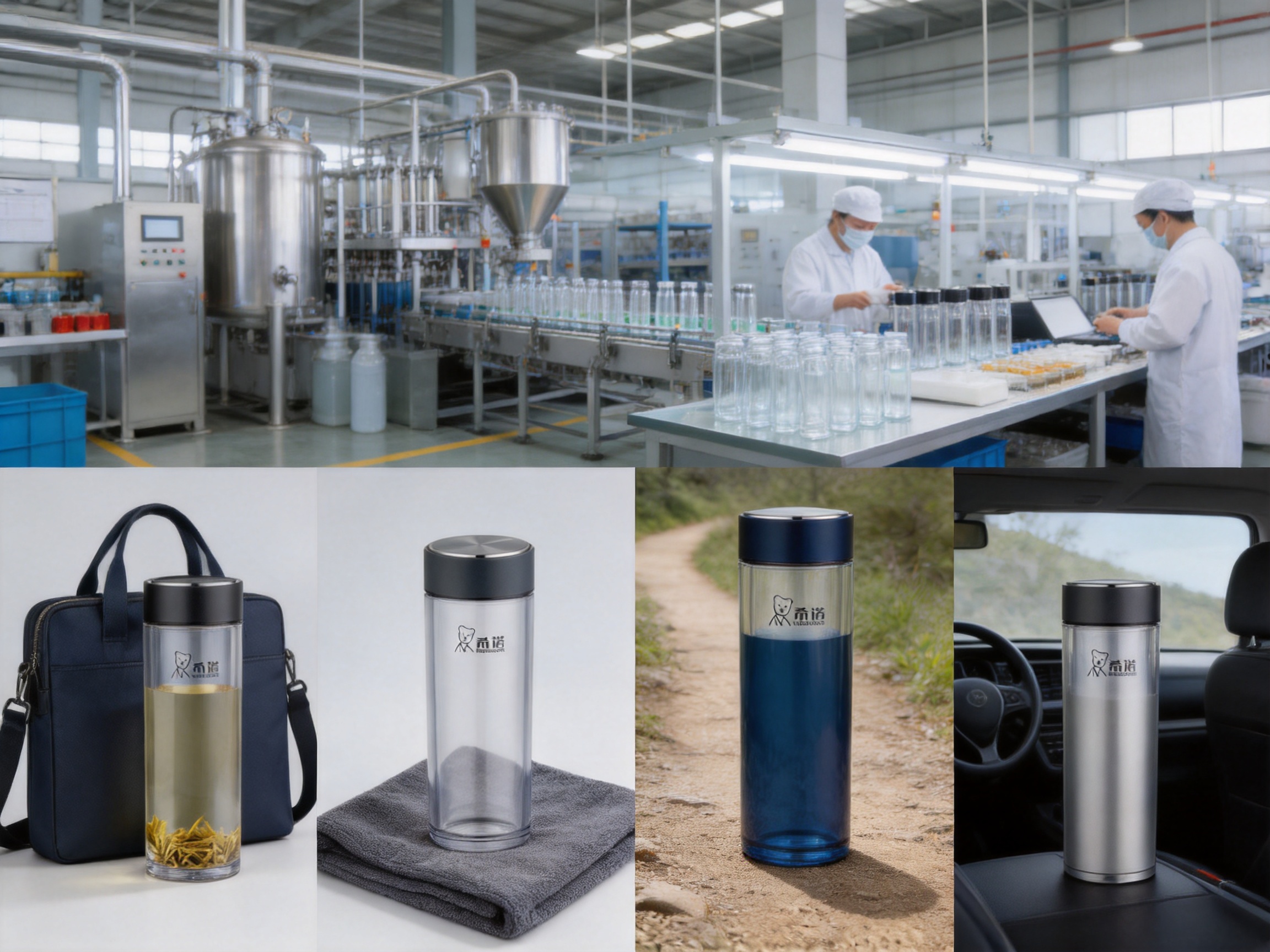
Manufactured by Heenoor Co., Ltd., a drinkware producer established in 1999, the bottle reflects a broader manufacturing capability that covers stainless steel, titanium, plastic, and glass drinkware. The company integrates product design, engineering validation, tooling development, standardized production, and quality management. This combination is particularly important for plastic drinkware, where material selection, wall thickness, molding consistency, lid fit, sealing-ring placement, and dimensional accuracy all influence the user experience.
The following article examines the product’s construction, performance advantages, use cases, specification considerations, manufacturing value, quality focus, customization potential, and suitability for buyers seeking a reliable drinkware program.
PC Car-Mounted Portable Anti-Fall Plastic Bottle
1. Product Overview and Design Purpose
The PC Car-Mounted Portable Anti-Fall Plastic Bottle is designed as a durable, portable drinking container for mobile use. Its name emphasizes three central characteristics: a PC material body, suitability for vehicle-related use, and resistance to damage caused by falls or impact. These characteristics address common weaknesses found in ordinary bottles, including brittle construction, unreliable lids, uncomfortable edges, and leakage when the bottle is placed on its side or inverted.
The main body is made from PC material. Polycarbonate is widely recognized for its high impact resistance and ability to retain structural integrity under handling conditions that may damage less robust plastics. In practical terms, this means the bottle is intended to tolerate the kinds of bumps and accidental drops that can occur during outdoor activities, commuting, sports, or vehicle use. The product is not presented as indestructible, but its material and thickened design provide a stronger foundation than a thin, fragile container.
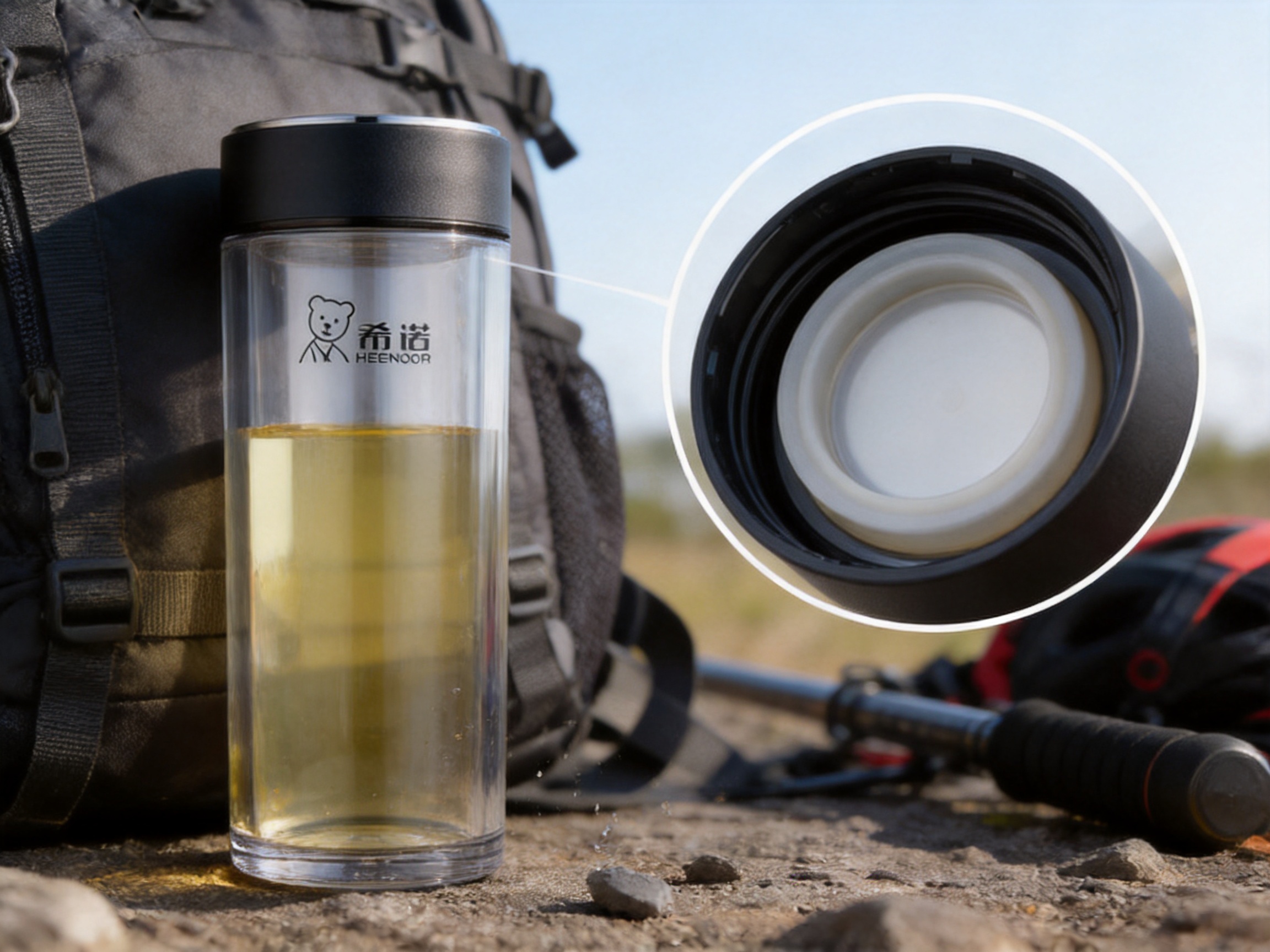
The lid incorporates a silicone sealing ring. This ring works through physical compression: when the lid is closed, the silicone is pressed against the corresponding sealing surface to create a barrier that helps prevent liquid from escaping. This design is especially relevant when the bottle is inverted, stored in a bag, placed in a vehicle, or moved during travel.
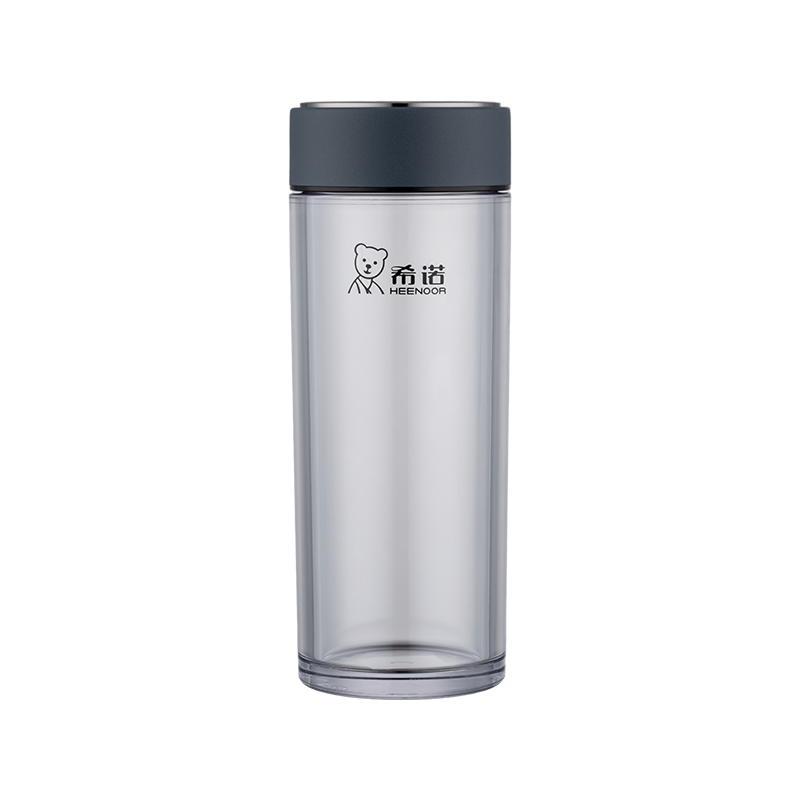
The body and lid are also designed with rounded contact areas. A smooth mouth and rounded lid can improve comfort during drinking and handling, while reducing sharp transitions that may feel unpleasant when the bottle is opened, carried, or cleaned. The transparent cup body gives the product a simple and versatile appearance, allowing users to see the remaining liquid level without opening the bottle.
With a compact overall form and a reasonable weight, the bottle is intended to balance portability with practical capacity. The available product material describes a capacity of 530ml in the main product presentation, while the accompanying specification table lists 300ml and 400ml configurations. Because product programs may include multiple sizes or variations, buyers should confirm the final capacity, dimensions, and configuration before placing an order. This variation does not change the core design concept: a compact, impact-resistant, sealed plastic bottle for mobile hydration.
2. Material Advantages of a PC Bottle Body
Impact resistance for active environments
The most important material advantage of the product is the use of PC for the bottle body. A bottle used in a car, gym bag, backpack, or outdoor setting may be subjected to repeated movement and accidental contact with hard surfaces. A container made from a material with limited impact resistance may crack, split, or become unusable after a single drop. PC is selected to provide a stronger response to impact, supporting a longer service life under ordinary handling.
This feature gives the bottle a practical advantage over thin disposable-style plastic bottles. Disposable containers are often optimized for low material use and short-term convenience rather than long-term durability. They may deform easily when squeezed, lose their shape after repeated use, or become uncomfortable to grip. The PC body of this product is intended for repeated use and is structurally more suitable for users who expect a bottle to remain serviceable over time.
Durability supported by a thickened structure
Material selection alone does not determine product durability. The physical design of the bottle also matters. The product uses a thickened construction to further improve resistance to drops and impacts. A reinforced wall structure can help distribute stress across the body instead of concentrating it at a single weak point.
The combination of PC material and a thickened body is therefore more meaningful than either feature in isolation. PC provides the underlying material performance, while the reinforced design supports the bottle’s ability to withstand common mechanical stresses. This approach is useful for outdoor use, where a bottle may be placed on rough ground, carried with tools or equipment, or exposed to accidental falls.
Visibility and everyday practicality
The clear bottle body provides a direct view of the liquid inside. This can help users check whether the bottle needs to be refilled, monitor consumption during exercise, and identify the approximate remaining quantity while driving or commuting. A transparent appearance also gives the product a neutral visual character that can fit different user groups and purchasing environments.
Compared with opaque containers, a clear body can make capacity easier to judge at a glance. Compared with highly decorative bottles, its simple appearance may be more suitable for corporate programs, promotional distribution, sports facilities, transportation use, and general retail applications.
3. Sealing System and Leak-Resistant Construction
A durable bottle is not useful if it leaks. Leakage can damage documents, electronic devices, vehicle interiors, clothing, or other items stored nearby. For this reason, the sealing structure is one of the most important design elements of the product.
The lid uses a silicone sealing ring made from heat-resistant silicone rubber. When the lid is tightened or closed into its intended position, the ring is compressed between the lid and the bottle’s sealing area. This physical compression creates contact pressure around the opening, helping to reduce the passage of liquid.
The sealing ring is not dependent on adhesives or complex mechanisms to perform its basic function. Its effectiveness depends on appropriate material elasticity, correct dimensions, accurate placement, and a suitable mating relationship between the bottle and lid. These details make manufacturing control especially important. Even a high-quality silicone material cannot provide consistent sealing if the groove, lid, or bottle mouth is produced outside the required dimensional range.
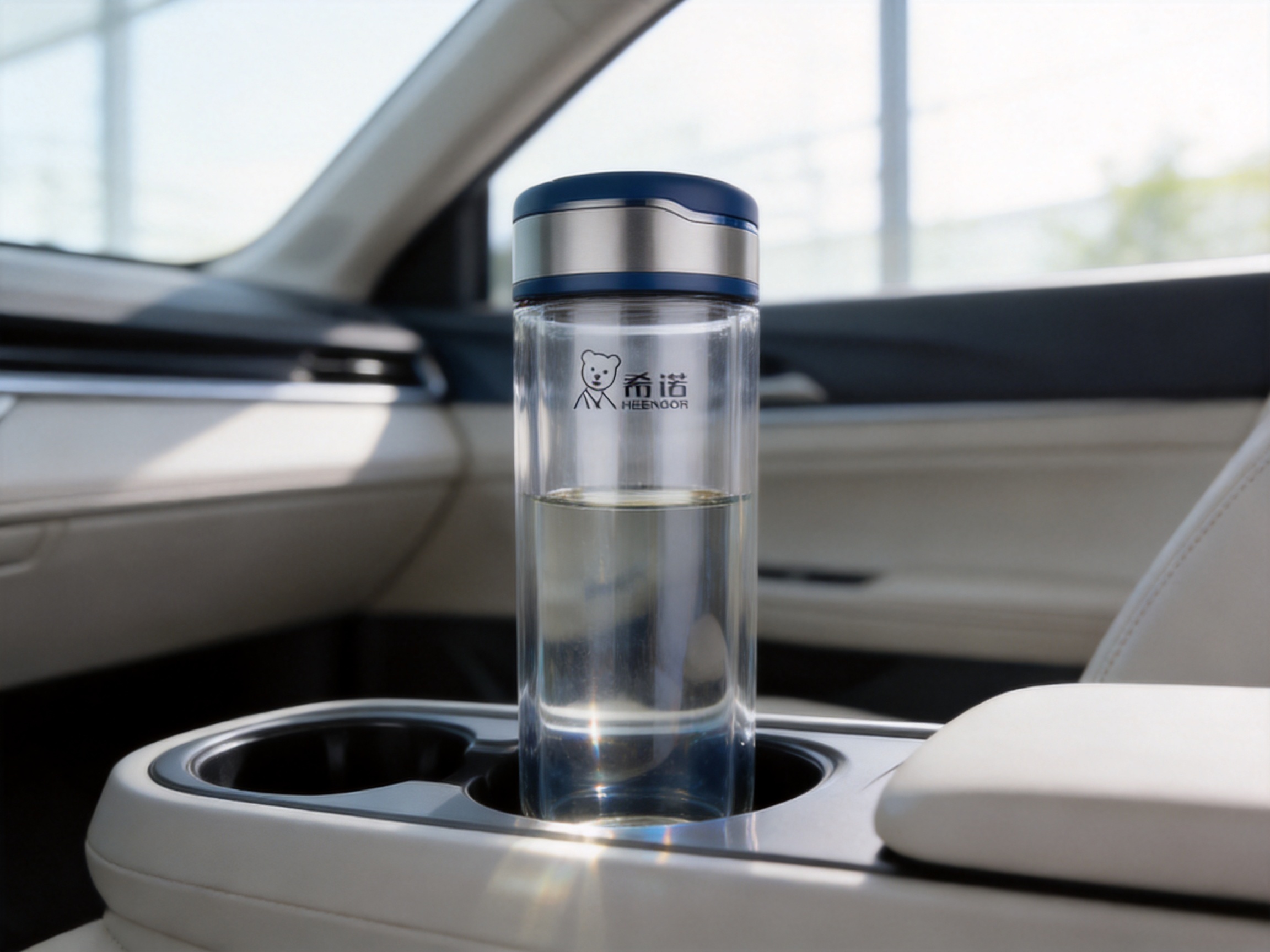
The leak-resistant design is particularly valuable for vehicle use. A bottle placed in a car may experience sudden braking, acceleration, turning, or vibration. If it is stored in a side pocket or cup holder, it may also tilt repeatedly. A properly compressed sealing ring helps maintain containment during these routine movements.
The lid material specification identifies 304 stainless steel and PP as components, while the sealing ring is heat-resistant silicone rubber. This combination brings together a rigid metal element, a practical polymer component, and a flexible sealing material. The result is a multi-material lid system designed to combine structural support, usability, and liquid containment.
Practical expectations for leak resistance
Leak resistance should always be understood in relation to correct assembly and intended use. The lid must be fully closed, the sealing ring must be properly seated, and the bottle should not be used with a damaged or deformed component. Buyers may also wish to establish their own testing requirements, such as inverted storage, repeated opening and closing, vibration simulation, or temperature-related evaluation.
For brands and procurement teams, the product’s sealing design provides a clear foundation for quality validation. A manufacturing partner can define inspection points for lid fit, ring placement, torque or closure behavior, and leakage performance. These controls help convert a good product concept into consistent production results.
4. Advantages Compared with Competing Bottle Types
The product competes with several categories of portable drinkware, including thin disposable plastic bottles, ordinary lightweight reusable bottles, glass bottles, and some metal containers. Each category has its own strengths, but the PC Car-Mounted Portable Anti-Fall Plastic Bottle is positioned to offer a useful balance between impact resistance, portability, visibility, and sealing performance.
Compared with thin disposable plastic bottles
Thin disposable bottles generally prioritize low cost and low weight. They may be convenient for short-term use, but their structure is not normally intended for repeated impacts, long-term handling, or repeated opening and closing. They can collapse, crease, or become difficult to grip. Their lids may also provide less robust sealing when the bottle is reused beyond its original purpose.
The PC bottle offers a more durable alternative for users who need a reusable container. Its thickened body is designed to tolerate more demanding handling, while the silicone sealing ring supports better containment during mobile use. The product can therefore be positioned as a practical upgrade from temporary disposable packaging.
Compared with ordinary thin-wall reusable plastic bottles
Some reusable plastic bottles are lightweight but may not provide the same level of impact resistance or structural confidence. A thin wall can help reduce weight, but it may also make the bottle more vulnerable to dents, deformation, or stress concentration. The thicker PC construction gives this product a stronger durability message, particularly for sports, travel, and vehicle use.
The rounded mouth and lid also provide a more refined handling experience. In a competitive market, small details such as touch comfort, visual clarity, lid stability, and ease of carrying can influence whether users continue using a product over an extended period.
Compared with glass bottles
Glass is valued for its clean appearance and resistance to odor retention, but it can break when dropped or struck. This makes glass less suitable for certain outdoor, vehicle, and sports environments. The PC bottle is positioned for users who prioritize impact resistance and reduced breakage risk.
The product’s transparent body can also provide some of the visual benefits associated with glass while offering a more resilient structure. It is not intended to replicate every characteristic of glass, but it provides a practical solution for situations in which the risk of impact is more important than a glass-like material profile.
Compared with metal bottles
Metal bottles may offer strong structural performance and thermal functions, depending on their construction. However, they are often heavier, opaque, and more complex in design. A clear PC bottle can be easier to monitor visually and may offer a lighter, more straightforward solution for ordinary hydration.
The product is not positioned primarily as an insulated bottle. Instead, it emphasizes impact resistance, portability, visible contents, and sealed everyday use. For customers who do not require hot-and-cold thermal retention, this focused design may offer a more efficient and economical choice.
| Feature | PC Car-Mounted Portable Anti-Fall Plastic Bottle | Thin Disposable Bottle | Glass Bottle | Metal Bottle |
|---|---|---|---|---|
| Body material | PC | Thin plastic | Glass | Metal alloy or stainless steel |
| Impact resistance focus | High-impact PC body with thickened design | Usually limited | Lower resistance to drops | Generally strong, depending on construction |
| Liquid visibility | Clear body | Usually clear | Usually clear | Often opaque |
| Leak-control feature | Compression silicone sealing ring | Basic cap design varies | Cap design varies | Cap and gasket design varies |
| Portability | Compact and moderate in weight | Very light | Heavier and breakable | May be heavier |
| Primary use orientation | Commuting, car use, sports, travel, outdoor activities | Short-term convenience | Home, office, and careful transport | Outdoor, thermal, and long-term reusable use |
5. Portable Design for Cars, Travel, and Commuting
The product’s car-mounted positioning reflects the reality that hydration often takes place between destinations. Drivers, passengers, delivery personnel, field workers, students, and commuters may need a bottle that can be carried in one hand, placed in a vehicle storage area, or moved quickly from a bag to a cup holder.
A compact bottle is easier to integrate into daily routines. It can be placed in a backpack side pocket, a gym bag, a desk area, or a vehicle compartment. Its reasonable weight helps reduce carrying fatigue, while its visible body allows the user to estimate remaining contents without opening the lid.
The product’s portability does not rely solely on low weight. A bottle that is extremely light but too fragile may be less useful in real-world conditions. The design instead aims to balance manageable weight with a reinforced body. This balance is important for mobile applications, where the bottle may be dropped, squeezed between belongings, or exposed to repeated motion.
For travel and outdoor use, the anti-fall design offers additional confidence. A bottle placed on a picnic surface, trail-side rock, sports bench, or campsite table can be accidentally knocked over. A more impact-resistant structure reduces the likelihood that a single incident will end the product’s useful life.
The bottle may also be suitable for company wellness programs, event distribution, sports clubs, educational organizations, and promotional campaigns. Its neutral colors, clear body, and practical design can accommodate different audiences without being limited to a highly specialized activity.
6. Capacity and Configuration Considerations
The product materials contain more than one capacity reference. The main product description identifies a capacity of 530ml, while the specification table lists 300ml and 400ml. This may indicate that the product family includes different versions, or that the supplied information combines product presentation data with configuration options. Buyers should confirm the required version with the manufacturer before finalizing a purchase.
The presence of multiple size options can be useful for brands and procurement teams. A 300ml version may be suitable for short commutes, children’s programs, compact vehicle storage, or event distribution. A 400ml version may offer a balance between portability and hydration. A 530ml version may be better suited to outdoor activities, gym sessions, longer travel, or users who prefer fewer refills.
Capacity should be evaluated together with external dimensions, weight, lid structure, and intended storage location. A bottle may have an appropriate liquid volume but still be unsuitable for a particular vehicle holder if its diameter or height is not compatible. For private-label and customized orders, dimensional drawings and physical samples are recommended before mass production.
| Potential configuration | Suitable application | Buyer verification point |
|---|---|---|
| 300ml | Short trips, compact storage, events, children’s programs | Confirm external size and actual filled weight |
| 400ml | Daily commuting, office use, light exercise | Confirm body dimensions and lid compatibility |
| 530ml | Outdoor activities, longer travel, sports and fitness | Confirm whether this is the selected production version |
Clear capacity communication is important in product marketing and packaging. Technical documents, labels, product pages, and purchase orders should use the same approved specification. This prevents confusion between nominal capacity, usable capacity, and different variants within a product family.
7. Comfort, Appearance, and User Experience
Performance features attract attention, but comfort often determines whether a bottle becomes part of a user’s daily routine. The rounded mouth and lid are intended to provide a smooth touch. This can make drinking more comfortable and reduce the unpleasant sensation associated with sharp or poorly finished edges.
The clear body also contributes to the user experience. It provides a clean, uncomplicated appearance and makes the bottle contents visible. The supplied color options are Deep Sea Blue and Palace Silver. These colors can add visual distinction while remaining sufficiently versatile for personal, professional, or promotional use.
Deep Sea Blue can communicate a sport-oriented, outdoor, or contemporary character. Palace Silver can create a more restrained and technical appearance. Both colors can be incorporated into a product range serving different market segments, while the transparent body maintains visual consistency across variants.
The product’s simple appearance can also support customization. Depending on manufacturing and decoration capabilities, buyers may explore printed logos, packaging changes, color adjustments, or coordinated accessories. Any customization should be evaluated for compatibility with the PC body, lid components, production tooling, durability requirements, and minimum order quantities.
8. Manufacturing Capability and Engineering Strength
The performance of a reusable bottle depends heavily on manufacturing discipline. A product may have a strong concept, but inconsistent molding, inaccurate assembly, or unstable material control can reduce its real-world value. Heenoor Co., Ltd. has developed its drinkware business around product development and industrial manufacturing, with capabilities covering design, engineering validation, tooling development, standardized production, and quality management.
This integrated approach is valuable because drinkware production involves multiple connected stages. The product design must be suitable for molding. The tooling must reproduce the intended geometry. The molded parts must meet dimensional requirements. The lid, bottle, and silicone ring must work together as a system. Production teams must maintain repeatability across batches. Quality personnel must verify that the finished item matches the approved sample and specification.
Product design and development
Product design is the first stage in converting a market need into a manufacturable bottle. For this model, the design priorities include impact resistance, portability, smooth handling, visible contents, and leak control. These priorities must be balanced rather than treated independently. Increasing wall thickness may improve durability but also affect weight and material consumption. Enlarging the lid may improve handling but change portability. Adjusting the sealing ring may influence opening force and leakage performance.
An experienced drinkware manufacturer can evaluate these relationships during development. The goal is to create a product that is not only attractive in a drawing or prototype but also stable during mass production and comfortable for actual users.
Engineering validation
Engineering validation helps identify potential weaknesses before large-scale production. For a PC bottle, validation may include dimensional checks, closure evaluations, drop-related assessments, inversion tests, material review, and compatibility checks between the lid and sealing ring. The exact testing program should be defined according to the buyer’s market, intended use, and regulatory requirements.
Validation is particularly important for a product described as anti-fall and leak-resistant. These claims should be supported by documented internal procedures and agreed acceptance criteria. A professional manufacturing partner can help customers translate general performance expectations into measurable tests.
Tooling development
Tooling directly affects the consistency of molded parts. The bottle body must maintain a stable shape, wall profile, mouth geometry, and surface appearance. The lid must fit accurately with the bottle and hold the sealing ring in the correct position. If tooling is poorly designed or inadequately maintained, the resulting parts may vary in size, display sink marks, or show inconsistent assembly behavior.
Heenoor’s tooling development capability supports the transition from product concept to standardized production. Proper tooling planning can also assist future customization, particularly when different capacities, colors, or decoration areas are required.
Standardized production and quality management
Standardized production is essential when a product is ordered repeatedly or distributed across multiple markets. Standard procedures can cover raw material handling, molding conditions, trimming, cleaning, component assembly, sealing-ring installation, visual inspection, functional checks, packing, and shipment preparation.
Quality management provides a framework for identifying and controlling risks. For this bottle, important quality points may include PC body appearance, wall integrity, transparent surface quality, lid fit, silicone-ring placement, color consistency, dimensional accuracy, and leakage performance. These controls help maintain the reliability expected from a reusable product.
9. Quality Priorities for the PC Bottle
Material and appearance control
The PC body should be evaluated for clarity, surface finish, molding consistency, and visible defects. Customers may define acceptable limits for scratches, bubbles, flow marks, color variation, deformation, and other appearance conditions. Clear products require particular attention because internal or surface irregularities may be more noticeable than they would be on opaque containers.
The lid components also require inspection. The combination of 304 stainless steel and PP should be checked for correct assembly, appropriate finish, and compatibility with the overall design. The silicone sealing ring should be free from visible damage, contamination, or deformation before assembly.
Dimensional consistency
Dimensional control supports both user experience and functional performance. The bottle mouth must match the lid. The sealing groove must hold the ring securely. The closure must engage correctly without excessive looseness or difficulty. The finished bottle should maintain the intended height, diameter, and weight range for storage and carrying.
Dimensional consistency is also important for buyers who plan to use the bottle with vehicle holders, protective sleeves, packaging inserts, or customized accessories. A small dimensional change can affect compatibility with a larger system.
Leakage and closure testing
Leakage testing should be performed using an agreed procedure. The bottle may be evaluated in an upright position, on its side, and inverted. Testing may also include repeated closure cycles or movement intended to simulate transport. The precise conditions should be documented so that supplier and buyer share the same understanding of acceptable performance.
The purpose of testing is not only to detect defective bottles. It also helps identify process trends. If leakage rates increase, the cause may be related to ring placement, lid dimensions, bottle-mouth variation, assembly pressure, or component contamination. A systematic quality-management process can help identify and correct these causes.
Drop and impact assessment
Because the product is designed with anti-fall characteristics, impact-related evaluation is relevant. A drop assessment can help determine whether the body cracks, whether the lid separates, whether the sealing ring remains in place, and whether the bottle continues to function after the test. Test height, surface type, filled condition, temperature, and number of drops should be defined in advance.
Testing does not eliminate the possibility of damage under severe misuse. Instead, it provides evidence that the product has been evaluated against representative handling risks. Buyers may request test records or establish additional requirements for specific applications.
10. Applications Across Different User Groups
Daily commuters
Commuters need a bottle that can move between home, public transportation, office, and vehicle environments. The product’s compact structure, transparent body, and sealing ring make it suitable for carrying in a work bag or placing near a seat. Its impact-resistant construction provides added confidence when the bag is set down or moved through crowded spaces.
Drivers and passengers
For drivers and passengers, a bottle must be easy to handle and resistant to movement. The product is designed for vehicle-related use and can support hydration during daily travel. Users should confirm that the selected size fits their particular cup holder or storage compartment, especially when choosing among the listed 300ml, 400ml, and 530ml references.
Sports and fitness users
During exercise, bottles may be dropped, placed on hard floors, or handled with wet hands. The PC body and thickened construction are suitable for users who need a more resilient alternative to a fragile container. The visible body also allows users to monitor hydration during a workout.
Outdoor travelers
Outdoor trips expose bottles to uneven surfaces, impacts, dirt, and frequent movement. A reusable PC bottle can be a practical choice for hiking, camping, recreational travel, and day excursions. Its portability reduces carrying burden, while its impact-resistant structure is suited to environments where accidental drops are more likely.
Organizations and procurement programs
Schools, companies, clubs, event organizers, and public institutions may require drinkware that combines broad usability with manageable cost and scalable production. The bottle’s simple design and available colors can support coordinated procurement. Heenoor’s experience in large-volume drinkware manufacturing may also help organizations plan repeat orders and product standardization.
11. Sustainability and Long-Term Product Value
A reusable bottle can support a reduction in dependence on short-term disposable containers when users keep and reuse it over an appropriate service period. The environmental value of a reusable product depends on actual user behavior, product lifespan, cleaning practices, manufacturing inputs, and end-of-life handling. A durable bottle is more likely to remain in service than a fragile bottle that must be replaced after a minor accident.
The PC body, reinforced structure, and replaceable or inspectable sealing component contribute to the possibility of continued use. Users should regularly inspect the bottle, lid, and silicone ring. If a component becomes cracked, warped, heavily scratched, or unable to seal correctly, it should be replaced or the bottle should be retired according to the applicable product guidance.
Manufacturers can also support responsible product use through clear care instructions, appropriate packaging, efficient production planning, and quality control that reduces avoidable defects. For customized programs, buyers may consider packaging reduction, consolidated shipping, and durable decoration methods as part of the overall product strategy.
12. Purchasing and Customization Considerations
Businesses purchasing this product should begin by confirming the exact configuration. Capacity is the first point to clarify because the supplied materials identify more than one volume. Buyers should also confirm body dimensions, total weight, lid construction, color, packaging, logo treatment, and intended application.
A technical purchase specification may include the following elements:
• Confirmed capacity and tolerance.
• PC body material and appearance requirements.
• Lid material configuration, including 304 stainless steel and PP components where applicable.
• Heat-resistant silicone rubber sealing-ring specification.
• Approved colors, including Deep Sea Blue or Palace Silver.
• Required leakage and inversion performance.
• Drop or impact evaluation conditions.
• Surface-finish and visual-quality standards.
• Packaging method and carton requirements.
• Applicable market regulations and documentation.
• Sample approval and mass-production inspection procedures.
Customization can be approached at several levels. The simplest option may involve selecting an existing color and adding approved branding. More extensive projects may require modified colors, packaging, accessories, capacity changes, or tooling adjustments. Each change can affect cost, lead time, testing, minimum order quantity, and production feasibility.
A reliable manufacturing partner should communicate these effects clearly. Technical clarity helps prevent a situation in which a requested appearance change unintentionally affects wall thickness, lid fit, decoration durability, or production stability.
13. Why Manufacturing Integration Matters to Buyers
Buyers often evaluate a bottle by its appearance and price, but the long-term value of a drinkware program depends on manufacturing integration. When design, tooling, production, and quality functions work independently without coordination, problems may emerge during scale-up. A sample may look acceptable, but mass-produced parts may show variation in color, dimensions, sealing, or assembly.
An integrated manufacturer can manage the product as a connected system. Design decisions can be reviewed for molding feasibility. Tooling can be developed around production requirements. Engineering validation can identify functional risks. Standardized production can establish repeatable processes. Quality management can monitor performance across batches.
Heenoor’s experience across stainless steel, titanium, plastic, and glass drinkware gives it a broad understanding of different material behaviors and product categories. This cross-material experience can be useful for brands that manage several drinkware lines or plan to expand from one material platform to another.
The company’s stated focus on manufacturable, durable, scalable products is relevant to procurement teams that require dependable supply rather than one-time prototype support. International customers may also value long-term project communication, documentation, quality coordination, and repeat-order stability.
14. Care and Use Recommendations
To preserve the product’s performance, users should inspect the bottle before use. The body, lid, and sealing ring should be checked for cracks, distortion, or visible damage. The lid should be closed fully, and the sealing ring should remain correctly seated in its designated position.
The bottle should be cleaned according to the manufacturer’s instructions. Mild cleaning methods and suitable utensils can help protect the clear surface and sealing components. Abrasive materials may create scratches or reduce the visual quality of the body. The bottle should also be allowed to dry appropriately between uses.
Users should avoid treating the anti-fall design as a guarantee against all damage. Severe impacts, sharp objects, high-pressure conditions, or misuse may still damage the bottle. A damaged container should not continue to be used if its structural integrity or leak resistance has been compromised.
For vehicle use, the bottle should be placed in a stable location where it does not interfere with driving controls, visibility, pedals, or safety equipment. The correct storage position depends on the vehicle and selected bottle size. A buyer distributing the product for fleet or corporate use may wish to include basic handling guidance with each unit.
15. Frequently Asked Questions
Q1: What is the main material of the bottle body?
The bottle body is made of PC material. It is selected for high impact resistance and is intended to provide greater durability than thin, fragile plastic containers.
Q2: Is the bottle designed to resist leaks?
Yes. The lid includes a heat-resistant silicone rubber sealing ring that creates a leak-resistant seal through physical compression when the lid is correctly closed.
Q3: Can the bottle be used in a car?
Yes. The product is positioned for car-mounted and mobile use. Buyers should confirm the external dimensions of the selected configuration to ensure compatibility with a particular cup holder or storage compartment.
Q4: What capacities are available?
The product presentation refers to a 530ml capacity, while the supplied specification table lists 300ml and 400ml options. Customers should confirm the final capacity and corresponding dimensions with the manufacturer before ordering.
Q5: What materials are used in the lid?
The specification identifies 304 stainless steel and PP for the lid, with heat-resistant silicone rubber used for the sealing ring.
Q6: What colors are available?
The listed colors are Deep Sea Blue and Palace Silver. Additional colors or customized finishes may be discussed for project orders, subject to production feasibility and order requirements.
Q7: Is the bottle suitable for sports and outdoor activities?
Yes. Its PC body, thickened construction, portable form, and sealed lid make it suitable for sports, fitness, travel, and outdoor activities where accidental impacts may occur.
Q8: Is the bottle insulated?
The supplied product information emphasizes impact resistance, portability, transparency, and leak-resistant sealing. It does not identify the bottle as a vacuum-insulated product. Buyers seeking thermal insulation should confirm whether a separate insulated model is required.
Q9: What makes this bottle different from a disposable plastic bottle?
The product is designed for repeated use and uses a more impact-resistant PC body with a thickened structure. It also includes a silicone sealing ring intended to improve containment during transport and inversion.
Q10: Can businesses customize the bottle?
Customization possibilities may include colors, branding, packaging, and other project elements. The exact options depend on the required order volume, tooling, decoration method, technical feasibility, and approval process.
Q11: What should buyers confirm before mass production?
Buyers should confirm capacity, dimensions, weight, body and lid materials, colors, sealing performance, impact requirements, packaging, decoration, regulatory documentation, and sample approval criteria.
Q12: Why is manufacturing experience important for this product?
The bottle depends on accurate molding, consistent wall structure, correct lid fit, stable sealing-ring placement, and repeatable assembly. Integrated design, tooling, engineering validation, standardized production, and quality management help maintain these functions across production batches.
16. Conclusion
The PC Car-Mounted Portable Anti-Fall Plastic Bottle is designed for users who need reliable hydration in moving and active environments. Its PC body provides a strong impact-resistant foundation, while the thickened design supports improved resistance to drops and bumps. The compression silicone sealing ring is intended to reduce leakage when the bottle is tilted or inverted, making it appropriate for cars, travel bags, sports equipment, and daily commuting.
The clear body, rounded mouth and lid, moderate weight, and available Deep Sea Blue and Palace Silver colors give the product a simple and versatile identity. Compared with thin disposable bottles, it offers a more reusable and durable structure. Compared with glass, it reduces the concern associated with breakage. Compared with heavier or opaque metal containers, it provides visible contents and a lightweight, straightforward format for everyday hydration.
The product’s value is also supported by the manufacturer’s broader capabilities. Heenoor Co., Ltd. combines product design, engineering validation, tooling development, standardized production, and quality management. Its experience across stainless steel, titanium, plastic, and glass drinkware enables it to support brands, organizations, and procurement teams seeking scalable and dependable drinkware manufacturing.
Before purchase, customers should confirm the final capacity because the supplied materials reference 530ml as well as 300ml and 400ml configurations. They should also define the required dimensions, sealing tests, impact evaluations, packaging, and customization details. With these points clarified, the product can serve as a practical solution for mobile hydration programs that prioritize portability, impact resistance, visual simplicity, and reliable manufacturing execution.
References
1. Product specification materials for the PC Car-Mounted Portable Anti-Fall Plastic Bottle, including body material, lid construction, sealing-ring material, color options, and capacity references.
2. Internal product description concerning impact resistance, thickened construction, leak-resistant sealing, portability, outdoor suitability, sports use, and commuting applications.
3. Manufacturer-provided company information concerning product development, engineering validation, tooling development, standardized production, and quality management.
4. General technical literature on polycarbonate materials and their use in impact-resistant reusable products.
5. General technical literature on silicone sealing components, compression seals, and gasket placement in reusable liquid containers.
6. General drinkware quality-management guidance concerning dimensional inspection, leakage evaluation, impact testing, appearance control, and production consistency.
Product: PC Car-Mounted Portable Anti-Fall Plastic Bottle

You may also like…
Copyright © 2025 Heenoor Co., Ltd. All Rights Reserved.
 Custom Stainless Steel Drinkware Manufacturers
BACK TOP