 English
 中文简体
中文简体 日本語
日本語 Español
 عربى
عربى
Search
Categories
Recommend
Categories
 Lin Yuxi — International Product Sales Manager
Recommend
-
 Industry news
 -
 Industry news
 -
 Industry news
 -
 Industry news
Sep 10, 2026 - By admin

Portable PC Car-Mounted Anti-Fall Plastic Bottle: Durable Hydration for Mobile Lifestyles
Content
- 1 Introduction
- 2 Product Overview
- 3 Why PC Material Matters in a Portable Bottle
- 4 Leak-Resistant Lid and Sealing Structure
- 5 Design Advantages for Mobile Use
- 6 Comparison with Common Alternative Bottle Types
- 7 Manufacturing Capabilities Behind the Product
- 8 Material and Component Coordination
- 9 Use Cases and Target Markets
- 10 Purchasing and Specification Considerations
- 11 Care, Handling, and Service Life
- 12 Why Manufacturing Partnership Matters
- 13 Quality and Compliance Perspective
- 14 Frequently Asked Questions
- 14.1 What is the main advantage of this bottle?
- 14.2 Is the bottle made from glass?
- 14.3 What materials are used in the lid?
- 14.4 What capacity is available?
- 14.5 Does the bottle prevent all leakage?
- 14.6 Is this an insulated bottle?
- 14.7 Is the bottle suitable for outdoor activities?
- 14.8 What colors are available?
- 14.9 How should the sealing ring be maintained?
- 14.10 Can the bottle be used in a car?
- 14.11 What manufacturing capabilities support this product?
- 14.12 Can the product be customized?
- 15 Conclusion
- 16 References
- 17 Product: PC Car-Mounted Portable Anti-Fall Plastic Bottle
Introduction
Reliable hydration is essential during commuting, road travel, outdoor recreation, sports, fitness, and everyday movement between locations. A bottle used in these situations must do more than hold liquid. It should withstand accidental drops, resist leakage, remain comfortable to handle, fit naturally into a mobile routine, and provide a practical balance between capacity and portability. The PC Car-Mounted Portable Anti-Fall Plastic Bottle is designed around these requirements.
This bottle combines an impact-resistant PC body with a reinforced construction, a sealed lid system, a rounded mouth, and a compact form intended for travel and mobile use. Its design addresses common problems associated with ordinary plastic bottles, including cracking after impact, inconvenient carrying, uncomfortable edges, and leakage when the bottle is placed in a bag or vehicle.
The product is presented as a 530 ml portable bottle, while the supplied specification table lists 300 ml and 400 ml capacity options with corresponding weights of 0.36 kg and 0.46 kg. This difference should be clarified during purchasing or project confirmation, especially for buyers managing multiple specifications or custom product programs. Regardless of the final selected capacity, the product concept is centered on durable plastic construction, secure sealing, and convenient transportation.
Behind the product is a drinkware manufacturer with experience in stainless steel, titanium, plastic, and glass products. Its capabilities cover product development, engineering validation, tooling development, standardized production, and quality management. This integrated approach is important because a dependable bottle is not created only through material selection. It also depends on mold accuracy, component compatibility, assembly control, inspection procedures, and stable production execution.
PC Car-Mounted Portable Anti-Fall Plastic Bottle
Product Overview
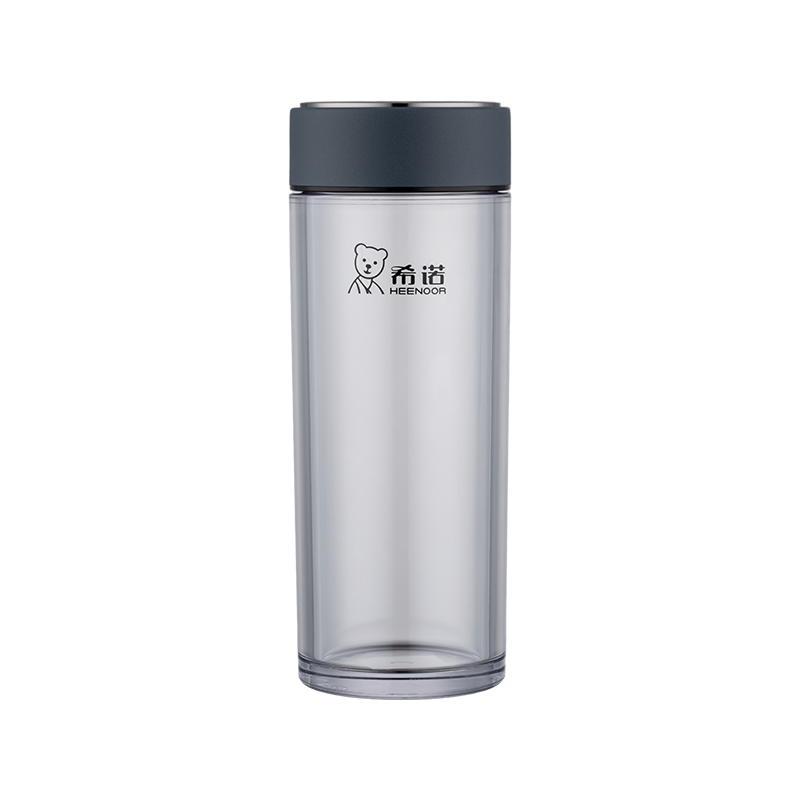
The PC Car-Mounted Portable Anti-Fall Plastic Bottle is a practical hydration container developed for users who need a bottle that can tolerate movement and occasional impact. The bottle body uses PC material, a thermoplastic known for its high impact resistance compared with many ordinary plastics. This makes the product suitable for situations where a bottle may be placed in a vehicle, carried during outdoor activities, or exposed to bumps during daily transport.
The body has a thickened design that further supports drop resistance. A thicker wall can help improve structural stability and reduce the likelihood of deformation when the bottle experiences external force. It also gives the product a more substantial feel in the hand, which can contribute to the perception of durability during daily use.
The lid combines 304 stainless steel and PP components, while the sealing ring is made from heat-resistant silicone rubber. Together, these components create a closure system intended to control leakage through physical compression. When the lid is tightened, the silicone ring is pressed against the corresponding sealing surface. This helps form a barrier that limits liquid escape, including when the bottle is inverted under normal use conditions.
The mouth and lid are rounded to provide a smoother touch. This detail contributes to comfort during drinking, opening, closing, and cleaning. The clear cup body also gives the bottle a simple and versatile appearance. Users can see the liquid level without opening the lid, while the uncomplicated visual design allows the bottle to suit commuting, fitness, travel, and outdoor settings.
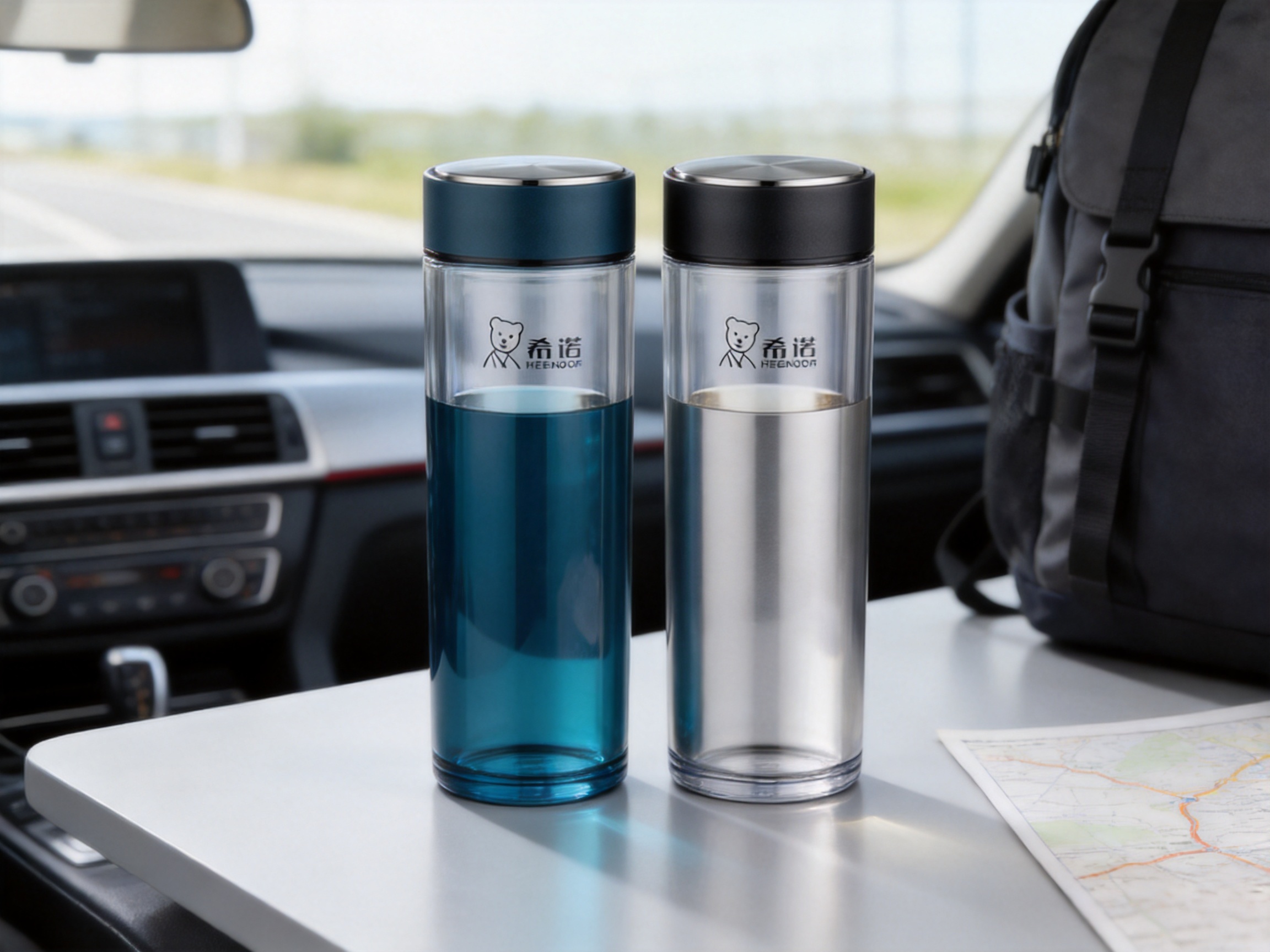
Color options listed for the product include Deep Sea Blue and Palace Silver. These choices provide a contrast between a darker, sport-oriented appearance and a lighter, more understated appearance. The color selection can support different market preferences while maintaining the same overall bottle structure.
Key Specification Summary
| Item | Specification |
|---|---|
| Product type | Portable anti-fall plastic water bottle |
| Primary body material | PC material |
| Listed capacity information | 300 ml / 400 ml; product description also refers to 530 ml |
| Listed weight | 0.36 kg / 0.46 kg |
| Lid material | 304 stainless steel + PP |
| Sealing ring material | Heat-resistant silicone rubber |
| Available colors | Deep Sea Blue / Palace Silver |
| Primary use scenarios | Outdoor trips, sports, fitness, commuting, and mobile use |
Because the capacity and weight information includes more than one configuration, purchasers should verify which capacity corresponds to each weight before placing an order. This is particularly important for distributors, retailers, and organizations preparing product listings or packaging materials.
Why PC Material Matters in a Portable Bottle
Material selection is one of the most important decisions in drinkware design. A bottle may have an attractive appearance, but if its body cannot tolerate normal handling, its value is quickly reduced. The use of PC material in this product is intended to provide a strong balance between impact resistance, transparency, weight, and manufacturability.
PC, or polycarbonate, is widely recognized as a high-impact thermoplastic. In a mobile hydration product, this characteristic is useful because the bottle may be dropped onto a hard floor, knocked against a vehicle console, placed in a crowded sports bag, or compressed against other equipment. No bottle should be treated as indestructible, but an impact-resistant body can help reduce the risk of sudden breakage during ordinary use.
Compared with some fragile transparent materials, PC offers a more practical solution for users who prioritize durability. A glass bottle can provide a premium appearance, but it may be unsuitable for certain outdoor, athletic, or vehicle-based environments because a hard impact can cause cracking or breakage. A thin conventional plastic bottle may be lightweight, but it may not offer the same structural confidence or long-term handling stability.
The clear body also offers functional value. Users can check the remaining liquid at a glance, which is convenient during exercise, driving breaks, travel, or work. Transparency can also assist distribution and retail presentation because the material and form are immediately visible to potential buyers.
Thickened Construction for Added Confidence
The bottle uses a thickened body design to enhance resistance to drops and external pressure. Wall thickness affects how a container responds to impact, flexing, and compression. A carefully designed thickened structure can help distribute force across a larger area instead of allowing stress to concentrate at a single weak point.
Thickening the body also requires appropriate engineering. Excessive material can increase weight and affect portability, while insufficient material can reduce durability. The goal is to establish a practical balance among strength, weight, capacity, handling comfort, and production efficiency. This is where product development and engineering validation become important. The final structure should be evaluated not only as a concept but also as a manufacturable item that can maintain consistent performance across production batches.
For buyers comparing products, the important advantage is not simply that the bottle is made from plastic. The advantage lies in the combination of PC material and a reinforced form. This combination is intended to offer a more dependable experience than lightweight bottles designed primarily for short-term or low-impact use.
Leak-Resistant Lid and Sealing Structure
Leakage is one of the most common problems associated with portable drinkware. A bottle that leaks can wet documents, clothing, electronic devices, vehicle interiors, or other items inside a bag. The closure system of this product is therefore a central part of its performance.
The lid includes a silicone sealing ring that works through physical compression. When the lid is properly installed and closed, the ring is compressed against the contact area between the lid and bottle. This compression creates a barrier designed to prevent liquid from escaping when the bottle is inverted. The system does not depend on a complicated mechanism. Instead, it uses the predictable sealing behavior of an elastic silicone component combined with an appropriately designed lid and neck structure.
The use of heat-resistant silicone rubber provides a material suited to repeated contact with liquid and temperature variation within normal use conditions. Silicone is flexible, which allows the sealing ring to conform to the mating surfaces. Its elasticity also supports repeated opening and closing when the ring is correctly positioned and maintained.
The lid combines 304 stainless steel and PP. Stainless steel can contribute to a durable, clean-looking exterior or structural component, while PP is a practical material for molded closure elements. Combining these materials allows the lid system to balance appearance, rigidity, manufacturability, and user comfort.
Correct Use of the Sealing System
A sealing ring can perform effectively only when it is correctly installed and the lid is fully closed. Users should inspect the ring periodically to ensure that it is seated evenly and free from dirt, deformation, or damage. The lid should be tightened according to the product’s intended design without excessive force that could damage the thread, ring, or closure components.
It is also important to distinguish between leak resistance and unlimited pressure resistance. The product is designed for practical portable use, including normal inversion and movement. It should not be treated as a pressurized container, nor should it be used in conditions beyond the manufacturer’s stated temperature and care instructions.
For retailers and procurement teams, the sealing design is a valuable product feature because it directly addresses a frequent consumer concern. A bottle that combines impact resistance with a dependable physical seal can be positioned as a practical option for travel, commuting, sports, and outdoor use.
Design Advantages for Mobile Use
The product is intended for situations in which users are moving between locations. This includes car travel, public transportation, walking, hiking, gym sessions, school, office commuting, and outdoor recreation. In these environments, the bottle needs to be easy to carry, easy to identify, and resilient enough to handle movement.
The compact form supports portability. A bottle that is too large may be difficult to place in a bag or vehicle storage area, while a bottle that is too small may require frequent refilling. The stated capacity information represents a practical range for personal hydration, although buyers should confirm the exact capacity configuration before purchase.
The rounded mouth and lid help reduce discomfort when the bottle is handled. Smooth edges are especially useful for a product that may be picked up frequently throughout the day. They can also simplify cleaning by reducing sharp transitions where residue might accumulate, although users should still follow suitable cleaning procedures.
The clear body offers a straightforward visual style. It can fit a variety of environments without appearing overly specialized. Deep Sea Blue provides a stronger, more energetic color identity, while Palace Silver has a neutral and refined appearance. This makes the product suitable for different user groups and sales channels.
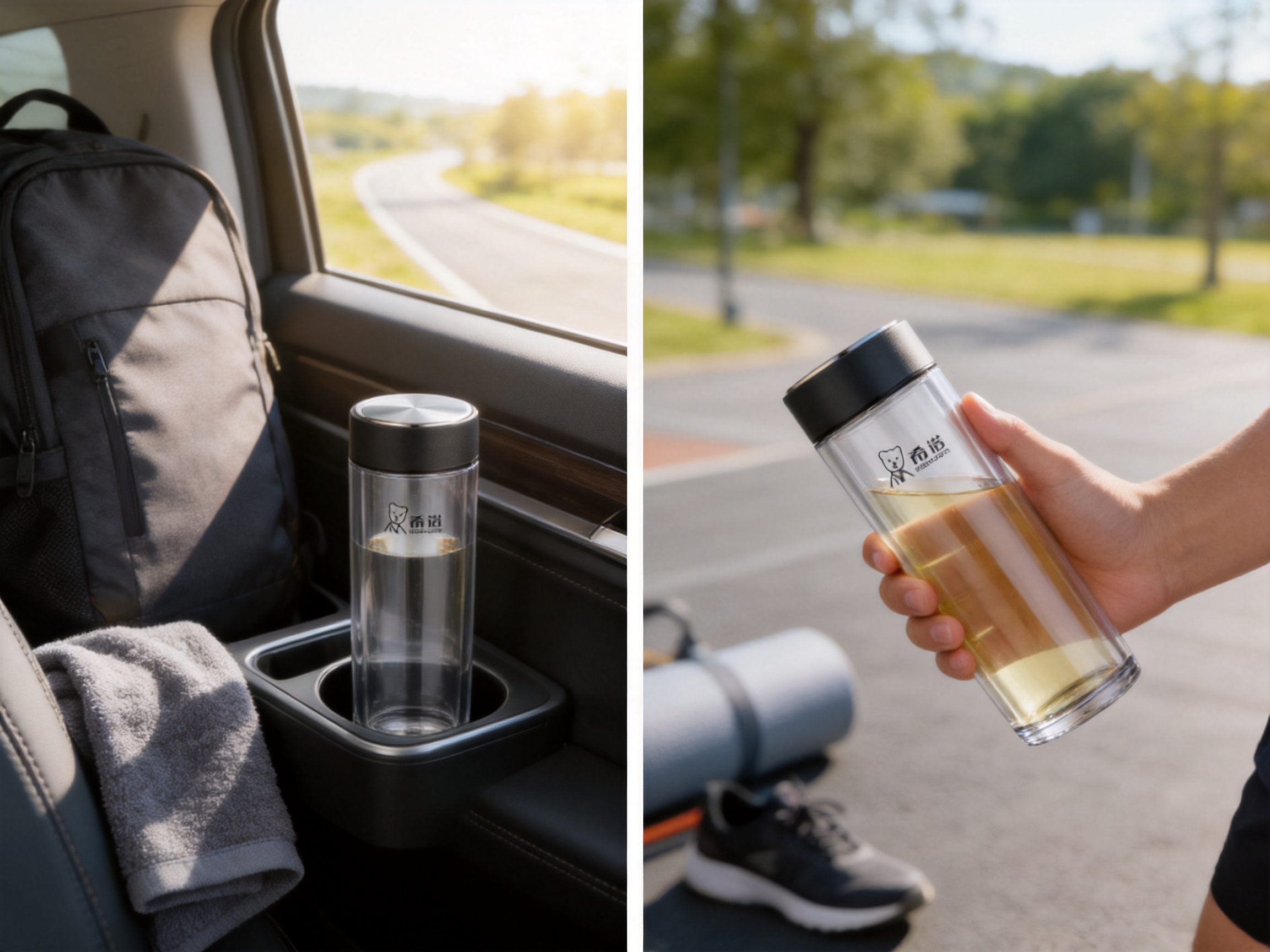
The bottle’s anti-fall positioning also makes it relevant to vehicle-based use. A bottle placed in a car may shift during acceleration, braking, or turning. It may also be knocked from a console or door compartment. Impact-resistant construction can help the bottle tolerate these everyday events better than a fragile alternative.
Portability Without Sacrificing Practicality
Portability is not determined only by dimensions. It also depends on weight, grip, shape, capacity, and the user’s confidence that the bottle can be carried without leaking. A bottle that is light but fragile may be less useful than a slightly more substantial bottle that remains functional after normal handling.
The product’s design seeks to balance these considerations. The PC body supports impact resistance, the compact structure supports transport, and the sealed lid helps make placement in a bag or vehicle more convenient. The result is a bottle intended for repeated movement rather than stationary use only.
For brands and distributors, this balance creates multiple positioning opportunities. The product may be marketed for daily commuting, outdoor travel, fitness, recreational sports, workplace hydration, and general personal use. Its appearance is simple enough for broad consumer appeal, while its material and sealing features provide clear functional talking points.
Comparison with Common Alternative Bottle Types
Product comparison should focus on intended use rather than claiming that one material is universally superior. Different bottles serve different needs. The advantage of this PC bottle is its combination of impact resistance, transparency, sealed construction, and practical portability.
Compared with Thin Disposable Plastic Bottles
Thin disposable bottles are often inexpensive and lightweight, but they are generally designed for temporary use. Their walls may deform easily, and their closures may not be intended for repeated opening and closing or frequent transport. The PC bottle offers a more structured body and a reusable-oriented design for users who want a sturdier hydration container.
The thicker body can provide a more stable grip and greater resistance to everyday knocks. The dedicated silicone sealing ring also offers a more deliberate approach to leak control than the basic closure found on many disposable containers.
Compared with Glass Bottles
Glass can offer clarity and a premium tactile experience, but it is vulnerable to breakage when dropped. This can limit its suitability for vehicles, sports bags, construction environments, or outdoor activities. The PC body is designed to provide a safer and more impact-tolerant alternative for mobile scenarios.
Users who regularly carry a bottle in changing environments may value the reduced breakage risk associated with an impact-resistant plastic body. The clear appearance preserves some of the visual benefits associated with transparent drinkware while providing a more practical structure for active use.
Compared with Stainless Steel Bottles
Stainless steel bottles are known for durability and are often selected for thermal insulation or a premium metal appearance. However, they may be heavier, opaque, and more expensive depending on their construction. The PC bottle is not presented as an insulated product. Its principal advantages are transparency, impact resistance, manageable portability, and a simple design.
For users who want to see the liquid level or prefer a lighter, clear container, the PC model may be more suitable. For users whose primary requirement is hot or cold retention, an insulated stainless steel model may be more appropriate. This distinction helps buyers select the right product for the right application.
Compared with Ordinary Rigid Plastic Bottles
Some rigid plastic bottles offer good durability but may lack a reinforced structure, a reliable sealing ring, or a carefully integrated lid system. The product described here combines these elements as part of a unified design. Its value therefore comes from the interaction of material, thickness, closure structure, and intended use.
Manufacturing Capabilities Behind the Product
A successful drinkware product requires more than an attractive design file. It must be converted into a repeatable manufacturing process. The manufacturer associated with this product integrates product design, engineering validation, tooling development, standardized production, and quality management. This combination supports a controlled path from initial concept to finished bottle.
Integrated development can reduce communication gaps between design and production teams. When engineering, tooling, manufacturing, and quality functions are considered together, product decisions can be evaluated for performance and manufacturability at the same time. This is especially relevant for plastic drinkware, where wall thickness, part geometry, draft angles, sealing surfaces, material flow, and assembly tolerances all influence the final result.
Product Design and Development
Product design establishes the intended user experience, visual appearance, capacity, grip, lid form, and overall structure. For this bottle, design priorities include a clear body, rounded contact surfaces, a compact form, and a reinforced profile. Design work must also consider how the bottle will be handled, cleaned, filled, closed, transported, and displayed.
Development teams can examine the relationship between the body and lid before tooling begins. The neck dimensions must support proper closure, while the sealing ring must align with the mating surfaces. The external shape must provide adequate strength without adding unnecessary bulk. These decisions influence both user satisfaction and production yield.
Engineering Validation
Engineering validation is the process of checking whether the design performs as intended. For an anti-fall bottle, relevant considerations may include resistance to impact, closure performance, dimensional stability, component fit, and repeated opening and closing. The product information states that the bottle meets national standards and has been certified by professional testing organizations. Buyers should request applicable test documentation and certification details for their intended market.
Validation can also identify potential weaknesses before mass production. For example, engineering teams may review stress concentration around the bottle shoulder, base, neck, and lid connection. They may also assess whether the sealing ring remains properly positioned during repeated use. These evaluations help transform a general product concept into a more dependable manufactured item.
Tooling Development
Tooling has a direct effect on plastic product consistency. The mold determines important features such as wall shape, surface finish, parting lines, dimensions, and the accuracy of mating components. A well-developed tool can help maintain consistency from one production cycle to the next.
For a transparent PC bottle, tooling quality is particularly important because visual defects may be more noticeable. Mold design, material flow, cooling behavior, and surface treatment can influence the appearance and dimensional stability of the finished body. The lid and PP components also require tooling that supports accurate fit and reliable assembly.
Tooling development is therefore not simply a preliminary production step. It is part of the product’s performance foundation. The better the tooling is aligned with the product requirements, the easier it becomes to maintain stable quality during larger production programs.
Standardized Production
Standardized production helps ensure that the intended design is reproduced consistently. It may include controlled material handling, documented process parameters, defined assembly procedures, operator instructions, and inspection checkpoints. For drinkware programs, standardization is important because customers expect the same fit, appearance, closure performance, and basic functionality across repeated orders.
The manufacturer’s experience with stainless steel, titanium, plastic, and glass drinkware indicates familiarity with different material systems and production methods. This cross-material experience can support more informed product development, especially for buyers comparing plastic products with metal or glass alternatives.
Quality Management
Quality management connects engineering requirements with production control. It can cover incoming material checks, in-process inspection, finished product review, packaging control, and documentation. For this bottle, attention may be directed toward body appearance, lid assembly, sealing ring placement, color consistency, dimensional accuracy, and product cleanliness.
Quality management is also important for international supply programs. Brands and procurement teams often require predictable specifications, stable communication, and repeatable delivery. A manufacturer with established development and quality processes is better positioned to support these requirements than a supplier focused only on isolated production orders.
Material and Component Coordination
The product uses several materials, each selected for a specific function. The PC body provides the main combination of transparency and impact resistance. The PP component contributes to the molded closure structure. The 304 stainless steel element supports the lid assembly, while heat-resistant silicone rubber provides the flexible sealing interface.
Using multiple materials requires careful coordination. Components must fit correctly, remain stable during normal handling, and provide a coherent user experience. The lid should open and close smoothly, the sealing ring should remain seated, and the body should align with the closure without excessive force.
Material coordination also influences the appearance of the finished product. The clear body allows the liquid and internal structure to be seen, while Deep Sea Blue and Palace Silver provide differentiated visual options. Stainless steel can add contrast to the lid, and PP can support practical molded forms.
Attention to Sealing Interfaces
The interface between the bottle neck, lid, and silicone ring is one of the most important areas in the design. A small dimensional variation can affect compression and therefore influence leakage performance. Consistent tooling and assembly procedures help maintain the intended relationship between these components.
Purchasers should also consider replacement and maintenance requirements when establishing a long-term product program. If the sealing ring is removable, users should be informed about proper cleaning and reinstallation. Clear care guidance can extend practical service life and reduce avoidable complaints.
Use Cases and Target Markets
Outdoor Travel
Outdoor travel exposes products to uneven surfaces, movement, temperature changes, and accidental impact. The anti-fall design and sealed lid make this bottle suitable for users who want a portable container for day trips, excursions, and general outdoor activities.
The clear body can help users monitor liquid consumption and remaining capacity during a trip. Its compact size can also make it easier to place in a backpack, vehicle compartment, or travel bag, subject to the exact dimensions of the selected configuration.
Sports and Fitness
During exercise, a bottle may be handled repeatedly, placed on the floor, moved between equipment, or stored in a gym bag. The reinforced PC body is intended to provide more confidence in these conditions than a fragile transparent container. The leak-resistant closure is also valuable when the bottle is carried with clothing or electronic accessories.
Because the bottle is not described as insulated, users should select beverages and temperatures in accordance with the manufacturer’s care instructions. Its principal fitness benefit is convenient hydration in a durable, portable format.
Daily Commuting
Commuters often carry bottles through crowded environments, public transportation, offices, and vehicles. The product’s compact structure, clear body, and sealed lid suit this routine. The bottle can be placed in a bag or car storage area with reduced concern about ordinary bumps and inversion, provided it is properly closed.
Vehicle-Based Use
The car-mounted positioning of the product reflects a common use scenario. A bottle in a vehicle can experience vibration, sudden movement, and accidental drops during entry and exit. The impact-resistant construction is designed to address these conditions, while the sealed lid helps protect surrounding surfaces from leaks.
Users should verify that the bottle fits securely in the intended vehicle holder or storage compartment. The product should never interfere with driving controls, visibility, airbags, or other safety equipment.
Purchasing and Specification Considerations
Organizations purchasing this product should confirm the exact capacity, weight, dimensions, color, packaging, and certification requirements before production or shipment. The supplied information references a 530 ml product description and a specification table listing 300 ml and 400 ml capacities. This may indicate multiple configurations or a content inconsistency that requires clarification.
Capacity affects packaging size, shipping calculations, retail descriptions, and user expectations. Weight affects transportation costs and perceived portability. Color selection can influence market positioning and inventory planning. Buyers should ensure that all product pages, labels, cartons, and technical documents use the same confirmed specification.
For custom programs, additional questions may include logo application, packaging format, carton quantity, color matching, inspection standards, sample approval, and delivery schedule. These details should be confirmed directly with the manufacturer before a purchase order is finalized.
Recommended Buyer Checklist
| Consideration | Recommended confirmation |
|---|---|
| Capacity | Confirm whether the order is for 300 ml, 400 ml, 530 ml, or another approved configuration. |
| Weight | Match the weight specification to the selected capacity. |
| Materials | Verify PC body, 304 stainless steel and PP lid components, and silicone sealing ring. |
| Leak testing | Confirm the applicable test method and acceptance criteria. |
| Impact testing | Request available anti-fall or drop-resistance test information. |
| Certification | Obtain relevant national-standard and professional testing documentation. |
| Color | Confirm Deep Sea Blue, Palace Silver, or approved custom colors. |
| Packaging | Confirm individual packaging, carton dimensions, labeling, and quantity per carton. |
| Quality control | Agree on inspection procedures and handling of nonconforming products. |
Care, Handling, and Service Life
Proper care supports the performance and appearance of any reusable bottle. Users should wash the bottle and lid regularly according to the manufacturer’s instructions. The sealing ring should be checked for residue, stretching, cracking, or displacement. If the ring is removable, it should be reinstalled evenly after cleaning.
The bottle should not be exposed to uses outside its intended design. It should not be treated as a pressure vessel, used with incompatible chemicals, or subjected to extreme temperatures unless specifically approved by the manufacturer. Consumers should also follow any instructions regarding hot liquids, dishwasher use, microwave use, and cleaning agents.
Although the PC body is designed for impact resistance, repeated severe impacts can eventually cause scratches, deformation, or other damage. Users should discontinue use if the bottle develops cracks, sharp edges, significant distortion, or a closure that no longer seals correctly.
Care guidance is particularly important for commercial buyers. Including clear instructions with the product can reduce misuse, support customer satisfaction, and reinforce the product’s practical value. It also helps ensure that the silicone ring and closure system continue to perform as intended over time.
Why Manufacturing Partnership Matters
For a buyer, the supplier is part of the product value. A bottle may appear simple, but successful production depends on material control, tooling expertise, assembly accuracy, testing, and communication. A manufacturer with experience across multiple drinkware categories can provide more than a single finished item. It can support product planning, technical review, sample development, production preparation, and quality coordination.
The manufacturer associated with this product was founded in 1999 and has developed into a large-scale drinkware manufacturer. Its capabilities include product development and industrial manufacturing, with experience in stainless steel, titanium, plastic, and glass drinkware. This background is relevant for customers that manage several drinkware categories or want to compare material solutions within one supply relationship.
Its stated focus on manufacturability, durability, scalability, and lifecycle reliability aligns with the requirements of commercial drinkware programs. Brands and procurement teams often need a partner that can support repeat orders, maintain specifications, and respond to technical questions. Integrated engineering and production resources can help reduce the risks associated with transferring a design between unrelated suppliers.
Support for Large-Volume Programs
Large-volume programs require consistent production rather than only a successful first sample. Tooling must remain controlled, materials must be managed, and inspection requirements must be understood by production personnel. Standardized processes can support more stable results across repeated batches.
Long-term supply stability also depends on communication. Product specifications, packaging instructions, quality expectations, and delivery requirements should be documented clearly. A supplier experienced in international project support can help coordinate these details with overseas brands, organizations, and procurement departments.
Quality and Compliance Perspective
The product information states that the bottle meets national standards and has been certified by professional testing organizations. Such statements are useful starting points, but the exact standards and certificates should be reviewed for the intended market. Requirements can differ according to country, product category, material contact regulations, labeling rules, and testing scope.
Commercial buyers should request copies of applicable reports, certificates, declarations, and material documentation. They should confirm whether the documentation applies to the exact product configuration, including the body, lid, sealing ring, colors, and any customized components.
Quality evaluation may include visual inspection, dimensional checks, closure fit, leak testing, impact testing, material verification, and packaging review. The appropriate testing program will depend on the customer’s market and internal standards. Clear acceptance criteria should be agreed upon before mass production.
Frequently Asked Questions
What is the main advantage of this bottle?
The main advantage is the combination of an impact-resistant PC body, thickened construction, and a silicone compression seal. This combination is intended to provide better durability and leak resistance for mobile use than many basic plastic or fragile transparent bottles.
Is the bottle made from glass?
No. The bottle body is made from PC material. Its clear appearance may resemble glass, but PC is a plastic material selected for impact resistance and portability.
What materials are used in the lid?
The supplied specifications list 304 stainless steel and PP for the lid, along with a heat-resistant silicone rubber sealing ring.
What capacity is available?
The product description refers to a 530 ml capacity, while the specification table lists 300 ml and 400 ml options. Buyers should confirm the exact capacity configuration with the manufacturer before ordering.
Does the bottle prevent all leakage?
The lid uses a silicone sealing ring that creates a leak-resistant seal through physical compression when properly installed and closed. No portable bottle should be considered leak-proof under every possible condition. Correct closure, clean sealing surfaces, and proper maintenance are important.
Is this an insulated bottle?
The supplied information does not describe the product as insulated. Its principal features are an impact-resistant PC body, portability, transparency, and a sealed lid. Users seeking hot or cold retention should confirm the product’s thermal performance before purchase.
Is the bottle suitable for outdoor activities?
Yes. The product is described as suitable for outdoor trips, sports, fitness, and daily commuting. Its PC body and thickened construction are intended to support use in environments where bumps or accidental drops may occur.
What colors are available?
The listed colors are Deep Sea Blue and Palace Silver. Custom color options should be confirmed with the manufacturer and may depend on order requirements.
How should the sealing ring be maintained?
The sealing ring should be kept clean, inspected regularly, and positioned evenly before closing the lid. Users should replace or discontinue use of the ring if it shows cracking, deformation, or other damage, subject to the manufacturer’s replacement policy.
Can the bottle be used in a car?
The product is intended for mobile and vehicle-related use. It can be carried in a vehicle or placed in a suitable holder, provided it does not interfere with driving controls or safety equipment. Users should confirm that the selected bottle size fits their vehicle storage location.
What manufacturing capabilities support this product?
The manufacturer’s stated capabilities include product design, engineering validation, tooling development, standardized production, and quality management. It also has experience with stainless steel, titanium, plastic, and glass drinkware.
Can the product be customized?
The provided information does not specify particular customization services. Buyers should discuss logo application, colors, packaging, capacity, and other requirements directly with the manufacturer during project development.
Conclusion
The PC Car-Mounted Portable Anti-Fall Plastic Bottle is designed for people who need practical hydration during movement. Its PC body provides an impact-resistant alternative to fragile transparent containers, while the thickened construction is intended to improve resistance to drops and everyday bumps. The rounded mouth and lid support a comfortable touch, and the clear body offers a simple way to monitor liquid levels.
The lid system is another important advantage. The combination of 304 stainless steel, PP, and a heat-resistant silicone sealing ring is designed to create a physical compression seal that helps prevent leakage when the bottle is inverted under normal conditions. This makes the product relevant to commuting, vehicle use, fitness, outdoor travel, and other mobile scenarios.
Its commercial value is supported by the manufacturing capabilities behind it. Product design, engineering validation, tooling development, standardized production, and quality management provide a structured foundation for consistent drinkware manufacturing. Experience with plastic, stainless steel, titanium, and glass products also enables broader technical understanding across different drinkware applications.
Before purchase, buyers should confirm the capacity configuration because the supplied materials reference both 530 ml and 300 ml/400 ml options. They should also request applicable certification and testing documentation, verify packaging and quality requirements, and align all product information before mass production. With these details clarified, the bottle offers a balanced solution for buyers seeking durability, portability, visual simplicity, and dependable mobile hydration.
References
1. Product specification and technical information supplied for the PC Car-Mounted Portable Anti-Fall Plastic Bottle.
2. Manufacturer-provided company profile covering product development, engineering validation, tooling development, standardized production, and quality management.
3. General technical literature on polycarbonate thermoplastics and impact-resistant plastic applications.
4. General technical literature on 304 stainless steel use in consumer products and drinkware components.
5. General technical literature on silicone rubber sealing rings and compression-based sealing systems.
6. General guidance on reusable drinkware inspection, cleaning, closure maintenance, and product-use safety.
Product: PC Car-Mounted Portable Anti-Fall Plastic Bottle

You may also like…
Copyright © 2025 Heenoor Co., Ltd. All Rights Reserved.
 Custom Stainless Steel Drinkware Manufacturers
BACK TOP